
Calimesa, California · Workers' Compensation
Calimesa Workers' Comp Claim Denied Lawyer
Hurt at work in Calimesa? Workers' comp pays for medical care and part of your lost pay while you heal. A free call tells you where you stand.
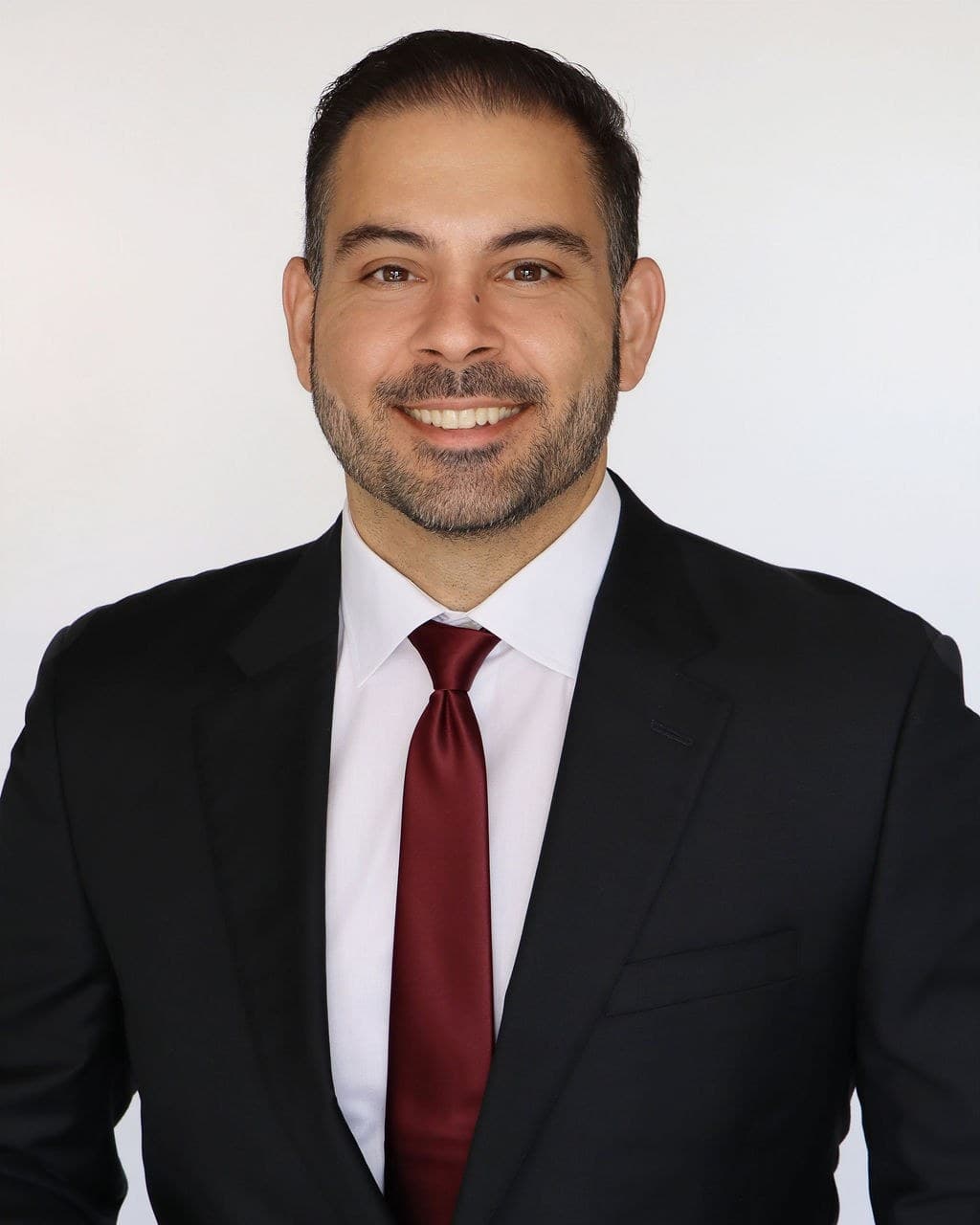
Eman Yazdchi, Esq., Certified Specialist in Workers' Compensation Law, California Board of Legal Specialization, State Bar of California.

California Board of Legal Specialization, State Bar of California

California Board of Legal Specialization, State Bar of California
- 14+
- Years of Practice
- 500+
- Cases handled over 14+ years
- $7M+
- Recovered over 14+ years
- 3
- Languages: English, Español, Farsi
Past results do not guarantee, warrant, or predict future cases. Each case is different and results depend on specific facts and circumstances.

By Eman Yazdchi, Esq. · Certified Specialist in Workers' Compensation Law, California Board of Legal Specialization, State Bar of California · Cal Bar #285231
A denial is not the end. It is the beginning of the fight for the benefits you earned.
If you work at one of the I-10 corridor warehouses, a hillside construction site, a nursery, or a property like Calimesa Country Club, you already know how hard the work is. Getting a denial letter on top of a real injury is crushing. But that letter is not the final word.
California law puts strict limits on what insurers can do and when. The insurer had a set window to decide your claim. If it missed that window, the law presumes you are covered. And even while it was investigating, it already owed you medical care.
Here is what to do right now:
- Do not ignore the denial letter. Every appeal has a deadline. The clock may already be running.
- Write down the date on the letter and the stated reason. This shapes which path you take and how much time remains.
- Call us before that deadline passes: (661) 273-1780. A free review gives you a clear picture of your options right now.
Was your Calimesa claim denied? Here is what that means.
A denial says the insurer will not pay, but California law gives you several clear paths to push back. The key is acting before your deadline runs out.
Receiving a denial letter while you are hurt and out of work is terrifying. But under California workers' comp law, a denial is a legal position the insurer must back up with real evidence. It is not automatically the end of your case. You have specific rights and specific deadlines to enforce them. The most important first step is understanding what kind of denial you received, because that determines which path you take.
There are two main types. A denied claim means the insurer says your injury is not covered at all. A denied treatment means the insurer accepts the claim but refuses to pay for a surgery, medication, or therapy your doctor ordered. These call for different responses with different deadlines. Getting them mixed up wastes time you may not have.
Why do insurers deny workers' comp claims?
Insurers deny for a handful of reasons. Most come down to money, not the real facts of your injury. Knowing their playbook makes it easier to push back.
After years of handling denied claims at the Riverside WCAB, we see the same moves over and over. Here are the most common reasons Calimesa workers get denied:
- "The injury is not work-related." The insurer argues your pain came from activities at home or a prior accident, not from your job. For forklift operators and packers along the I-10 corridor, they often point to off-the-clock lifting. For nursery and groundskeeping crews, they blame hobbies or sports.
- "You had this condition before." The insurer says an old injury or age-related wear caused your problem, not the job. Their doctor has to prove the specific how and why of any split between work and non-work causes. Pointing at an old MRI is not enough.
- "You reported it too late." The insurer claims you missed the 30-day notice window. This is often wrong. If you did not know your injury was work-related until later, the clock may not have started when they claim.
- "The treatment is not medically necessary." A Utilization Review doctor hired by the insurer reviewed your surgeon's request and said no. This denial follows a different appeal path than a full claim denial, described below.
None of these positions are automatic wins for the insurer. Every one can be contested. A denial letter is a starting point, not a verdict.
The 90-day rule: what §5402 means for your Calimesa claim
The insurer had 90 days to accept or turn down your claim. Miss that window and the law treats your injury as covered. Up to $10,000 in medical care was owed from the start.
Here is one of the strongest protections California workers have, and one most workers never hear about until it is too late.
Labor Code §5402(b): "If liability is not rejected within 90 days after the date the claim form is filed and received by the employer or the employer's insurer, the injury shall be presumed compensable."
In plain words: if the insurer did not formally deny your claim within 90 days of receiving your DWC-1 form, the law treats your injury as covered. The insurer cannot go back and win on causation at that point. The presumption has already attached.
There is a second protection in the same rule. While the insurer was deciding, it owed you up to $10,000 in medical care. That is not optional. If the insurer froze your treatment during the investigation, that was likely a violation. We can pursue that as a separate matter.
We see this play out regularly for Calimesa workers. A warehouse forklift operator reports a cumulative back strain. The insurer delays, sends the worker to its own doctor, asks for more records, and lets the 90-day window slip by. Then it issues a denial. By then, the presumption of coverage has already kicked in. That is leverage we use on your behalf at the Riverside WCAB.
Denied treatment vs. a denied claim: two different fights
A denied treatment goes through a medical review process. A denied claim goes before a WCAB judge. Both have tight deadlines. Choosing the wrong path costs you critical time.
This distinction trips up a lot of injured workers, and the confusion is costly.
When your treatment is denied: the insurer's Utilization Review doctor reviewed your surgeon's request and said it did not meet the guidelines. That denial goes to Independent Medical Review (an independent doctor, paid by the state, who reviews your file against the medical guidelines) within 30 days. If that doctor reverses the denial, the insurer must authorize your care. If not, the denial stands except on very narrow grounds like fraud or a clear conflict of interest. The WCAB judge is not the first stop on this path. It is a medical process handled through the Division of Workers' Compensation.
When your entire claim is denied: the insurer is saying it owes you nothing. This fight goes before a judge at the Riverside WCAB. You or your attorney files a Petition for Reconsideration (a written request asking the judge to review the decision again) within 25 days of a mailed ruling or 20 days of electronic service. If the judge's ruling still goes against you, the next step is a Writ of Review to the California Court of Appeal, filed within 45 days of the board's decision.
If your case was already closed and your condition has gotten worse, California still gives you a route. A Petition to Reopen is available within five years of your original injury date if new disability has appeared or your situation has changed materially.
How long do you have to respond?
Some deadlines are as short as 20 days. Others run 30 or 45 days, or up to five years. These clocks start from the date of denial, not the date you get around to reading the letter.
If there is one thing to take from this page, it is this: every appeal route listed below has a hard deadline. Missing it can close the door permanently. Look at your denial letter now, note the date it was issued, and count forward.
| What was denied | Your appeal route | Deadline | Law |
|---|---|---|---|
| Treatment denied at Utilization Review | Independent Medical Review | 30 days from the denial | §4610.5 |
| IMR upheld the denial | Appeal only on narrow grounds (fraud, bias, conflict) | 30 days | §4610.6 |
| A judge's decision (Findings & Award) | Petition for Reconsideration | 25 days if mailed, 20 if served electronically | §5903 |
| Reconsideration denied | Writ of Review to the Court of Appeal | 45 days | §5950 |
| New or worse disability after a closed case | Petition to Reopen | Within 5 years of the injury | §5803 |
Not sure where your clock stands? Call us today: (661) 273-1780.
What to do the day your denial letter arrives
Act fast, document everything, and call a lawyer before the deadline expires. Every day you wait is one less day on the appeal clock.
Here is a practical checklist for the day the letter arrives:
- Note the date on the letter and the date you received it. Deadlines often run from the date of service, which may be earlier than when you opened the envelope.
- Identify the stated reason for denial. "Not work-related," "pre-existing condition," "late report," and "not medically necessary" each call for a different response.
- Gather your paperwork. Your DWC-1 claim form, all doctor's notes, the names of any witnesses, your pay stubs, and any photos of the incident or your work area.
- Do not discuss your case with the insurer's adjuster without a lawyer. Anything you say can be used to close the door on your claim.
- Call (661) 273-1780 today. A free review gives you a clear answer on which path applies and how much time you have left.
A denial letter from the insurer is designed to look final. It is not. But it does have a clock attached. The sooner you act, the more options stay open for you.
Results in cases like this
Every case is different. Past results do not guarantee, warrant, or predict a similar outcome.
$5,000,000
Catastrophic spinal cord injury
$1,500,000
Cervical spine injury
$425,000
Slip and fall accident
Find Out What Your Calimesa Case May Be Worth
Two minutes. No fee unless we win; costs may apply.
Question 1 of 5
What type of injury do you have?
Not ready to fill this out? Just call (661) 273-1780 and we’ll ask the same questions by phone.
Free Consultation
Call or send the short form. We review your case, explain your rights, and outline your options. Free, no obligation.
We Build Your Case
We gather medical evidence, handle the insurance company, and file all the workers' comp court (WCAB) paperwork for you.
We Pursue Every Benefit
Medical care, lost wages, and permanent disability benefits. No fee unless we win your case; costs may apply.
Denied claims at the Riverside WCAB: what Calimesa workers face
Calimesa denied-claim appeals are heard at the Riverside WCAB on Main Street, about 30 miles west on Interstate 10. Eman Yazdchi appears there regularly on denied claims and reconsideration petitions.
Where is the Riverside WCAB, and what does it cover?
Workers' comp cases from Calimesa, including all denied-claim appeals, are heard at the Riverside district office of the Workers' Compensation Appeals Board at 3737 Main Street in Riverside. From Calimesa, that is a 30-mile drive west on Interstate 10. The district covers much of the Inland Empire, including Calimesa, Beaumont, Banning, Yucaipa, and Redlands. Yazdchi Law appears regularly at this board on denied-claim cases, treatment disputes, and reconsideration petitions. Related: Riverside workers' comp claims and Inland Empire workers' comp coverage.
Which Calimesa jobs drive the most denied claims?
Calimesa sits where the I-10 begins its climb toward the San Gorgonio Pass. The mix of work here creates specific denial patterns we see regularly at the Riverside WCAB:
- Warehouse and distribution: forklift operators and packers at I-10 corridor distribution facilities deal most often with cumulative-trauma back and shoulder denials. Insurers argue the strain came from off-the-clock activities, not the warehouse floor.
- Hillside construction: framing and grading crews on Calimesa's hillside residential developments face denials tied to pre-existing arthritis. The insurer pulls an old X-ray and says the job did not cause the injury.
- Nursery and landscaping: nursery workers and outdoor grounds crews, including staff at properties like Calimesa Country Club, see wrist, shoulder, and back claims denied on grounds that the repetitive motion was not forceful enough or that the worker had prior strain from elsewhere.
- Manufactured-home park maintenance: repair workers at Calimesa's manufactured-home communities face denials when employers argue the injured task was performed off-site or outside scheduled hours.
Each of these denial patterns has a documented response under California law. The fight is about making the insurer meet its burden of proof, not simply accepting the label on the denial letter.
The apportionment defense in Calimesa cumulative-trauma cases
In cumulative-trauma claims, Calimesa insurers often hire a Qualified Medical Evaluator to argue that part of your injury came from factors outside of work. California law requires that doctor to prove the specific how and why of any such split. A general reference to age or wear is not enough. That standard comes from a 2005 Workers' Compensation Appeals Board en banc decision, Escobedo v. Marshalls, which held that apportionment to a prior condition requires real medical evidence, not just a theory or a reference to an old scan.
When we contest apportionment at the Riverside WCAB, we hold the insurer's medical expert to that exact standard. For older warehouse workers and construction laborers in Calimesa, winning the apportionment fight can shift the value of a claim by tens of thousands of dollars.
What does a Calimesa denied-claim lawyer cost?
Nothing to start and nothing unless we win. Workers' comp attorney fees in California are set by the WCAB judge, typically 12 to 15 percent of whatever we recover for you.
There is no hourly billing and no retainer to pay before we get started. In California workers' comp, the attorney fee is set by the judge, not the law firm. The standard range is 12 to 15 percent of what we recover, and only if we recover something. If we do not win, you owe no fee. A nursery worker or a forklift operator with a denied claim gets the same quality of representation as any higher-paid worker. The system was designed that way on purpose.
About your attorney
Eman Yazdchi is a Certified Specialist in Workers' Compensation Law, certified by the California Board of Legal Specialization, State Bar of California (CA Bar #285231). Only a small fraction of California attorneys hold this credential. He has represented hundreds of injured California workers and appears regularly at the Riverside WCAB. Our office provides bilingual representation for Calimesa's Spanish-speaking workers. More about Eman Yazdchi. Verify his State Bar profile.
Our firm has recovered up to $5,000,000 for a catastrophic spinal-cord injury and $1,500,000 for a cervical-spine injury. Past results do not guarantee future outcomes.
Nearby Inland Empire cities we serve
Injured at work in Calimesa? Talk it through for free.
Most claims must be filed within one year under Labor Code section 5405. A free call tells you where your clock stands.
Frequently Asked Questions
What happens if the insurer missed the 90-day deadline to decide my Calimesa claim?
What does the $10,000 in interim medical care actually cover?
What are the most common reasons Calimesa workers' comp claims get denied?
Can I be fired for fighting a denied workers' comp claim?
What is Independent Medical Review and when do I use it for a Calimesa denial?
What is a Petition for Reconsideration and when do I file one?
Can undocumented workers in Calimesa fight a denied workers' comp claim?
How much does a workers' comp attorney charge to fight a denied claim in Calimesa?
Last reviewed by Eman Yazdchi, Esq., June 2026.
Free case evaluation
Get your free Calimesa case evaluation
Three fields. We respond within one business day.
Talk to a Certified Specialist
Certified Specialist in Workers' Compensation Law, California Board of Legal Specialization, State Bar of California.
Takes 30 seconds. No obligation.
I am glad and so very pleased...he made happen what no other attorney could do. So far he has proven his weight in gold.
Eman at Yazdchi Law was extremely professional, responsive, and supportive at all times. He and his staff exceeded all of my expectations.
Client testimonials. Testimonials are not a guarantee, warranty, or prediction of the outcome of your case.