
Civic Center, California · Workers' Compensation
Civic Center Workers' Compensation Lawyer
Hurt at work in Civic Center? Workers' comp pays for medical care and part of your lost pay while you heal. A free call tells you where you stand.
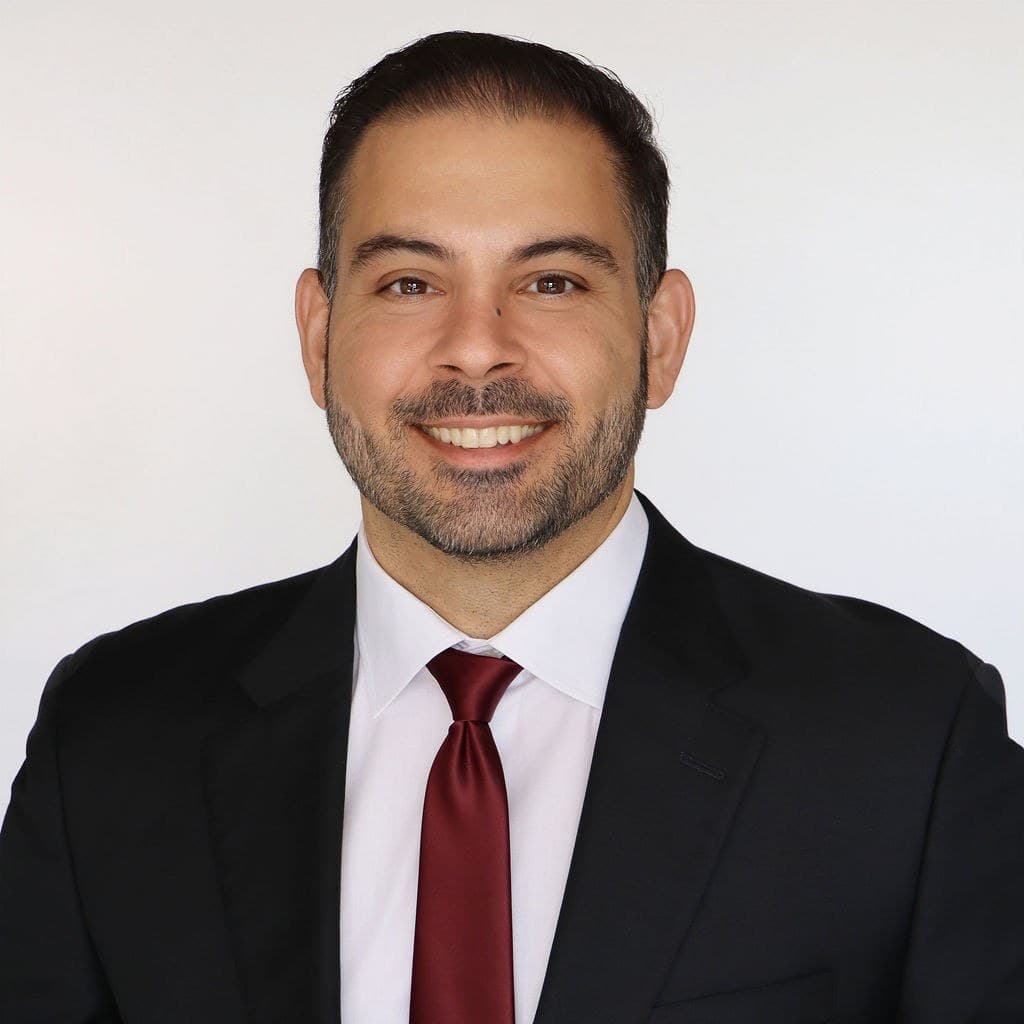
Eman Yazdchi, Esq., Certified Specialist in Workers' Compensation Law, California Board of Legal Specialization, State Bar of California.


California Board of Legal Specialization, State Bar of California
California Board of Legal Specialization, State Bar of California
- 14+
- Years of Practice
- 2,000+
- Cases handled over 14+ years
- $50M+
- Recovered over 14+ years
- 3
- Languages: English, Español, Farsi
Past results do not guarantee, warrant, or predict future cases. Each case is different and results depend on specific facts and circumstances.
Prepared by Yazdchi Law
If you were hurt on the job in Civic Center, Los Angeles, you have real rights. You do not have to face the City's insurance program, the County's adjusters, or a contractor's carrier on your own.
Few neighborhoods in California pack more government employment into a few blocks. City Hall sits on Spring Street at the center of it all. The Hall of Administration, the Stanley Mosk Courthouse, and the Clara Shortridge Foltz Criminal Justice Center are just steps away. So are the Police Administration Building, Caltrans District 7 headquarters, the Ronald Reagan State Office Building, and several major federal buildings. The workers who keep all of this running face real hazards every day. Building-services crews slip on polished lobby floors. Court security officers are injured during disturbances. Caltrans inspectors hurt their backs on field jobs. Courthouse clerks develop wrist and shoulder problems from years at the keyboard. Janitorial contractors build up knee and hip damage from long shifts on hard floors.
Here is what matters right now. You very likely qualify for workers' comp regardless of fault. Benefits include full medical care at no cost to you, two-thirds of your wages while you cannot work, and a cash award if the damage is permanent. You have one year from the date of injury to file a claim. Every week you wait makes the case harder to prove.
Eman Yazdchi is a Certified Specialist in Workers' Compensation Law, certified by the California Board of Legal Specialization, State Bar of California (CA Bar #285231). He handles City, County, state, and contractor claims at the Los Angeles WCAB and offers a free review of every case. Call (661) 273-1780.
Do you have a Civic Center workers' comp case?
If your injury happened while you were doing your Civic Center job, you very likely have a valid claim. That covers a single accident and conditions that built up slowly over time.
Most hurt workers ask the same question first: do I really qualify? The answer is almost always yes. A City Hall supply-room worker who strains a knee lifting a box has a case. An LA County Sheriff's deputy hurt during a disturbance at the Foltz Criminal Justice Center has a case. A Caltrans inspector who falls on a job-site visit has a case. A courthouse cafeteria worker whose wrist aches after years of prep work has a case. California workers' comp is a no-fault system. You do not need to prove your employer was careless. You just need to show the injury happened at work.
Two kinds of injury are covered. A specific injury occurs in one moment: a fall on a polished courthouse hallway, a collision during a government errand, a single bad lift in a City Hall mail room. A cumulative injury develops over time: carpal tunnel from sustained keyboard work, shoulder wear from years of pushing janitorial carts, knee breakdown from long security-post standing shifts at the Mosk Courthouse. Both types qualify under California law. The one-year filing clock for a cumulative injury starts the day a doctor first connects the condition to your job.
Coverage extends to every employee regardless of immigration status. Contractor staff working for building-services or food-service companies at Civic Center buildings are covered the same as direct government employees, even though the employer listed on their paycheck is the contractor, not the City or County.
What benefits can you receive?
Workers' comp pays all medical bills at no cost to you, replaces two-thirds of your wages while you are off work, and adds a cash award for any lasting damage to your body.
California law provides four categories of benefits for injured workers.
Medical care. The law requires the insurer to cover all treatment your condition needs. That includes doctor visits, specialist consultations, surgery, physical therapy, imaging, and prescriptions. You pay no deductibles and no copays. A City Hall permit clerk and a security guard employed by a Civic Center contractor are entitled to the exact same coverage.
Temporary disability. While you cannot work, you receive two-thirds of your average weekly wage up to the state weekly cap. Payments continue for as long as 104 weeks within a five-year window. That is the legal maximum. The insurer cannot stop earlier without cause.
Permanent disability. Once your condition is as stable as it will get, a doctor scores the lasting damage as a percentage. That score determines a weekly cash payment. For injuries since 2013, the scoring formula applies a 1.4 multiplier and then adjusts for your age and how physically demanding your occupation is. Harder jobs and younger ages generally produce higher ratings and higher awards.
Retraining voucher. If you cannot return to your prior job and your employer cannot offer modified work, you may qualify for a supplemental job displacement benefit worth up to $6,000 for approved retraining or education programs.
How much is a Civic Center workers' comp claim worth?
Value depends on lasting damage, your age, your job's physical demands, and future care costs. No honest review gives a dollar figure without reading your medical records.
The table below shows general California value ranges by injury severity. These are statewide reference figures. Your actual outcome depends on your disability rating, your age, your occupation, and the future medical care you will need.
| Injury severity | Typical permanent-disability rating | Approximate value range |
|---|---|---|
| Minor strain or sprain, full recovery | 0 to 5% | $2,000 to $10,000 |
| Moderate injury, conservative treatment resolves it | 5 to 15% | $10,000 to $50,000 |
| Serious injury or single-level surgery | 15 to 30% | $50,000 to $150,000 |
| Severe injury or multi-level surgery | 30 to 70% | $150,000 to $350,000 |
| Catastrophic injury, spinal cord or TBI | 70 to 100% | $350,000 and above |
These are general California ranges, not a prediction. Your actual award depends on your disability rating, age, occupation, and future medical care. Past results do not guarantee future outcomes.
The rating formula adjusts for your occupation's physical demands. A Caltrans District 7 field inspector doing outdoor work carries a different occupational adjustment than a desk-based City Hall permit analyst. Harder occupations land at the higher end of the range. Our firm has recovered $5,000,000 for a catastrophic spinal-cord injury and $1,500,000 for a cervical-spine injury. Past results do not guarantee future outcomes. Call (661) 273-1780 for a free, honest review of your situation.
What if the insurer denies your claim?
A denial is not the end. The insurer has 90 days to decide, and during that window you still get up to $10,000 in medical care. You have a right to appeal at every step.
Once you file the DWC-1 claim form, the 90-day decision rule applies. If the insurer misses that deadline, the law presumes your injury is covered. During those 90 days, up to $10,000 in medical care is owed right away. The insurer cannot freeze your treatment while they investigate.
If the insurer denies a specific treatment your doctor ordered, such as an MRI or surgery, you can challenge it through Independent Medical Review. You have 30 days from the denial to request review. An independent doctor examines your records and either confirms or overturns the insurer's decision. That reviewer's determination is binding.
If your employer fires you, cuts your hours, or punishes you in any way for filing a workers' comp claim, that is illegal retaliation. You can seek reinstatement, your lost pay, and a financial penalty on top of your injury award. Tell us immediately if that happens.
If the final award or decision is wrong, you can file a Petition for Reconsideration within 25 days of a mailed decision, or 20 days if delivered electronically. A further court challenge is available within 45 days. If your condition worsens within five years of the injury, you can reopen the case at that point.
How long do you have to file in Civic Center?
Report the injury within 30 days and file your formal claim within one year. For a cumulative injury, the one-year window opens the day a doctor connects it to your work.
Two deadlines govern every Civic Center workers' comp claim. Missing the report deadline gives the insurer reason to challenge whether the injury happened at work. Missing the filing deadline can bar the claim entirely.
| Action | Deadline | Rule |
|---|---|---|
| Report the injury to your employer in writing | 30 days from injury | §5400 |
| File your formal claim (DWC-1) | 1 year from injury | §5405 |
| Cumulative-trauma clock starts | When you feel it and a doctor connects it to work | §5412 |
| Insurer must accept or deny | 90 days from filing | §5402 |
| Appeal a denied treatment | 30 days from denial | §4610.5 |
Not sure where your clock stands? A free call answers that question: (661) 273-1780.
Results in cases like this
Every case is different. Past results do not guarantee, warrant, or predict a similar outcome.
$5,000,000
Catastrophic spinal cord injury
$1,500,000
Cervical spine injury
$425,000
Slip and fall accident
Find Out What Your Civic Center Case May Be Worth
Two minutes. No fee unless we win; costs may apply.
Question 1 of 5
What type of injury do you have?
Not ready to fill this out? Just call (661) 273-1780 and we’ll ask the same questions by phone.
Free Consultation
Call or send the short form. We review your case, explain your rights, and outline your options. Free, no obligation.
We Build Your Case
We gather medical evidence, handle the insurance company, and file all the workers' comp court (WCAB) paperwork for you.
We Pursue Every Benefit
Medical care, lost wages, and permanent disability benefits. No fee unless we win your case; costs may apply.
Why Civic Center workers choose Yazdchi Law
Eman Yazdchi is a Certified Specialist who appears regularly at the Los Angeles WCAB at 320 W 4th Street and has represented hundreds of California government and contractor workers.
The Civic Center's workforce is unlike any other neighborhood in Los Angeles. City of LA employees, County of LA employees, State of California employees, and private contractor staff all work within a few blocks of each other. Each group files at the Los Angeles WCAB, but through a different self-insured program or private carrier. Knowing the difference matters from the very first form you file.
City of Los Angeles employees file at the Los Angeles WCAB at 320 W 4th Street, naming the City as the self-insured employer. This group includes City Hall building-services crews, permit and records clerks, LAPD civilian staff at the Police Administration Building, and other City workers. Sworn LAPD officers also qualify for a set of statutory presumptions that can make certain conditions automatically covered without proving a specific cause at work.
County of Los Angeles employees, including Sheriff's deputies stationed at the Stanley Mosk Courthouse and the Foltz Criminal Justice Center, file at the same Los Angeles WCAB through the County's self-insured program. County deputies benefit from their own set of statutory presumptions covering specific health conditions. County adjusters run a different operation than a private carrier, and knowing their practices helps move a case efficiently.
State of California employees at Caltrans District 7 headquarters and the Ronald Reagan State Office Building also file at the Los Angeles WCAB. Contractor employees, including janitors, food-service workers, and security officers employed by companies like ABM Industries, Aramark, and Compass Group, file through their direct employer's workers' comp carrier at the same WCAB. The DWC-1 claim form names the contractor as the employer, not the building's government owner.
Federal employees at the Edward R. Roybal Federal Building and the U.S. Courthouse work under a separate federal program. Yazdchi Law refers those workers to counsel who specialize in federal claims, because the two systems do not overlap.
Labor Code §4600: "Medical, surgical, chiropractic, acupuncture, and hospital treatment, including nursing, medicines, medical and surgical supplies, crutches, and apparatuses, including orthotic and prosthetic devices and apparatus, that is reasonably required to cure or relieve the injured worker from the effects of his or her injury shall be provided by the employer."
That right begins on the day you are injured. No waiting period. No deductible. No copay.
What it means to work with Eman Yazdchi
The City, the County, and large contractors have adjusters and attorneys on their side the moment you report an injury. You deserve the same quality of representation. Eman Yazdchi handles the entire claim process, from filing the DWC-1 through the final award or settlement. He appears regularly at the Los Angeles WCAB, just blocks from City Hall, and returns calls the same day.
Eman Yazdchi is a Certified Specialist in Workers' Compensation Law, certified by the California Board of Legal Specialization, State Bar of California (CA Bar #285231). Only a small fraction of California attorneys hold this credential. He has represented hundreds of injured California workers and appears regularly at the Los Angeles WCAB. More about Eman Yazdchi. Verify his State Bar profile.
Nearby areas we serve in Los Angeles
- Downtown Los Angeles workers' comp
- Koreatown workers' comp
- Echo Park workers' comp
- Los Angeles workers' comp hub
Injured at work in Civic Center? Talk it through for free.
Most claims must be filed within one year under Labor Code section 5405. A free call tells you where your clock stands.
Frequently Asked Questions
Do I pay anything to hire a workers' comp lawyer in Civic Center?
Can I be fired for filing a workers' comp claim?
What if I am undocumented?
How long does a Civic Center workers' comp case take?
Can I pick my own doctor?
Are Los Angeles City Hall employees covered by workers' comp?
What if I am a County deputy sheriff hurt at the Mosk Courthouse or the Foltz building?
What if I work for a Civic Center contractor like ABM Industries or Aramark?
Free case evaluation
Get your free Civic Center case evaluation
Three fields. We respond within one business day.
Talk to a Certified Specialist
Certified Specialist in Workers' Compensation Law, California Board of Legal Specialization, State Bar of California.
Takes 30 seconds. No obligation.
Very thankful for everything they did for us. Always responsive, reassured us every step of the way and obtained a great result.
Eman by far exceeds the basic requirements other lawyers give to clients and surpasses all expectations.
Client testimonials. Testimonials are not a guarantee, warranty, or prediction of the outcome of your case.