
Florence Graham, California · Workers' Compensation
Florence-Graham Workers' Compensation Lawyer
Hurt at work in Florence Graham? Workers' comp pays for medical care and part of your lost pay while you heal. A free call tells you where you stand.
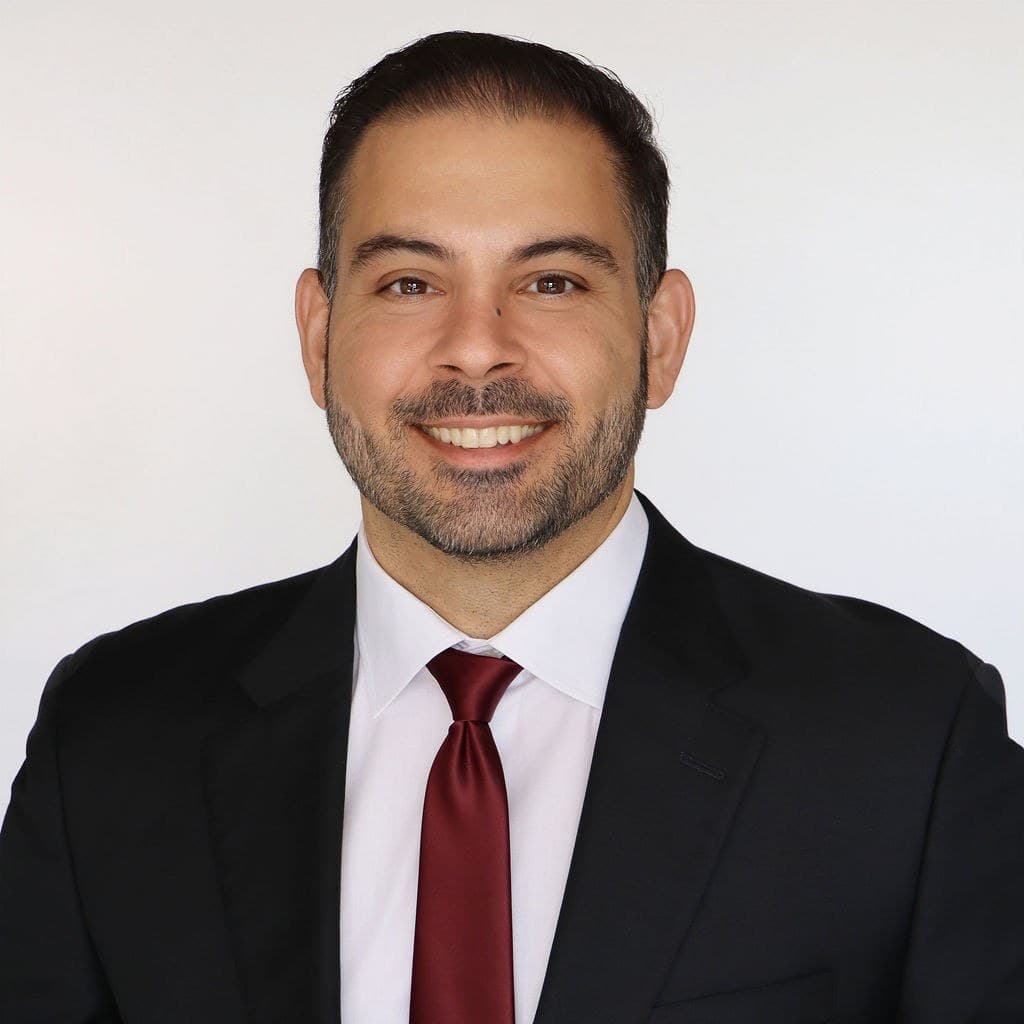
Eman Yazdchi, Esq., Certified Specialist in Workers' Compensation Law, California Board of Legal Specialization, State Bar of California.


California Board of Legal Specialization, State Bar of California
California Board of Legal Specialization, State Bar of California
- 14+
- Years of Practice
- 2,000+
- Cases handled over 14+ years
- $50M+
- Recovered over 14+ years
- 3
- Languages: English, Español, Farsi
Past results do not guarantee, warrant, or predict future cases. Each case is different and results depend on specific facts and circumstances.
Prepared by Yazdchi Law
If you were hurt on the job in Florence-Graham, you have real rights. You do not have to face the insurance company alone.
Florence-Graham is a dense community in South Los Angeles County. It runs from Florence Avenue south to Firestone Boulevard. The work here is physical. Some workers pack and process meat at Vernon plant floors. Others run forklifts at Alameda-corridor warehouses. Many sew in cut-and-sew shops along the Florence strip. Still others work the counters and kitchens along Pacific Boulevard in Huntington Park. These jobs take a real toll on the body.
California workers' comp is a no-fault system. If your injury came from your job, you very likely qualify. You can get your medical care paid in full, two-thirds of your wages while you heal, and a cash award if the damage is lasting. You have one year to file. You pay nothing up front.
Eman Yazdchi is a Certified Specialist in Workers' Compensation Law, certified by the California Board of Legal Specialization, State Bar of California (CA Bar #285231). He files Florence-Graham claims at the Los Angeles WCAB and handles every appearance. Call (661) 273-1780 for a free review.
Do you have a Florence-Graham workers' comp case?
If your injury or illness came from your Florence-Graham job, you very likely qualify. The system covers most workers, regardless of fault or immigration status.
The most common question we hear: do I actually have a case? If your injury happened at work, or because of the work you do, you almost certainly do. You do not need to prove your employer was careless. California uses a no-fault rule. The worker gives up the right to sue, and in exchange the employer owes benefits no matter who was at fault.
Two kinds of injury both count. A specific injury happens on one day. Think of a fall from a loading dock on Florence Avenue, a deep cut on a Smithfield processing line, or a slip in a South Gate cold-storage freezer. A build-up injury develops over months or years of the same repeated motion. That covers the shoulder worn down from lifting cases at an Alameda-corridor warehouse. It also covers the wrist that gives out after years at a sewing machine. The law that covers build-up injuries does not require one single accident. The clock for a build-up claim starts when a doctor first connects your condition to your work.
Coverage extends to every worker, including undocumented workers. California law protects all employees regardless of immigration status.
What benefits can you receive?
Medical care paid in full, two-thirds of your wages while you recover, a cash award for lasting damage, and a retraining voucher if you cannot return to your old work.
The benefit package has four parts.
Medical care. The insurer pays for all treatment you need from the date of injury. That includes surgery, imaging, physical therapy, prescriptions, and mileage to appointments. You pay no copays or deductibles. This applies from day one, before the claim is even accepted.
Temporary disability. While you are off work, you receive two-thirds of your average weekly wage, up to the state's weekly cap. For example, a forklift operator earning $900 a week would receive about $600 a week while recovering. These payments can continue for up to 104 weeks within five years. They do not continue indefinitely.
Permanent disability. Once your condition is as stable as it will get, a doctor scores the lasting damage as a percentage. That percentage sets how many weeks of additional payments you receive. For injuries since 2013, the rating system weighs your age and your occupation. Harder jobs often produce higher ratings.
Retraining voucher. If your employer cannot offer your old job or a comparable one, you may receive a voucher of up to $6,000 for approved retraining or education.
How much is a Florence-Graham workers' comp claim worth?
Value depends on how much lasting damage you have, your age, your occupation, and your future care. No honest lawyer names a number without reviewing your records first.
The honest answer is: it depends. What you can expect turns on your permanent disability rating, how demanding your job is, your age, and what ongoing medical care you will need. The table below shows general California ranges by injury severity.
| Injury severity | Typical permanent-disability rating | Approximate value range |
|---|---|---|
| Minor strain or sprain, full recovery | 0 to 5% | $2,000 to $8,000 |
| Moderate injury, surgery or extended therapy | 10 to 25% | $30,000 to $90,000 |
| Serious injury or single-level fusion | 25 to 40% | $80,000 to $175,000 |
| Severe or multi-level injury | 40 to 70% | $150,000 to $400,000 |
| Catastrophic injury (spinal cord or TBI) | 70% to 100% | $400,000 and above |
These are general California ranges, not a prediction. Your actual award depends on your disability rating, age, occupation, and future medical care. Past results do not guarantee future outcomes.
Our firm has recovered $5,000,000 for a catastrophic spinal-cord injury and $1,500,000 for a cervical-spine injury. Past results do not guarantee future outcomes.
Insurers often try to cut your award by blaming part of your condition on age, a prior injury, or normal wear. That argument is called apportionment. The law requires their doctor to show the specific medical reason for any reduction, not just point to an old X-ray or MRI. We hold them to that standard on every claim.
What if the insurer denies your claim?
A denial is not final. The law gives you 30 days to appeal a denied treatment, and up to $10,000 in medical care must be provided while the insurer is still deciding.
After you file the DWC-1 claim form, the insurer has 90 days to accept or deny. During those 90 days, up to $10,000 in medical care is owed immediately. They cannot freeze your treatment while they investigate.
If they deny a treatment your doctor ordered, you can appeal through Independent Medical Review within 30 days of the denial. An outside physician reviews your records against state treatment guidelines and either upholds or overturns the denial. This process runs separately from the WCAB hearing track.
If your entire claim is denied, the appeal ladder starts with a hearing before a WCAB judge. After that, you can file a Petition for Reconsideration within 25 days of a mailed decision. A Writ of Review in the Court of Appeal follows if needed. Missing the Reconsideration deadline almost always closes the appellate door. Call (661) 273-1780 the same day any denial letter arrives.
How long do you have to file in Florence-Graham?
Report the injury within 30 days and file the claim within one year. For a build-up injury, the clock starts when a doctor first ties your condition to your work.
There are two deadlines. Missing either one gives the insurer an opening to deny your claim entirely.
| Action | Deadline | Law |
|---|---|---|
| Tell your employer in writing | 30 days from injury | §5400 |
| File your claim form | 1 year from injury | §5405 |
| Build-up injury clock starts | When a doctor connects your condition to your work | §5412 |
| Insurer must accept or deny | 90 days from filing | §5402 |
| Appeal a denied treatment | 30 days from denial | §4610.5 |
Not sure where your clock stands? A free call sorts it out: (661) 273-1780.
Labor Code §4600: "Medical, surgical, chiropractic, acupuncture, and hospital treatment, including nursing, medicines, medical and surgical supplies, crutches, and apparatuses, including orthotic and prosthetic devices and orthopedic braces, that is reasonably required to cure or relieve the injured worker from the effects of the injury shall be provided by the employer."
Results in cases like this
Every case is different. Past results do not guarantee, warrant, or predict a similar outcome.
$5,000,000
Catastrophic spinal cord injury
$1,500,000
Cervical spine injury
$425,000
Slip and fall accident
Find Out What Your Florence Graham Case May Be Worth
Two minutes. No fee unless we win; costs may apply.
Question 1 of 5
What type of injury do you have?
Not ready to fill this out? Just call (661) 273-1780 and we’ll ask the same questions by phone.
Free Consultation
Call or send the short form. We review your case, explain your rights, and outline your options. Free, no obligation.
We Build Your Case
We gather medical evidence, handle the insurance company, and file all the workers' comp court (WCAB) paperwork for you.
We Pursue Every Benefit
Medical care, lost wages, and permanent disability benefits. No fee unless we win your case; costs may apply.
What makes a Florence-Graham claim distinctive?
Claims from the Smithfield meatpacking floor, Alameda-corridor warehouses, and Florence-corridor garment shops all file at the Los Angeles WCAB, 320 W 4th Street downtown.
Which Florence-Graham industries drive the most claims?
The South LA industrial belt produces a specific set of serious injuries. Our caseload from this corridor includes:
- Vernon meatpacking (Smithfield / Farmer John): Amputation, laceration, repetitive-strain, and ammonia-exposure claims from one of the highest-injury plant floors in Southern California. Your home in Florence-Graham gives you full venue rights at the Los Angeles WCAB, even though the plant address is in Vernon.
- Alameda-corridor warehousing: Forklift accidents, falling-load injuries, and cumulative shoulder and back wear from distribution centers that serve the Port of LA and Long Beach freight chain. Workers at these facilities often develop build-up injuries over one to three years before the pain becomes disabling.
- Florence-corridor garment and textile: Sewing-machine repetitive strain, hand injuries, and chemical exposures at cut-and-sew shops along the Florence Avenue strip. Many garment workers here are paid by the piece, not by the hour. Reconstructing accurate wages from piece-rate records is often essential to getting the correct disability payment.
- Huntington Park and Pacific Boulevard retail and food service: Slip-and-fall, lifting, and repetitive-motion claims from grocery clerks, restaurant workers, and fast-food employees along the Pacific Boulevard commercial corridor.
- South Gate and Cudahy light manufacturing: Metal fabrication, plastics, and chemical operations with hand, eye, and respiratory injuries. Some employers here self-insure, which affects how a claim is filed and pursued.
Where is the Los Angeles WCAB, and how do hearings work?
Florence-Graham claims are filed and heard at the Los Angeles WCAB, 320 W 4th Street, downtown Los Angeles. From central Florence-Graham near Florence and Compton avenues, the courthouse is about 8 miles north by the 110 Freeway or surface streets. Eman Yazdchi appears at this office regularly and handles all hearings, depositions, and settlement conferences. You do not navigate the courthouse alone.
Piece-rate wages and garment-worker claims
Cut-and-sew shops along the Florence corridor often pay workers by the piece, not by the hour. When an employer's records understate actual earnings, the temporary-disability payment is calculated too low from the start. We reconstruct true earnings through bank deposits, co-worker statements, and labor commissioner findings. A corrected average weekly wage can significantly increase the benefit checks you receive throughout your claim.
Why Florence-Graham workers choose Yazdchi Law
Eman Yazdchi is a Certified Specialist who appears regularly at the Los Angeles WCAB and has represented hundreds of California workers from the South LA industrial corridor.
Eman Yazdchi is a Certified Specialist in Workers' Compensation Law, certified by the California Board of Legal Specialization, State Bar of California (CA Bar #285231). Only a small fraction of California attorneys hold this credential. He has represented hundreds of injured workers from across the South LA industrial corridor and appears regularly at the Los Angeles WCAB. More about Eman Yazdchi. Verify his State Bar profile.
Consultations are free and available in Spanish. You pay nothing unless we win. Attorney fees in California workers' comp are set by the WCAB judge, typically 12 to 15 percent of what we recover for you. There is no fee if there is no recovery. Call (661) 273-1780 to start.
Injured at work in Florence Graham? Talk it through for free.
Most claims must be filed within one year under Labor Code section 5405. A free call tells you where your clock stands.
Frequently Asked Questions
Do I pay anything up front to hire a workers' comp lawyer in Florence-Graham?
No. You pay nothing to get started. Attorney fees in California workers' comp are set by the WCAB judge, usually 12 to 15 percent of your award or settlement. You owe no fee if there is no recovery. That means a sewing-machine operator and a meatpacking line worker get the same quality of legal help as anyone else. Call (661) 273-1780 for a free review today.
Can my employer fire me for filing a workers' comp claim?
No. Firing you, cutting your hours, or penalizing you in any way for filing a workers' comp claim is illegal. If it happens, you can win your job back, your lost pay, and a penalty of up to $10,000 added to your award. Do not sign any paperwork from your employer after an injury without talking to a lawyer first. Call (661) 273-1780 the same day.
I am undocumented. Can I still file a workers' comp claim in Florence-Graham?
Yes. California workers' comp protects every employee regardless of immigration status. Medical care, wage replacement, and permanent disability payments apply to undocumented workers just as they do to anyone else. Your employer cannot threaten to report your immigration status because you filed a claim. That threat is its own separate violation of California law. Our staff speaks Spanish, and all consultations are free and confidential. Call (661) 273-1780.
My wrist has been hurting for years from sewing work. Is it too late to file?
Probably not. Build-up injuries are covered by California workers' comp. The one-year deadline for a cumulative injury runs from the day a doctor first ties your condition to your job, not from when the pain started. If no doctor has yet connected your wrist to your sewing work, seeing one is your first step. Then call us at (661) 273-1780 so we can review your timeline.
How long does a Florence-Graham workers' comp claim take to resolve?
Most uncontested claims settle or reach an award within 12 to 18 months. A contested case at the Los Angeles WCAB can take two to three years, especially when the insurer disputes the medical care or the permanent disability rating. We keep you updated at every step and push for the earliest fair resolution.
I work at Farmer John in Vernon but live in Florence-Graham. Where do I file?
At the Los Angeles WCAB, 320 W 4th Street. Your home in Florence-Graham gives you full venue rights there, even though the plant is in Vernon. Smithfield's Farmer John facility has carried one of the highest injury rates in the South LA industrial belt for decades. Eman Yazdchi has experience with meatpacking floor injuries and appears at the Los Angeles WCAB regularly.
Can I choose my own doctor for a workers' comp claim?
In most cases, the insurer's Medical Provider Network controls your initial choice of doctor. If your employer did not properly notify you of the MPN before your injury, you may have the right to see your personal physician. Once your condition is stable, you can request a panel Qualified Medical Evaluator if you disagree with the insurer's medical opinion. We guide you through the right path for your situation from the first call.
What happens if the insurer misses the 90-day deadline to decide my claim?
If the insurer does not accept or deny your claim within 90 days of your filing, the law presumes your injury is covered. If they do deny, you have the right to a hearing before a WCAB judge and, if needed, a Petition for Reconsideration filed within 25 days of a mailed decision. Missing that deadline almost always closes the appellate door. Call (661) 273-1780 the same day any denial letter arrives.
Free case evaluation
Get your free Florence Graham case evaluation
Three fields. We respond within one business day.
Talk to a Certified Specialist
Certified Specialist in Workers' Compensation Law, California Board of Legal Specialization, State Bar of California.
Takes 30 seconds. No obligation.
I am glad and so very pleased...he made happen what no other attorney could do. So far he has proven his weight in gold.
Eman at Yazdchi Law was extremely professional, responsive, and supportive at all times. He and his staff exceeded all of my expectations.
Client testimonials. Testimonials are not a guarantee, warranty, or prediction of the outcome of your case.