
Jefferson Park, California · Workers' Compensation
Jefferson Park Workers' Compensation Lawyer
Hurt at work in Jefferson Park? Workers' comp pays for medical care and part of your lost pay while you heal. A free call tells you where you stand.
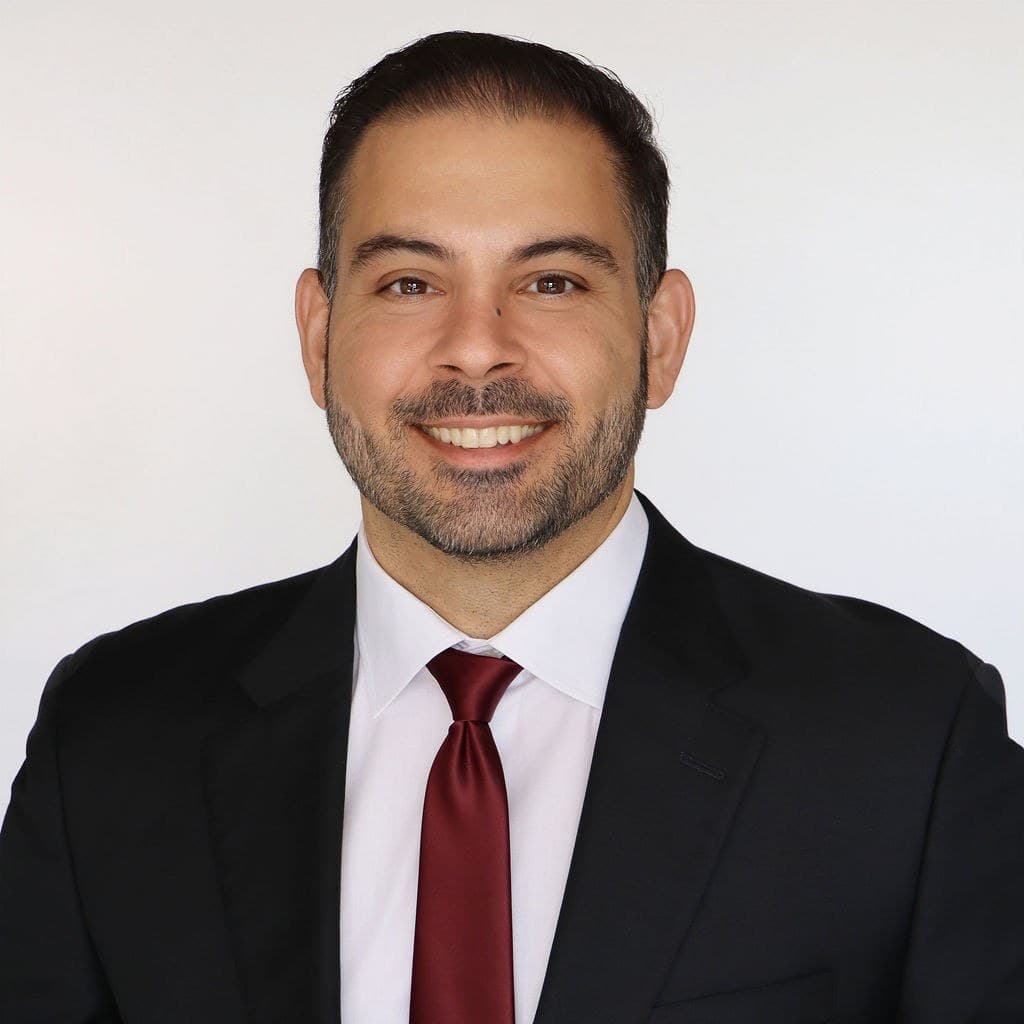
Eman Yazdchi, Esq., Certified Specialist in Workers' Compensation Law, California Board of Legal Specialization, State Bar of California.


California Board of Legal Specialization, State Bar of California
California Board of Legal Specialization, State Bar of California
- 14+
- Years of Practice
- 2,000+
- Cases handled over 14+ years
- $50M+
- Recovered over 14+ years
- 3
- Languages: English, Español, Farsi
Past results do not guarantee, warrant, or predict future cases. Each case is different and results depend on specific facts and circumstances.
Prepared by Yazdchi Law
If you were hurt at work in Jefferson Park, you have real rights. You do not have to face the insurance company alone.
A USC dining-hall crew member who falls on a wet tile floor, a Keck Medicine EVS worker hurt by a chemical splash, or a Metro Crenshaw construction laborer struck by a tool falling from scaffold all share the same core right: medical care paid in full, wage checks while healing, and a permanent disability award if the damage lasts. Fault does not disqualify you. Your immigration status does not bar you.
Act today:
- Tell your supervisor in writing. A text or email works. Say "I was hurt at work" and give the date.
- Ask for the DWC-1 claim form. Your employer must hand it over within one working day. If they stall, call (661) 273-1780. That delay is itself a violation.
- See a doctor and say the injury is from work. That note sets the cause on record from day one.
You have one year to file a claim. Do not wait. Eman Yazdchi is a Certified Specialist in Workers' Compensation Law, certified by the California Board of Legal Specialization, State Bar of California (CA Bar #285231). Call (661) 273-1780 for a free review.
Do you have a Jefferson Park workers' comp case?
If your injury happened at work or grew out of your job duties, you very likely qualify. Fault is not a factor, and your immigration status does not matter.
California's workers' comp system is built on a clear trade. You give up the right to sue your employer in civil court. Your employer covers a guaranteed set of benefits for any injury tied to your job. It does not matter who caused the accident. You can be partly at fault and still collect every benefit the law provides.
The coverage is wider than most people expect. A Jefferson Boulevard restaurant cook who slips on a grease patch near the grill qualifies. A USC parking attendant hurt by a car door in the South Campus garage qualifies. A home-health aide who strains her knee transferring a patient in a West Adams apartment qualifies. A 10 Freeway maintenance laborer hit by a passing vehicle qualifies.
Two types of injury count. A specific injury happens on one day: a fall from scaffold, a burn, a vehicle collision on a delivery route. A cumulative injury builds up over months or years of the same physical demand. California law defines both as covered work injuries. For a build-up injury, the filing clock starts the day you first felt the disability AND knew, or reasonably should have known, that work caused it.
Workers of every immigration status have the same rights here. California's labor statutes are explicit on this point, and the firm handles bilingual consultations.
What benefits can you receive?
Full medical care at no cost, two-thirds of your wages while off work for up to 104 weeks, a permanent disability award, travel reimbursement, and a retraining voucher if your old job is gone.
Medical care. By California law, the insurer pays for all treatment from the date of injury: doctor visits, imaging, surgery, physical therapy, prescriptions, and specialist referrals. No copays. No deductibles. Jefferson Park workers often find Medical Provider Network doctors along the Crenshaw corridor and near the USC Health campus east of the neighborhood.
Temporary disability. If the injury keeps you off work, you collect two-thirds of your average weekly wage, up to the state weekly cap. Payments run for up to 104 weeks within five years of the injury date. For a Keck Medicine EVS worker going through surgery and rehab, or a Jefferson Boulevard grocery clerk recovering from a back strain, that can mean months of income support.
Permanent disability. Once your condition stabilizes, a doctor scores the lasting limitation as a percentage under the AMA Guides. For injuries since 2013, the state rating formula applies a 1.4 multiplier. It then adjusts for your age and how hard your job is on your body. Harder physical work tends to land on the higher end of that adjustment. That final percentage drives how many weeks of permanent disability payments you receive.
Mileage. Every round trip to a medical appointment is reimbursed at the state mileage rate.
Retraining voucher. If your employer cannot offer your old job or a comparable position, you may qualify for a Supplemental Job Displacement Benefit voucher worth up to $6,000 for approved retraining programs.
How much is a Jefferson Park workers' comp claim worth?
It depends on your lasting damage, your age, your job, and your future care needs. No honest estimate exists before a medical review. Here are California's general ranges by injury severity.
| Injury severity | Typical PD rating | Approximate value range |
|---|---|---|
| Minor strain or sprain, full recovery expected | 0 to 8% | $2,000 to $15,000 |
| Moderate injury needing therapy or minor surgery | 8 to 20% | $15,000 to $60,000 |
| Serious injury or single-level spinal fusion | 20 to 40% | $60,000 to $150,000 |
| Severe or multi-level spinal surgery | 40 to 70% | $150,000 to $350,000 |
| Catastrophic (spinal cord, TBI, or amputation) | 70% and above | $350,000 and up |
These are general California ranges, not a prediction. Your actual award depends on your disability rating, age, occupation, and future medical care. Past results do not guarantee future outcomes.
Yazdchi Law has recovered up to $5,000,000 for a catastrophic spinal-cord injury and $1,500,000 for a cervical-spine injury. Past results do not guarantee future outcomes.
The value calculation starts with the AMA Guides percentage. For post-2013 injuries, that number gets a 1.4 multiplier. Then the law adjusts it for your age and the physical demands of your job. A USC patient-transport worker and a Metro construction laborer with the same rated injury may land at different final awards because of those occupational adjustments.
One battle to prepare for: apportionment. The insurer may argue that part of your disability traces to a prior injury or age-related wear, not your current job. The law requires their doctor to prove the exact split with real medical evidence explaining the how and why, not just a guess. In 2005, the California Workers' Compensation Appeals Board, sitting en banc, ruled in Escobedo v. Marshalls that apportionment must rest on genuine medical evidence. We hold every insurer's doctor to that standard on every file.
What if the insurer denies your claim?
A denial is not the end. You still get up to $10,000 in medical care while they decide. Denied treatment can be appealed within 30 days through Independent Medical Review.
After you file the DWC-1, the insurer has 90 days to accept or deny. If they miss that window, California law presumes the injury is covered. During those 90 days, up to $10,000 in authorized medical care is owed immediately. They cannot freeze your treatment while they investigate.
Labor Code §4600: "Medical, surgical, chiropractic, acupuncture, and hospital treatment, including nursing, medicines, medical and surgical supplies, crutches, and apparatus, including orthotic and prosthetic devices and apparatus, as is reasonably required to cure or relieve from the effects of the injury shall be provided by the employer."
If the insurer denies a specific treatment your doctor ordered, such as a knee scope, a shoulder repair, or an MRI, you can appeal through Independent Medical Review. File within 30 days of the denial notice. An independent physician reviews your records against the state's treatment guidelines and either approves or overturns the insurer's decision. That outcome is binding on the insurer.
If the Independent Medical Review does not resolve the issue, the full appeal path is open. A Petition for Reconsideration must be filed within 25 days of a mailed decision (20 days for electronic service). A Writ of Review goes to the Court of Appeal within 45 days of the WCAB ruling. Within five years of the injury date, you can also petition to reopen a closed case if your condition has materially worsened.
If your employer fires you, demotes you, or cuts your shifts because you filed a claim, that is illegal retaliation. The remedy includes reinstatement, your lost wages, and a 50% penalty on your disability award, up to $10,000. Call (661) 273-1780 the same day it happens. Do not quit and do not sign termination paperwork before talking to us.
How long do you have to file in Jefferson Park?
Report within 30 days and file your formal claim within one year. For a build-up injury, the one-year clock starts the day you knew (or should have known) work caused it.
| What you do | Deadline | Law |
|---|---|---|
| Tell your employer in writing | 30 days from injury | §5400 |
| File your DWC-1 claim form | 1 year from injury | §5405 |
| Build-up injury clock starts | Day you feel it and know work caused it | §5412 |
| Insurer must accept or deny | 90 days after you file | §5402 |
| Appeal a denied treatment | 30 days from the denial notice | §4610.5 |
Missing the 30-day report deadline is not always fatal, but it gives the insurer grounds to challenge the claim. Missing the one-year filing deadline usually is fatal. If you are not sure where your clock stands, call for a free review: (661) 273-1780.
Results in cases like this
Every case is different. Past results do not guarantee, warrant, or predict a similar outcome.
$5,000,000
Catastrophic spinal cord injury
$1,500,000
Cervical spine injury
$425,000
Slip and fall accident
Find Out What Your Jefferson Park Case May Be Worth
Two minutes. No fee unless we win; costs may apply.
Question 1 of 5
What type of injury do you have?
Not ready to fill this out? Just call (661) 273-1780 and we’ll ask the same questions by phone.
Free Consultation
Call or send the short form. We review your case, explain your rights, and outline your options. Free, no obligation.
We Build Your Case
We gather medical evidence, handle the insurance company, and file all the workers' comp court (WCAB) paperwork for you.
We Pursue Every Benefit
Medical care, lost wages, and permanent disability benefits. No fee unless we win your case; costs may apply.
What makes a Jefferson Park claim distinctive?
USC and Keck Medicine staff, Metro Crenshaw and 10 Freeway construction workers, and Jefferson Boulevard service workers all file their claims at WCAB Los Angeles, 320 W 4th Street downtown.
Which industries drive the most claims?
Jefferson Park is a historic South Los Angeles neighborhood anchored by Jefferson Boulevard, bounded roughly by Crenshaw Boulevard to the west, the 10 Freeway to the north, and Western Avenue to the east. Its workforce spans several sectors with above-average injury rates.
- USC campus and Keck Medicine. USC's dining halls, environmental services, housing operations, security, patient transport, and parking departments together employ hundreds of workers near or within Jefferson Park. Dining crews carry heavy trays and bus carts across long shifts on slick tile floors. EVS staff at Keck Medicine handle biohazard cleanup and industrial cleaning products in clinical areas where musculoskeletal strain and chemical-exposure risk are ongoing. These workers file lifting injuries, wet-floor slips, and exposure claims at the Los Angeles WCAB regularly.
- Metro Crenshaw/LAX Line and 10 Freeway construction. The Metro Crenshaw/LAX build-out along Exposition Boulevard and ongoing Caltrans maintenance on I-10 employ laborers, ironworkers, and equipment operators from the Jefferson Park area. Excavation crews, rebar crews, and crane operators face fall, crush, and struck-by hazards on every shift. When an accident happens, the claim goes to the Los Angeles WCAB.
- Jefferson Boulevard small-business corridor. Independent grocers, fast-food restaurants, and retail shops along Jefferson Boulevard employ cooks, cashiers, and stock workers at elevated rates of slip, cut, and repetitive-lifting injury. Tight back-of-house kitchen spaces, uneven stockroom floors, and heavy merchandise deliveries all contribute to the risk.
- Home health and elder care. Home-health aides and personal-care attendants serving Jefferson Park's senior population face patient-handling strain in tight residential spaces, slippery bathroom floors, and pathogen-exposure risk. Knee, shoulder, and back injuries from cumulative patient handling are among the most common claims we see from this sector in South Los Angeles.
Where is the WCAB, and how does it work?
All Jefferson Park workplace injury claims are filed at WCAB Los Angeles, 320 W 4th Street, in downtown Los Angeles. From the center of the neighborhood near Jefferson Boulevard and 11th Avenue, that courthouse is about 5 miles east via the 10 Freeway, typically 15 to 25 minutes outside peak commute hours. Eman Yazdchi appears there regularly and handles every hearing on your behalf. You do not navigate the process alone.
Why Jefferson Park workers choose Yazdchi Law
Certified Specialist Eman Yazdchi has represented hundreds of injured California workers and appears regularly at WCAB Los Angeles to handle every stage of their claims.
Eman Yazdchi is a Certified Specialist in Workers' Compensation Law, certified by the California Board of Legal Specialization, State Bar of California (CA Bar #285231). Only a small fraction of California attorneys hold this credential. He has represented hundreds of injured workers across South Los Angeles and the greater LA area, appearing regularly at the WCAB Los Angeles office. More about Eman Yazdchi. Verify his State Bar profile.
Attorney fees in California workers' comp are set by the WCAB judge, typically 12 to 15 percent of your award or settlement. Nothing comes out of your pocket to start. If we recover nothing for you, you owe no fee.
Related pages: California workers' comp hub and Leimert Park workers' comp.
Injured at work in Jefferson Park? Talk it through for free.
Most claims must be filed within one year under Labor Code section 5405. A free call tells you where your clock stands.
Frequently Asked Questions
Do I pay anything up front to hire a workers' comp lawyer?
Can my employer fire me for filing a workers' comp claim?
Does my immigration status affect my workers' comp claim?
How long does a workers' comp claim take to resolve?
Can I pick my own doctor?
I work in USC Environmental Services. Where does my claim go?
My injury built up over years of the same repetitive work. Is it too late to file?
The insurer denied the surgery my doctor ordered. What are my options?
Free case evaluation
Get your free Jefferson Park case evaluation
Three fields. We respond within one business day.
Talk to a Certified Specialist
Certified Specialist in Workers' Compensation Law, California Board of Legal Specialization, State Bar of California.
Takes 30 seconds. No obligation.
I am glad and so very pleased...he made happen what no other attorney could do. So far he has proven his weight in gold.
Eman at Yazdchi Law was extremely professional, responsive, and supportive at all times. He and his staff exceeded all of my expectations.
Client testimonials. Testimonials are not a guarantee, warranty, or prediction of the outcome of your case.