
Little Tokyo, California · Workers' Compensation
Little Tokyo Workers' Compensation Lawyer
Hurt at work in Little Tokyo? Workers' comp pays for medical care and part of your lost pay while you heal. A free call tells you where you stand.
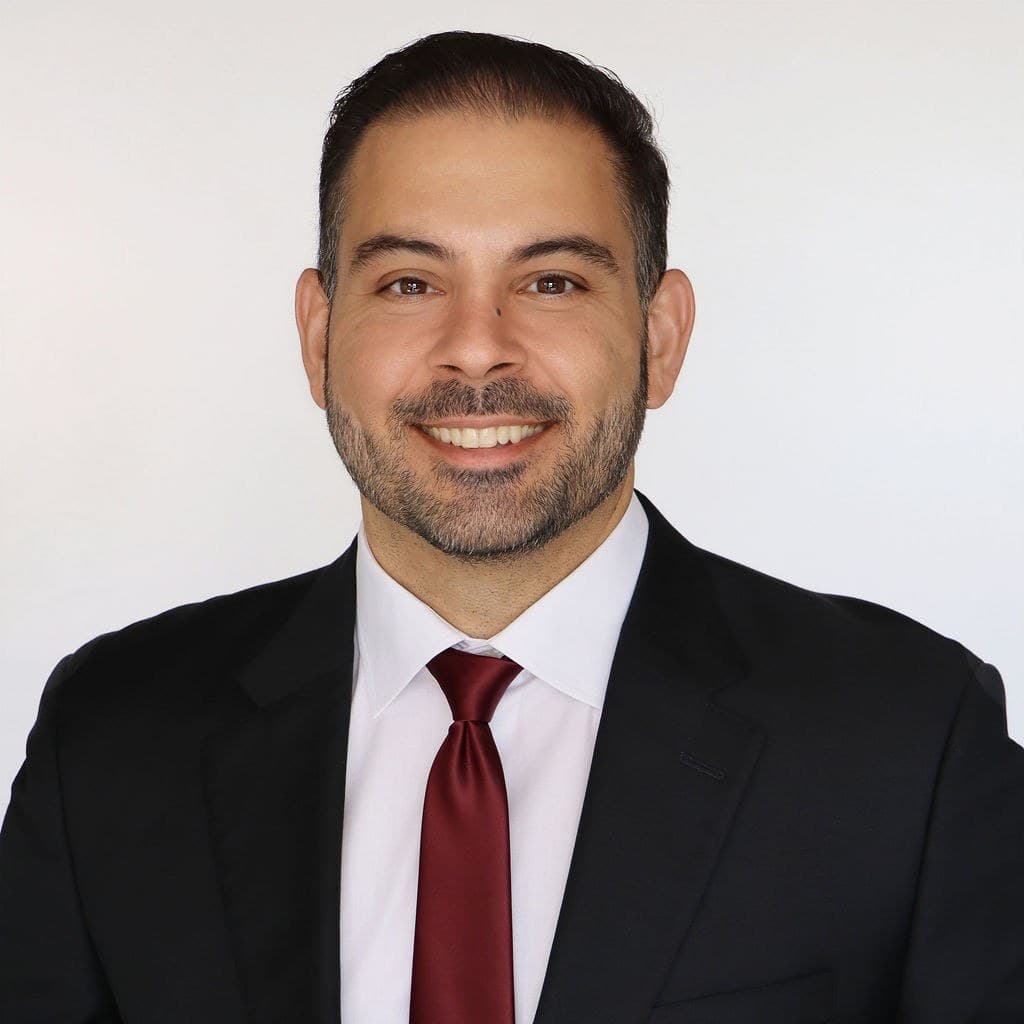
Eman Yazdchi, Esq., Certified Specialist in Workers' Compensation Law, California Board of Legal Specialization, State Bar of California.


California Board of Legal Specialization, State Bar of California
California Board of Legal Specialization, State Bar of California
- 14+
- Years of Practice
- 2,000+
- Cases handled over 14+ years
- $50M+
- Recovered over 14+ years
- 3
- Languages: English, Español, Farsi
Past results do not guarantee, warrant, or predict future cases. Each case is different and results depend on specific facts and circumstances.
Prepared by Yazdchi Law
If you were hurt on the job in Little Tokyo, you have real rights, and you do not have to face the insurance company alone.
A housekeeper at the Doubletree by Hilton who strained her shoulder turning mattresses. A sushi chef at Japanese Village Plaza with a deep knife laceration. An exhibit installer at the Japanese American National Museum who fell from overhead rigging. California workers' compensation covers all of them. It covers you too.
Here is what that means in plain terms. Your medical care is paid in full from the date of injury. While you cannot work, you receive two-thirds of your regular wages. If the damage lasts, you get a cash award on top of that. You pay nothing out of pocket, ever.
Here is what to do right now:
- Tell your supervisor in writing. A text or email is fine. Say "I was hurt at work" and give the date.
- Ask for the DWC-1 claim form. Your employer must hand it over within one working day. If they stall, call (661) 273-1780. That stall can be a violation on its own.
- See a doctor and say the injury is work-related. Put the cause on the record. Do not let the insurer's doctor examine you first.
You have one year from the injury date to file. If your injury built up over time, that clock starts the day a doctor first connects your condition to your job. Do not wait.
Eman Yazdchi is a Certified Specialist in Workers' Compensation Law, certified by the California Board of Legal Specialization, State Bar of California (CA Bar #285231). He handles Little Tokyo hotel, restaurant, and museum claims at the Los Angeles WCAB.
Do you have a Little Tokyo workers' comp case?
If a Little Tokyo job caused or worsened your injury, you very likely have a valid claim. Fault does not matter. Coverage does not depend on your immigration status.
Most hurt workers wonder the same thing: do I really qualify? The answer is almost always yes. California workers' compensation is a no-fault system. You do not have to prove your employer was careless. You only have to show that the injury happened in the course of your employment.
That covers a wide range of situations in Little Tokyo. A housekeeper at the Miyako Hotel whose back gave out flipping mattresses on a long shift. A prep cook burned during the dinner rush inside Weller Court. A retail clerk who slipped on a wet courtyard surface at Japanese Village Plaza. A security officer who tripped in the loading bay of the Geffen Contemporary at MOCA.
Sudden accidents and slow build-up injuries both count. A wrist worn down by years of sushi knife work is covered. So is a single bad fall on Astronaut E.S. Onizuka Street. Coverage extends to every employee, regardless of immigration status. If your job is in Little Tokyo, so is your claim.
What benefits can you receive?
A successful claim pays your full medical costs, two-thirds of your wages while you are off work, and a cash award for lasting injury. No copays. No deductibles.
Labor Code §4600: "Medical, surgical, chiropractic, acupuncture, and hospital treatment, including nursing, medicines, medical and surgical supplies, cures, and orthotic and prosthetic devices and accessories, as is reasonably required to cure or relieve the injured worker from the effects of his or her injury shall be provided by the employer."
That means the insurer covers your emergency care, specialist visits, surgery, physical therapy, imaging, and prescriptions. You never pay a copay or deductible. The insurer also reimburses mileage to and from medical appointments.
While you are off work, temporary disability pays two-thirds of your average weekly wage. That amount is capped at the state weekly maximum. It can run for as long as 104 weeks within five years of the injury date.
Once your condition has stabilized, a doctor rates the lasting damage as a percentage. For injuries since 2013, the law applies a 1.4 multiplier and then adjusts the result based on your age and how physically demanding your job is. Hotel housekeeping and restaurant kitchen work typically shift the adjustment upward because of the heavy physical load those jobs carry.
If you cannot return to your old job and your employer cannot offer regular work, you may qualify for a Supplemental Job Displacement Benefit voucher, worth up to $6,000 for approved retraining or education.
How much is a Little Tokyo workers' comp claim worth?
It depends on your disability rating, your age, your job, and your future care needs. No honest lawyer quotes a number without reviewing your records first.
Here is a general sense of how awards range across injury types in California. These are statewide reference figures, not a promise about your case.
| Injury severity | Typical permanent-disability rating | Approximate value range |
|---|---|---|
| Minor soft-tissue strain, full recovery | 0 to 5% | $3,000 to $15,000 |
| Moderate injury, some lasting limitation | 10 to 20% | $30,000 to $75,000 |
| Serious injury or single-level spinal fusion | 25 to 40% | $80,000 to $175,000 |
| Severe or multi-level spinal involvement | 45 to 70% | $180,000 to $400,000 |
| Catastrophic (spinal cord, TBI, amputation) | 70 to 100% | $500,000 to $5,000,000+ |
These are general California ranges, not a prediction. Your actual award depends on your disability rating, age, occupation, and future medical care. Past results do not guarantee future outcomes.
Yazdchi Law has recovered $5,000,000 for a catastrophic spinal cord injury and $1,500,000 for a cervical spine injury. Past results do not guarantee future outcomes. For a free, honest read on your claim, call (661) 273-1780.
What if the insurer denies your claim?
A denial is not the end. You still get up to $10,000 in care while they decide. You have 30 days to appeal a denied treatment.
After you file the DWC-1 form, the insurer has 90 days to accept or deny your claim. Miss that window, and the law presumes your injury is covered. During those 90 days, up to $10,000 in medical care is owed immediately. The insurer cannot freeze your treatment while they investigate.
If they deny a specific treatment your doctor ordered, such as hand surgery after a knife laceration, you can appeal through Independent Medical Review within 30 days. An independent doctor reviews your records against state treatment guidelines and either upholds or overturns the denial.
If your condition later turns out worse than the original rating, you can ask to reopen the case within five years of the injury date.
If your employer fires you, cuts your hours, or changes how they treat you after you file, that is illegal. The anti-retaliation law gives you the right to get your job back, recover your lost pay, and add a penalty of up to $10,000 to your award.
How long do you have to file in Little Tokyo?
Report the injury within 30 days. File your formal claim within one year. For a build-up injury, the clock starts the day a doctor connects your condition to your job.
Missing a deadline gives the insurer a legal opening to deny everything. Two clocks run, and both matter.
| What you must do | Deadline | Law |
|---|---|---|
| Tell your employer in writing | Within 30 days of injury | §5400 |
| File the DWC-1 claim form | Within 1 year of injury | §5405 |
| Build-up injury clock starts | When a doctor links condition to work | §5412 |
| Insurer must accept or deny | 90 days from filing | §5402 |
| Appeal a denied treatment | 30 days from the denial | §4610.5 |
Not sure where your clock stands? A free call can sort it out: (661) 273-1780.
Results in cases like this
Every case is different. Past results do not guarantee, warrant, or predict a similar outcome.
$5,000,000
Catastrophic spinal cord injury
$1,500,000
Cervical spine injury
$425,000
Slip and fall accident
Find Out What Your Little Tokyo Case May Be Worth
Two minutes. No fee unless we win; costs may apply.
Question 1 of 5
What type of injury do you have?
Not ready to fill this out? Just call (661) 273-1780 and we’ll ask the same questions by phone.
Free Consultation
Call or send the short form. We review your case, explain your rights, and outline your options. Free, no obligation.
We Build Your Case
We gather medical evidence, handle the insurance company, and file all the workers' comp court (WCAB) paperwork for you.
We Pursue Every Benefit
Medical care, lost wages, and permanent disability benefits. No fee unless we win your case; costs may apply.
Little Tokyo claims and the Los Angeles WCAB
Little Tokyo claims are heard at the WCAB Los Angeles office at 320 W 4th Street, less than half a mile away. Yazdchi Law files and tries cases there regularly, and coordinates Japanese-language interpreters at no cost to the worker.
Where do Little Tokyo claims get heard?
The Los Angeles district office of the Workers' Compensation Appeals Board sits at 320 W 4th Street, just west of Little Tokyo's Alameda Street border. Yazdchi Law files Applications, attends Mandatory Settlement Conferences, and tries cases at that office. For Little Tokyo workers, the commute to a hearing is short. For us, the venue is familiar ground.
Which Little Tokyo jobs produce the most claims?
The neighborhood's workforce is dense and physical. Hotel housekeeping and maintenance at the Doubletree by Hilton Little Tokyo and the Miyako Hotel drive a significant share of claims. Room turnovers involve repetitive lifting, pushing heavy carts, and sustained bending. Cumulative shoulder and back injuries are a recognized pattern at both properties.
Sushi and ramen kitchen workers on 1st Street and inside Japanese Village Plaza face a different injury profile. Yanagiba and deba blades are razor sharp, and deep lacerations to the hand and fingers happen quickly. Burns from hot oil, boiling broth, and flaming sake presentations occur during busy dinner service. Repetitive wrist and shoulder strain from continuous cutting and plating builds up across months and years of the same motion.
Exhibit installers at the Japanese American National Museum and at the Geffen Contemporary at MOCA handle overhead rigging, heavy art crates, and forklifts in confined gallery spaces. Fall injuries and crush injuries are documented risks in that environment. Rigging contractors and equipment manufacturers may carry separate liability, and we review that angle on every installation case.
Japanese Village Plaza and Weller Court retail clerks carry stock and navigate slippery open-air courtyard surfaces. In wet weather, slip-and-fall claims from those surfaces are a recurring pattern in the neighborhood.
The JANM also employs visitor-services staff who are on their feet for full shifts on hard floors, with repetitive ankle, knee, and lower-back strain a common cumulative-trauma issue.
Japanese-language workers and interpreter services
A significant share of Little Tokyo's workforce speaks Japanese as a primary language. The WCAB provides certified court interpreters for hearings, depositions, and medical-legal evaluations at no cost to the worker. Yazdchi Law coordinates interpreter scheduling for QME exams and WCAB appearances in Los Angeles. Accuracy during a medical evaluation matters greatly. We watch interpreter quality closely on Japanese-language cases.
How tip income affects your wage benefits
Temporary disability and permanent disability payments are both based on your average weekly wage. That figure must include regular tips and gratuities, not just base hourly pay. Carriers often leave tip income out of the calculation, which lowers both weekly checks and the final award. Yazdchi Law requests credit card receipts and tip-credit records to establish the correct number from the start.
Why Little Tokyo workers choose Yazdchi Law
Eman Yazdchi is a Certified Specialist who appears regularly at the Los Angeles WCAB. He has represented hundreds of California workers and his office handles Japanese-language cases.
Eman Yazdchi is a Certified Specialist in Workers' Compensation Law, certified by the California Board of Legal Specialization, State Bar of California (CA Bar #285231). Only a small fraction of California attorneys hold this credential. He has represented hundreds of injured California workers and appears regularly at the Los Angeles WCAB district office at 320 W 4th Street.
Attorney fees in California workers' compensation are set by the WCAB judge, typically 12 to 15 percent of your award or settlement. You pay nothing up front, and you owe no fee unless there is a recovery. A Miyako Hotel housekeeper and a JANM exhibit installer get the same quality of representation. More about Eman Yazdchi. Verify his State Bar profile.
Nearby neighborhoods we serve
- Chinatown workers' comp
- Boyle Heights workers' comp
- Downtown LA workers' comp
- Arts District workers' comp
Injured at work in Little Tokyo? Talk it through for free.
Most claims must be filed within one year under Labor Code section 5405. A free call tells you where your clock stands.
Frequently Asked Questions
Do I pay anything up front to hire Yazdchi Law?
No. California workers' compensation attorneys are paid only if they recover money for you. The fee is set by the WCAB judge, usually 12 to 15 percent of your award or settlement. You never pay by the hour, and you owe nothing if there is no recovery. That structure means a hotel housekeeper and a museum exhibit installer get the same quality of representation regardless of how much money they have in the bank.
Can my employer fire me for filing a workers' comp claim?
No. California law makes it illegal to fire, cut hours, or otherwise punish a worker for filing a workers' comp claim. If that happens to you, you have the right to get your job back, recover your lost wages, and collect a penalty added to your award. Notify us right away if your supervisor or HR department changes how they treat you after you report the injury. Timing matters on retaliation claims.
What if I am undocumented and work at a Little Tokyo hotel or restaurant?
You are covered. California workers' compensation protects every employee regardless of immigration status. Your right to medical care, temporary disability pay, and a permanent disability award does not depend on your documents. Your employer cannot threaten to contact immigration authorities because you filed a claim. That threat is its own violation of California law. Yazdchi Law represents undocumented Little Tokyo hotel and restaurant workers at the Los Angeles WCAB, and your information is not shared with the insurance carrier or the employer.
Are sushi restaurant workers covered by workers' comp?
Yes. Sushi chefs, prep cooks, dishwashers, and servers are employees of the restaurant operator and covered under California workers' compensation law. Knife lacerations from yanagiba and deba blades, burn injuries from hot oil and sake, and repetitive wrist strain from continuous cutting and plating are all compensable. Tendon and nerve injuries in the hand are time-sensitive, and we push for immediate medical authorization so repair does not get delayed by the insurer's investigation process.
What if I am a JANM or Geffen Contemporary exhibit installer who was injured on the job?
You are covered as an employee of the museum or of the contracted art-handling firm. Falls from overhead rigging, heavy crate-handling injuries, and pinch-point hand injuries all qualify as workers' comp claims. We also review whether a separate claim against a rigging contractor or equipment manufacturer is available outside the workers' comp system. Those two paths can run at the same time, and a third-party claim is sometimes worth more than the workers' comp award alone.
How long will my Little Tokyo workers' comp case take?
Median time from filing an Application to a first WCAB hearing in Los Angeles runs more than seven months. Contested permanent disability cases commonly take 18 to 24 months from the injury date to a final award. Yazdchi Law pushes for an early Findings and Award when the medical record supports it. When a lump-sum settlement fits the worker's situation better, we use a Compromise and Release to close the file and get money in your hands faster.
Does Yazdchi Law work with Japanese-language interpreters?
Yes. The WCAB provides certified court interpreters for hearings, depositions, and medical-legal evaluations at no cost to the worker. Yazdchi Law coordinates interpreter scheduling for QME exams and WCAB appearances at the Los Angeles office. Accuracy during a medical evaluation can determine whether the insurer accepts or disputes the extent of your injury. We watch interpreter quality closely on Japanese-language cases and raise concerns with the WCAB when the interpreter's accuracy is in question.
How are tip wages counted when calculating my disability pay?
Both temporary disability and permanent disability payments are based on your average weekly wage. That figure must include regular tips and gratuities, not just your base hourly pay. Insurance carriers often leave tip income out of the wage calculation, which lowers your weekly benefit checks and reduces the final permanent disability award. Yazdchi Law requests credit card receipts and tip-credit records to establish the correct average weekly wage. Getting the number right from the start can mean thousands more on a final award after a serious hand or wrist recovery.
Free case evaluation
Get your free Little Tokyo case evaluation
Three fields. We respond within one business day.
Talk to a Certified Specialist
Certified Specialist in Workers' Compensation Law, California Board of Legal Specialization, State Bar of California.
Takes 30 seconds. No obligation.
I am glad and so very pleased...he made happen what no other attorney could do. So far he has proven his weight in gold.
Eman at Yazdchi Law was extremely professional, responsive, and supportive at all times. He and his staff exceeded all of my expectations.
Client testimonials. Testimonials are not a guarantee, warranty, or prediction of the outcome of your case.