
Midway City, California · Workers' Compensation
Workers' Comp Lawyer in Midway City, California
Hurt at work in Midway City? Workers' comp pays for medical care and part of your lost pay while you heal. A free call tells you where you stand.
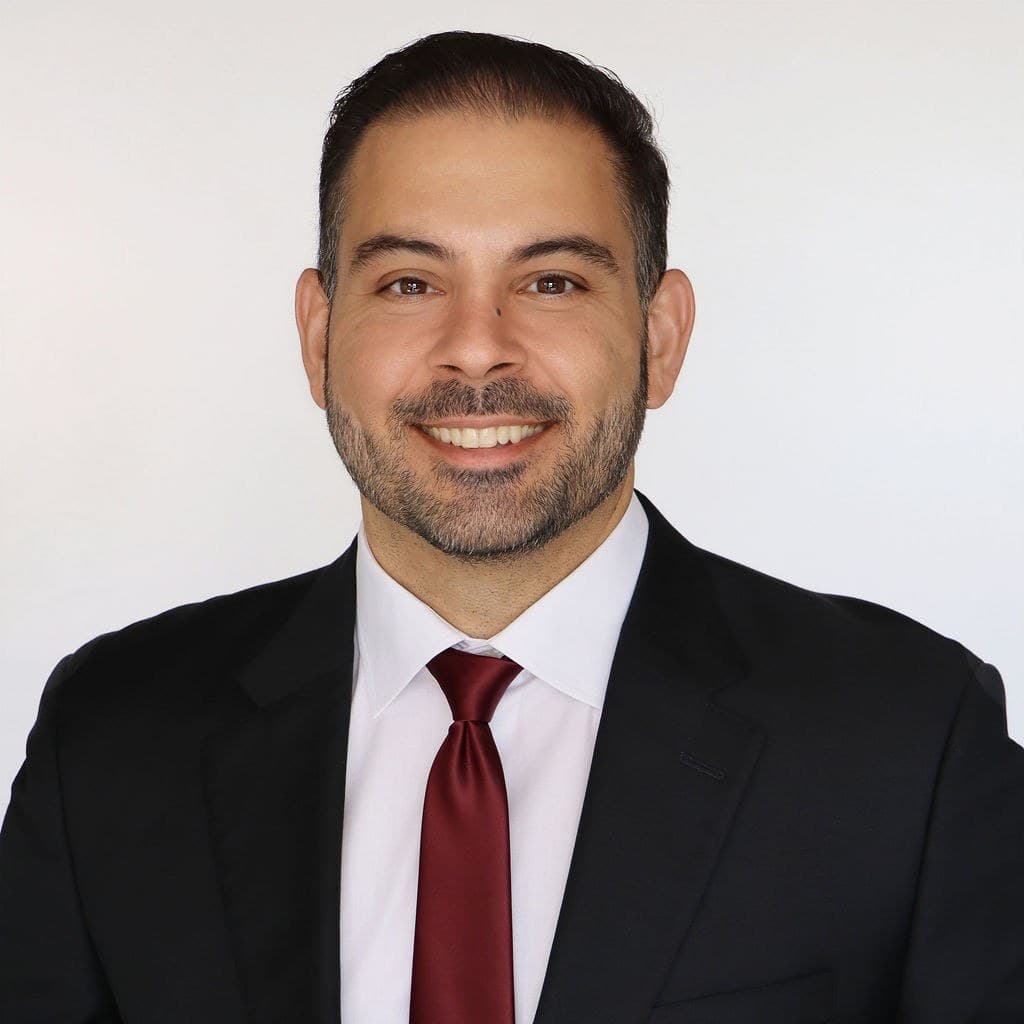
Eman Yazdchi, Esq., Certified Specialist in Workers' Compensation Law, California Board of Legal Specialization, State Bar of California.


California Board of Legal Specialization, State Bar of California
California Board of Legal Specialization, State Bar of California
- 14+
- Years of Practice
- 2,000+
- Cases handled over 14+ years
- $50M+
- Recovered over 14+ years
- 3
- Languages: English, Español, Farsi
Past results do not guarantee, warrant, or predict future cases. Each case is different and results depend on specific facts and circumstances.
Prepared by Yazdchi Law
If you were hurt at work in Midway City, you do not have to deal with the insurance company on your own. California law gives you the right to medical care, wage replacement, and a permanent disability award. Using those rights costs you nothing today.
Midway City workers take on some of the toughest physical jobs in Orange County. A mechanic at a Beach Boulevard body shop who strains his shoulder pulling a transmission. A packaging worker on Edinger Avenue whose wrists break down from years of the same repetitive motion. A tire technician on Bolsa Avenue whose lower back gives out from mounting heavy truck tires every shift. All of them have real rights under California law. That is true whether the injury happened in one moment or wore in slowly over time.
The law covers every worker, including those who are undocumented. A Bolsa Avenue detail worker and a Westminster-border restaurant cook stand on equal footing under California workers' compensation law.
Three things to do right now:
- Tell your supervisor in writing. A text or email works. Include the date and that you were hurt at work.
- Ask for the DWC-1 claim form. Your employer must give it to you within one working day. If they stall, call (661) 273-1780.
- See a doctor and connect the injury to your job. Getting the cause on record is the most important step you can take.
You have one year to file in most cases. For injuries that develop slowly over time, that deadline may start later than you expect. Call (661) 273-1780 for a free review of where you stand.
Do you have a Midway City workers' comp case?
If the injury happened while you were doing your job, you very likely have a valid claim. Fault does not matter under California law.
California workers' comp is a no-fault system. You do not need to prove your employer did something wrong. You only need to show the injury arose out of and in the course of your work. That rule applies to every Midway City worker, from a parts runner at a Hoover Street dealership to a cook along the Westminster border.
California covers both types of work injury. A specific injury happens on one day: a tire slips and crushes your hand, a customer pushes you, a ladder collapses. A cumulative injury builds up over repeated exposures: a tire technician's hearing fades from years of impact-wrench noise, or a packaging worker on Edinger Avenue develops carpal tunnel from a decade of the same hand motion. Both types are fully covered.
Your immigration status does not affect your right to file. California law extends coverage to every worker regardless of immigration status. Your employer cannot threaten to report you for using your legal rights. That threat is a separate violation of California law.
What benefits can you receive?
You get all your medical care paid at no cost, two-thirds of your wages while you recover, a cash award for lasting damage, and a training voucher if you cannot return to your old job.
Full medical care. The law requires the insurer to pay for all treatment your injury needs. That includes emergency care, surgery, physical therapy, imaging, and prescriptions. You pay no copays and no deductibles.
Temporary disability payments. While you cannot work, you receive two-thirds of your average weekly wage up to the state weekly cap. Those payments continue for as long as 104 weeks within a five-year period. They stop when you return to work or reach the cap.
Permanent disability award. Once your condition has stabilized, a doctor rates the lasting damage as a whole-person impairment percentage. That percentage sets how many weeks of additional payments you receive.
Mileage reimbursement. Every drive to a medical appointment earns you reimbursement at the state rate.
Supplemental Job Displacement Voucher. If your employer cannot offer you a job within your physical limits, you may receive a training voucher worth up to $6,000 to build new skills.
How much is a Midway City workers' comp claim worth?
It depends on your lasting disability, your age, the physical demands of your occupation, and what future care you will need. No honest number exists without a review of your specific case.
California calculates permanent disability using a set process for injuries since 2013. A doctor scores the lasting damage as a whole-person impairment percentage. The law then applies a 1.4 multiplier to that score. After that, the result is adjusted based on your age and how physically demanding your occupation is. Heavier work generally earns a higher adjustment. The final percentage determines how many weeks of weekly payments you receive.
Yazdchi Law has recovered $5,000,000 for a catastrophic spinal-cord injury and $1,500,000 for a cervical-spine case. Past results do not guarantee future outcomes.
These are general California ranges, not a prediction. Your actual award depends on your disability rating, age, occupation, and future medical care. Past results do not guarantee future outcomes.
| Injury severity | Typical permanent-disability rating | Approximate value range |
|---|---|---|
| Minor strain or sprain, full recovery expected | 0 to 8% | $3,000 to $12,000 |
| Moderate injury, no surgery required | 8 to 20% | $12,000 to $35,000 |
| Serious injury or single-level spinal fusion | 25 to 45% | $40,000 to $90,000 |
| Severe or multi-level spinal injury | 45 to 70% | $90,000 to $200,000 |
| Catastrophic: spinal cord injury or TBI | 70 to 100% | $250,000 and above |
What if the insurer denies your claim?
A denial is not the end of your case. You have the right to appeal, to an independent medical review, and to a hearing before a WCAB judge.
After you file your claim form, the insurer has 90 days to accept or deny. If they miss that window, California law treats your injury as covered. During those 90 days, the insurer must still authorize up to $10,000 in medical care. They cannot freeze your treatment while they investigate.
If the insurer rejects a surgery or procedure your doctor ordered, you can request an independent medical review. That request must go in within 30 days of the denial. A separate physician reviews your records against the state's treatment guidelines. That doctor's decision is binding on the insurer.
Insurers often try to cut a claim by arguing part of your disability comes from a prior condition or normal aging. By law, they must prove that argument with real medical evidence. They need a specific explanation of how much is non-work-related and exactly why. A doctor who points at an old MRI without a detailed analysis does not meet the legal standard. We hold them to that standard on every claim.
If your employer fires you, cuts your pay, or demotes you for filing a claim, that is illegal retaliation under §132a. You can recover your job, your lost wages, and a penalty of up to $10,000 added to your award.
How long do you have to file in Midway City?
Report the injury within 30 days and file your formal claim within one year. For a cumulative injury, the clock may start later than the last day you worked.
Two deadlines protect your case, and missing either gives the insurer an opening. Report the injury to your employer within 30 days. File your formal workers' comp claim within one year. For an injury that built up over repeated work exposures, that one-year clock starts the day you first felt the disability and a doctor connected it to your job.
| What you need to do | Deadline | Law |
|---|---|---|
| Report to your employer in writing | 30 days from injury | §5400 |
| File your workers' comp claim | 1 year from injury | §5405 |
| Cumulative-trauma injury date | When you knew work caused it | §5412 |
| Insurer must accept or deny | 90 days from filing | §5402 |
| Appeal a denied treatment | 30 days from denial | §4610.5 |
Not sure where your deadline stands? Call (661) 273-1780 for a free review.
Results in cases like this
Every case is different. Past results do not guarantee, warrant, or predict a similar outcome.
$5,000,000
Catastrophic spinal cord injury
$1,500,000
Cervical spine injury
$425,000
Slip and fall accident
Find Out What Your Midway City Case May Be Worth
Two minutes. No fee unless we win; costs may apply.
Question 1 of 5
What type of injury do you have?
Not ready to fill this out? Just call (661) 273-1780 and we’ll ask the same questions by phone.
Free Consultation
Call or send the short form. We review your case, explain your rights, and outline your options. Free, no obligation.
We Build Your Case
We gather medical evidence, handle the insurance company, and file all the workers' comp court (WCAB) paperwork for you.
We Pursue Every Benefit
Medical care, lost wages, and permanent disability benefits. No fee unless we win your case; costs may apply.
Why Midway City workers choose Yazdchi Law
Certified Specialist Eman Yazdchi appears regularly at the Long Beach WCAB and has represented hundreds of California workers across Orange County industries.
Eman Yazdchi is a Certified Specialist in Workers' Compensation Law, certified by the California Board of Legal Specialization, State Bar of California (CA Bar #285231). Only a small fraction of California attorneys earn that credential. He has represented hundreds of injured California workers. He appears regularly at the Long Beach WCAB, which handles cases from Midway City and the surrounding Central Orange County communities.
The firm serves Spanish-speaking clients. Most of Midway City's auto-repair and light-industrial workforce communicates in Spanish as a first language. The Long Beach WCAB provides interpreters at hearings and medical exams at no cost to the worker.
There is no upfront cost. Attorney fees in California workers' comp are set by a WCAB judge, typically 12 to 15 percent of the final award or settlement. If there is no recovery, you owe nothing. More about Eman Yazdchi. Verify his State Bar profile.
Labor Code §4600: "Medical, surgical, chiropractic, acupuncture, and hospital treatment, including nursing, medicines, medical and surgical supplies, crutches, and apparatus, including orthotic and prosthetic devices and services, that is reasonably required to cure or relieve from the effects of the injury shall be provided by the employer."
The Long Beach WCAB
Workers' comp cases from Midway City are heard at the Long Beach district office of the WCAB, at 300 Oceangate. That is the verified venue where Yazdchi Law appears for Central Orange County clients. Spanish-language interpreters are available at hearings, depositions, and medical exams. Eman Yazdchi appears there regularly on auto-repair claims, chemical exposure cases, packaging and assembly cumulative trauma, and distribution warehouse injuries from the Bolsa Chica corridor.
Where Midway City workplace injuries happen
- Beach Boulevard auto-repair corridor: independent mechanical shops, paint-and-body operators, and tire-and-brake centers where crush injuries, solvent exposure, and back and shoulder strain are common.
- Bolsa Avenue commercial belt: used-car dealerships, detail shops, and parts distributors where repetitive lifting and chemical exposure strain the back, shoulders, and lungs.
- Edinger Avenue light-industrial zone: packaging, assembly, and small-parts manufacturing where carpal tunnel, elbow tendinitis, and shoulder impingement build up over time.
- Westminster-border restaurant and retail strip: kitchens where burns, wet-floor falls, and repetitive-motion claims occur regularly.
- Bolsa Chica logistics edge: last-mile delivery and distribution warehouses where back injuries, forklift incidents, and loading-dock falls are common.
Common injury types from Midway City
Auto-mechanic crush, strain, and laceration injuries from undercarriage and engine work. Paint-and-body chemical exposure, including isocyanate-paint occupational asthma from spray booths and sanding-dust respiratory disease. Tire-shop noise-induced hearing loss from years of impact-wrench use. Cumulative upper-extremity injuries in Edinger Avenue packaging and assembly, including carpal tunnel syndrome and rotator-cuff disease. Forklift and loading-dock falls in the Bolsa Chica distribution corridor. Kitchen burns and wet-floor falls along the Westminster border. Our bilingual team handles Spanish-language claims throughout.
Emergency care near Midway City
For a serious work injury, call 911 first. MemorialCare Orange Coast Medical Center, on Newhope Street in Fountain Valley, is the closest full-service emergency department. Hoag Hospital in Newport Beach is a regional option for trauma and surgical cases. For catastrophic injuries, UCI Medical Center on Chapman Avenue in Orange is the Level I regional trauma center for the area. MemorialCare Long Beach Medical Center has a burn unit that serves chemical and thermal injury cases from Midway City's paint and auto-repair operations.
Injured at work in Midway City? Talk it through for free.
Most claims must be filed within one year under Labor Code section 5405. A free call tells you where your clock stands.
Frequently Asked Questions
Do I pay anything up front, and how does the contingency fee work?
Can my employer fire me for filing a workers' comp claim in Midway City?
What if I am undocumented? Can I still file a workers' comp claim?
How long does a Midway City workers' comp claim usually take?
Can I choose my own doctor?
My injury built up over years, not from one accident. Is it still covered?
What if the insurer denies my claim or refuses to approve my surgery?
My employer is a small shop on Beach Boulevard. Do they have to carry workers' comp?
Free case evaluation
Get your free Midway City case evaluation
Three fields. We respond within one business day.
Talk to a Certified Specialist
Certified Specialist in Workers' Compensation Law, California Board of Legal Specialization, State Bar of California.
Takes 30 seconds. No obligation.
A fighting force both consistent and compassionate on a scale’s a 5 all around.
Very thankful for everything they did for us. Always responsive, reassured us every step of the way and obtained a great result.
Client testimonials. Testimonials are not a guarantee, warranty, or prediction of the outcome of your case.