
Miracle Mile, California · Workers' Compensation
Miracle Mile Workers' Compensation Lawyer
Hurt at work in Miracle Mile? Workers' comp pays for medical care and part of your lost pay while you heal. A free call tells you where you stand.
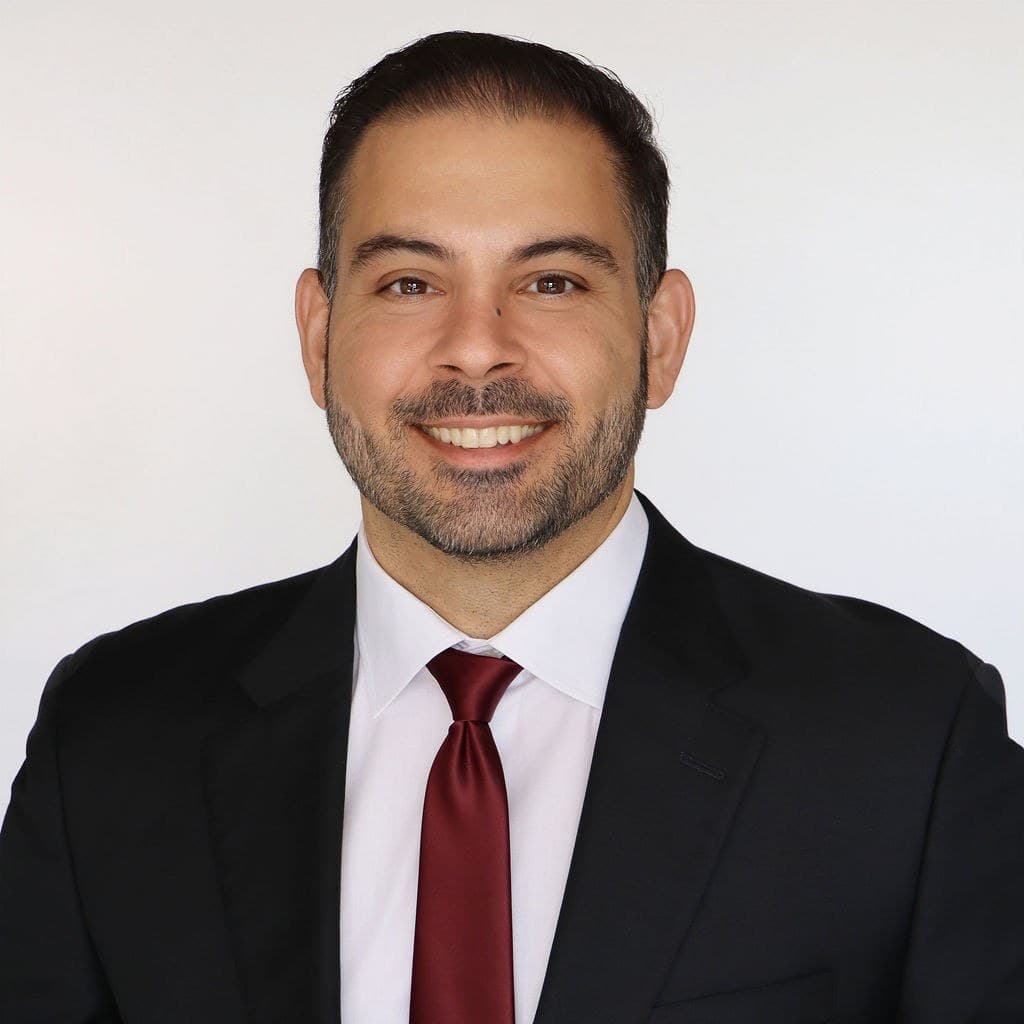
Eman Yazdchi, Esq., Certified Specialist in Workers' Compensation Law, California Board of Legal Specialization, State Bar of California.


California Board of Legal Specialization, State Bar of California
California Board of Legal Specialization, State Bar of California
- 14+
- Years of Practice
- 2,000+
- Cases handled over 14+ years
- $50M+
- Recovered over 14+ years
- 3
- Languages: English, Español, Farsi
Past results do not guarantee, warrant, or predict future cases. Each case is different and results depend on specific facts and circumstances.
Prepared by Yazdchi Law
If you were hurt on the job in Miracle Mile, you have real rights. You do not have to face the insurance company alone.
You may be entitled to full medical care paid by the insurer, two-thirds of your regular wages while you cannot work, and a cash award if the injury causes lasting damage. That is true whether you slipped hauling an art crate at LACMA, strained your back in a Wilshire office tower, or were hurt near the La Brea Tar Pits construction zone. You have one year to file. Acting quickly protects your claim.
Three steps to take right now:
- Tell your supervisor in writing. A text or email works. Say where you were hurt and when.
- Ask for the DWC-1 claim form. Your employer must give it to you within one working day.
- See a doctor and say the injury is from work. Getting that connection on the record early is critical.
Eman Yazdchi is a Certified Specialist in Workers' Compensation Law, certified by the California Board of Legal Specialization, State Bar of California (CA Bar #285231). He handles every Miracle Mile file personally and appears at the Los Angeles WCAB. Call (661) 273-1780 for a free case review.
Do you have a Miracle Mile workers' comp case?
If you were hurt doing your job in Miracle Mile, you very likely qualify. Fault does not matter, and immigration status does not matter either.
California workers' comp is a no-fault system. You do not need to prove your employer did anything wrong. You just need to show that the injury happened at work, or because of your work. A single accident counts. So does an injury that built up over months or years of repeated motion.
Museum Row and the Wilshire corridor run on physically demanding work every day. An exhibit installer rigging a heavy sculpture for a LACMA traveling show. A security officer patrolling the Petersen Automotive Museum parking structure on back-to-back shifts. An AV technician pulling cable runs at SAG-AFTRA on Wilshire. A kitchen worker gripping hot pans on the 6th Street restaurant strip. A construction laborer placing concrete forms for the Purple Line extension at Wilshire and Fairfax. Every one of these workers is covered.
If you are undocumented, you are still protected. California extends every workers' comp right to every worker, regardless of immigration status. An undocumented custodian at the Academy Museum has the same right to paid medical care and wage replacement as any full-time documented employee.
What benefits can you receive?
Medical care at no cost to you, two-thirds of your wages while you are out, a cash award for lasting damage, travel reimbursement, and a retraining fund if you cannot return to the same type of work.
Here is what California law gives you:
- Medical care: The insurer pays for all treatment your injury needs, from the date it happened. Specialists, imaging, surgery, physical therapy, prescriptions, and medical devices. No copay. No deductible.
- Temporary disability: While you are off work, you receive two-thirds of your average weekly wage, up to the state cap, for as long as 104 weeks within five years. If shoulder surgery sidelines an Academy Museum AV tech for four months, a wage check arrives every two weeks during recovery.
- Permanent disability: If the injury leaves lasting damage after your treatment ends, a doctor rates that damage as a percentage. That percentage sets how many weeks of cash payments you receive.
- Mileage: Every trip to a doctor, pharmacy, or treatment center is reimbursed at the state rate.
- Retraining voucher: If your employer cannot offer you the same category of work, you may qualify for a Supplemental Job Displacement voucher worth up to $6,000 toward school or retraining.
You should not have to pay any of this out of your own pocket. The law puts that obligation on the insurer.
How much is a Miracle Mile workers' comp claim worth?
It depends on lasting damage, your age, how physical your job is, and what future care you will need. No honest attorney gives a number without reviewing your file first.
The main driver of claim value is your permanent disability rating. Once your injury reaches maximum improvement, a doctor scores the lasting damage as a percentage. For injuries since January 1, 2013, the rating law then adjusts that score based on your age and your occupation. A long-tenured exhibit installer with years of overhead rigging often lands at a higher adjusted rating. A younger desk worker with a similar diagnosis may land lower.
Insurers often try to cut the rating. They argue that age or a prior condition, not your job, caused part of the damage. This is called apportionment. By law, their doctor must provide a real medical explanation of the how and why. A vague reference to "normal wear" does not meet the standard. In a 2005 WCAB en banc ruling, Escobedo v. Marshalls confirmed that bare conclusions do not qualify. We hold every insurer doctor to that standard on every Miracle Mile case.
The table below shows general California ranges to give you a sense of scale.
| Injury severity | Typical PD rating | Approximate value range |
|---|---|---|
| Minor strain or sprain, full recovery | 0 to 5% | $0 to $5,000 |
| Moderate injury, conservative care, some lasting limits | 5 to 15% | $5,000 to $40,000 |
| Serious injury or single-level fusion, significant restrictions | 15 to 30% | $40,000 to $150,000 |
| Severe injury, multi-level surgery, major work limits | 30 to 60% | $150,000 to $350,000 |
| Catastrophic: spinal cord, TBI, or amputation | 70% and above | $350,000 and above |
These are general California ranges, not a prediction. Your actual award depends on your disability rating, age, occupation, and future medical care. Past results do not guarantee future outcomes.
Yazdchi Law has recovered up to $5,000,000 for a catastrophic spinal-cord injury and $1,500,000 for a cervical-spine injury on behalf of California workers. Past results do not guarantee future outcomes. Call (661) 273-1780 for a free, honest assessment of your situation.
What if the insurer denies your claim?
A denial is not the final word. You get up to $10,000 in medical care during the investigation. You have a 30-day window to appeal a rejected treatment, and the WCAB is your next step if the whole claim is denied.
After you file the DWC-1 form, the insurer has 90 days to accept or deny your claim. That is a firm deadline. During those 90 days, you are entitled to up to $10,000 in medical treatment right away. The insurer cannot put your care on hold while it investigates.
If the insurer says no to a surgery or procedure your doctor ordered, such as a shoulder repair or an MRI, you can challenge that denial through Independent Medical Review within 30 days. An independent physician reviews your file against the state treatment guidelines and issues a binding decision the insurer must follow.
If the whole claim is denied, you can put the case on the Los Angeles WCAB calendar for a hearing before a judge. A judge's ruling can then be challenged through a Petition for Reconsideration, filed within 25 days of a mailed decision. Above that is a Writ of Review in the Court of Appeal, filed within 45 days. We handle every level of this process for Miracle Mile workers.
If your employer retaliates after you report an injury, such as cutting your hours or changing your schedule, you have a separate right to seek reinstatement and your lost wages back. Tell us the moment your situation at work changes after you file.
Results in cases like this
Every case is different. Past results do not guarantee, warrant, or predict a similar outcome.
$5,000,000
Catastrophic spinal cord injury
$1,500,000
Cervical spine injury
$425,000
Slip and fall accident
Find Out What Your Miracle Mile Case May Be Worth
Two minutes. No fee unless we win; costs may apply.
Question 1 of 5
What type of injury do you have?
Not ready to fill this out? Just call (661) 273-1780 and we’ll ask the same questions by phone.
Free Consultation
Call or send the short form. We review your case, explain your rights, and outline your options. Free, no obligation.
We Build Your Case
We gather medical evidence, handle the insurance company, and file all the workers' comp court (WCAB) paperwork for you.
We Pursue Every Benefit
Medical care, lost wages, and permanent disability benefits. No fee unless we win your case; costs may apply.
How long do you have to file in Miracle Mile?
Report the injury within 30 days and file your formal claim within one year. For a build-up injury, the one-year clock starts when a doctor first connects your condition to your work.
Two deadlines matter most. You must report the injury to your employer within 30 days. You must file the formal claim within one year of the injury date. For a cumulative trauma claim, the one-year window does not start at your last shift. It starts the day a doctor first says your condition came from your work. A La Brea Tar Pits field worker whose knees broke down over years of outdoor labor has until one year after that medical finding, not one year after their final day on the job.
| What you do | Deadline | Law |
|---|---|---|
| Tell your employer in writing | 30 days from injury | §5400 |
| File your claim | 1 year from injury | §5405 |
| Build-up injury clock starts | When you feel it and a doctor ties it to your work | §5412 |
| Insurer must accept or deny | 90 days from filing | §5402 |
| Appeal a denied treatment | 30 days from the denial | §4610.5 |
Not sure where your clock stands? A free call can answer that: (661) 273-1780.
Why Miracle Mile workers choose Yazdchi Law
Certified Specialist Eman Yazdchi represents Miracle Mile workers at the Los Angeles WCAB and handles every file personally from the first call through final settlement.
Eman Yazdchi is a Certified Specialist in Workers' Compensation Law, certified by the California Board of Legal Specialization, State Bar of California (CA Bar #285231). Fewer than 1 percent of California attorneys hold this credential. He has represented hundreds of injured California workers and appears regularly at the Los Angeles WCAB at 320 W 4th Street, the district office that handles all Miracle Mile claims.
Museum exhibit-installation produces some of the most complex injuries we handle. Long-tenured LACMA riggers develop shoulder labrum tears from years of overhead work. Petersen installers suffer spinal injuries from hauling heavy crates through the galleries. Security officers on Museum Row develop knee and foot damage from long shifts on concrete floors. Contract security work generates its own injury pattern: slip-and-fall incidents, vehicle strikes in parking structures, and assault claims. We have handled all of these case types at the Los Angeles WCAB and know the carriers, QME physicians, and judges involved in the Miracle Mile claim volume.
Because our fee comes entirely from what we recover for you, a janitorial worker at the Page Museum receives the same quality of representation as a producer at E! Entertainment. The office is bilingual. Language is not a barrier. More about Eman Yazdchi. Verify his State Bar profile.
Labor Code §4600: "Medical, surgical, chiropractic, acupuncture, and hospital treatment, including nursing, medicines, medical and surgical supplies, crutches, and apparatuses, including orthopedic and prosthetic devices and appliances, as may reasonably be required to cure or relieve from the effects of the injury shall be provided by the employer."
That means no copays and no deductibles. The insurer covers every necessary treatment cost from the date of your injury.
Related pages on yazdchilaw.com
Injured at work in Miracle Mile? Talk it through for free.
Most claims must be filed within one year under Labor Code section 5405. A free call tells you where your clock stands.
Frequently Asked Questions
Do I pay anything up front to hire a Miracle Mile workers' comp lawyer?
Can my employer fire me for filing a workers' comp claim?
What if I am undocumented?
How long does a Miracle Mile workers' comp claim take?
Can I choose my own doctor?
I work at LACMA or another Museum Row employer. Are museum workers covered the same way?
What if my injury built up over years of repetitive work?
What if the insurer denies my Miracle Mile claim outright?
Free case evaluation
Get your free Miracle Mile case evaluation
Three fields. We respond within one business day.
Talk to a Certified Specialist
Certified Specialist in Workers' Compensation Law, California Board of Legal Specialization, State Bar of California.
Takes 30 seconds. No obligation.
I am glad and so very pleased...he made happen what no other attorney could do. So far he has proven his weight in gold.
Eman at Yazdchi Law was extremely professional, responsive, and supportive at all times. He and his staff exceeded all of my expectations.
Client testimonials. Testimonials are not a guarantee, warranty, or prediction of the outcome of your case.