
Barstow, California · Workers' Compensation
Workers' Comp Claim Denied Lawyer in Barstow, California
Hurt at work in Barstow? Workers' comp pays for medical care and part of your lost pay while you heal. A free call tells you where you stand.
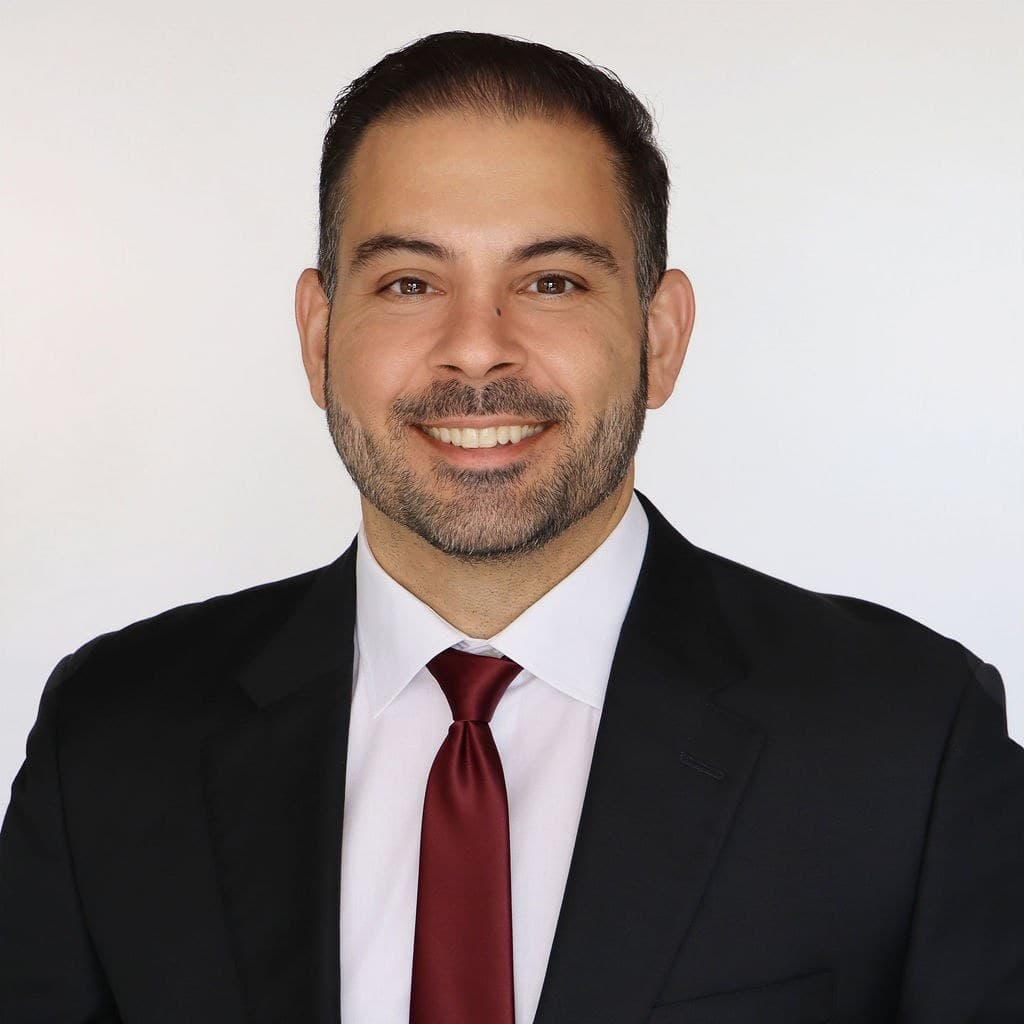
Eman Yazdchi, Esq., Certified Specialist in Workers' Compensation Law, California Board of Legal Specialization, State Bar of California.


California Board of Legal Specialization, State Bar of California
California Board of Legal Specialization, State Bar of California
- 14+
- Years of Practice
- 2,000+
- Cases handled over 14+ years
- $50M+
- Recovered over 14+ years
- 3
- Languages: English, Español, Farsi
Past results do not guarantee, warrant, or predict future cases. Each case is different and results depend on specific facts and circumstances.
Prepared by Yazdchi Law
Getting a denial letter after a work injury in Barstow hits hard. You were hurt on the job. You filed the paperwork. Now the insurance company is telling you no. That letter is not the final word. It is the beginning of the fight.
You have real legal rights here. The law is specific about what the insurer can do and how long they have to do it. Whether you work at the BNSF Classification Yard, support the base at Fort Irwin, or haul freight through the I-15 corridor, your path forward very likely exists. Both a denied claim and a denied treatment can be challenged, and both cost you nothing to start.
Do these three things right now:
- Read the denial letter carefully. It must state a specific reason. "Not work-related" and "pre-existing condition" are different fights with different responses. The reason on the letter shapes the strategy.
- Write down every date. When you were hurt, when you reported it, when you filed the DWC-1, and when the denial arrived. Deadlines matter here. Missing one can close a door permanently.
- Call us at (661) 273-1780 today. A free review takes about 15 minutes and tells you exactly where your clock stands and what your options are.
Was your Barstow workers' comp claim denied? Here is what to do.
Do not ignore the denial. Read the reason, note the date it arrived, and contact a lawyer right away. Your response window is short, and it starts the day that letter lands.
A denial letter can feel like the final word. It is not. In California, almost every denial can be challenged. The question is which path to take and how quickly you move. A BNSF rail worker, a civilian contractor at Fort Irwin, and a truck-stop logistics employee at the I-40 interchange all have the same legal tools available to them. The insurer's decision to deny is just that: a decision. It is not a court ruling, and it is not the end of your options.
The first thing to check is timing. Under California law, the insurer had 90 days after you filed your DWC-1 claim form to accept or deny. If they let that window close without acting, the law presumes your injury is covered. That presumption is powerful and worth checking immediately.
Why do insurers deny workers' comp claims?
They claim the injury was not from work, blame old wear or a prior injury, say you reported too late, or call the treatment unnecessary. Each reason has a specific legal response.
Insurance companies deny claims for a set of recurring reasons. Knowing which one they used tells you which door to open next.
- Not work-related. The insurer says the injury did not happen at work or is unconnected to your job duties. This is common for BNSF yard workers and long-haul drivers whose injuries build up over years. The insurer hopes you cannot point to a single bad day. California law covers injuries that develop over time just as much as one-day accidents.
- Pre-existing condition. They point to old X-rays, a prior injury, or normal spinal wear to argue the pain was already there. This does not end your claim. If years of coupling rail cars or vibrating in a cab seat made an old condition much worse, the law covers that added harm. The insurer has to prove exactly how much damage came from non-work causes, and they have to back it up with real medical evidence.
- Late reporting. They argue you did not notify your employer within the required time. California requires notice within 30 days. But if your injury built up slowly and you did not know it was work-related until a doctor tied the two together, the clock may not have started when the insurer claims.
- Treatment not medically necessary. Your treating doctor ordered an MRI, a nerve study, or surgery, and the insurer's review team said no. This is a separate fight with its own appeal route and its own deadline. Do not let it sit.
- Outside the scope of employment. They claim you were not doing actual job duties when you were hurt. Workers at remote Fort Irwin contract sites or on the I-40 corridor sometimes face this when injuries happen in transitional spaces or during unusual task assignments.
None of these reasons automatically closes your case. Each one has a legal response. A denial is proof the insurer chose not to pay right now. That choice can be challenged.
The 90-day rule: what §5402 means for your Barstow claim
If the insurer took more than 90 days to deny your DWC-1 claim, the law presumes your injury is covered. You are also owed up to $10,000 in medical care during the investigation period, even before they make a final decision.
This is the single most important rule on a denied claim. Once you hand your employer the DWC-1 form, a clock starts. The insurer has 90 days to either accept or deny your case. Here is the exact language in the law:
Labor Code §5402(b): "If liability is not rejected within 90 days after the date the claim form is filed with the employer, the injury shall be presumed compensable under this division. The presumption is rebuttable only by evidence discovered subsequent to the 90-day period."
That presumption is a real advantage. The insurer can try to overcome it, but only with new evidence found after the deadline closed. That is a hard bar to clear in front of a WCAB judge.
There is a second protection inside the same law. While the insurer investigates your claim, they still owe you medical care up to ten thousand dollars. They cannot freeze all treatment while they decide. If a BNSF supervisor or a Fort Irwin contractor's HR office delayed handing over the DWC-1 form, that stall does not erase your rights. We document those delays and use them as part of your case.
Denied treatment vs. a denied claim: two different fights
A denied treatment (an MRI, a surgery, an injection) goes to a medical review process first. A denied claim or a bad ruling from a judge goes to the appeals board. The deadlines are different and both are short.
These two situations look alike but follow completely different tracks. Mixing them up costs workers their deadlines.
Treatment denial: Your doctor ordered care and the insurer's Utilization Review team said no. That decision goes to Independent Medical Review, where a doctor with no financial stake reviews your file. You have 30 days from the denial to file that request. If the reviewer sides with you, the insurer must approve and pay for the care. If the reviewer sides with the insurer, you can only challenge on very narrow grounds: fraud, a conflict of interest, or clear bias. This process is fast and often more effective than going straight to a judge.
Full claim denial or a judge's ruling: If your whole claim was turned down, or a Workers' Compensation judge issued a decision you disagree with, the response goes through a Petition for Reconsideration (a written request asking the appeals board to look at the decision again). You have 25 days if the ruling was mailed, or 20 days if it was sent electronically. Miss that window and the ruling becomes final.
If the board still rules against you after reconsideration, you can take the case to the Court of Appeal through a Writ of Review, within 45 days. And if your case was already closed but your condition has gotten worse, you can ask to reopen it within five years of the original injury date.
How long do you have to respond?
Treatment denial: 30 days. A judge's ruling: 25 days by mail, 20 by electronic service. After reconsideration: 45 days to the Court of Appeal. Closed case with a worsening condition: five years from the injury date.
These deadlines are hard stops. Missing one does not just hurt your case. It can end it. Here is the full picture in one place.
| What was denied | Your appeal route | Deadline | Law |
|---|---|---|---|
| Treatment denied at Utilization Review | Independent Medical Review | 30 days from the denial | §4610.5 |
| IMR upheld the denial | Challenge only on narrow grounds (fraud, bias, conflict) | 30 days | §4610.6 |
| A judge's Findings and Award | Petition for Reconsideration | 25 days if mailed; 20 if served electronically | §5903 |
| Reconsideration denied | Writ of Review to the Court of Appeal | 45 days | §5950 |
| New or worse condition after a closed case | Petition to Reopen | Within 5 years of the injury | §5803 |
Not sure which deadline applies to your Barstow case? A free call sorts it out: (661) 273-1780.
What to do the day your denial letter arrives
Keep the letter and envelope. Note the date. Do not call the insurer to argue. Find a lawyer that same day. The response clock starts when the denial arrives, not when you feel ready to deal with it.
The worst move is to wait. Many workers spend two or three weeks trying to handle it directly with the insurer and then discover the appeal window has closed. Here is the right order of steps.
- Keep the envelope and the letter together. The postmark matters. If there is ever a dispute about when your appeal window started, the mailing date is evidence.
- Do not argue your case with the insurer by phone or email. Anything you say goes into the record and can support their denial. Let your attorney handle those conversations.
- Keep every medical appointment. A gap in care is an argument for the insurer. Every missed appointment they can point to helps them claim the injury was not serious. Keep going to your doctor and report every symptom.
- Tell your treating doctor the claim was denied. Your doctor can write a report directly rebutting the insurer's stated reason. That report is often the strongest tool in the appeal.
- Call us at (661) 273-1780. Eman Yazdchi appears at the San Bernardino WCAB on Barstow denial files regularly. A free review takes about 15 minutes and gives you a clear picture of your options.
One more thing: if your employer has treated you differently since you filed, such as cutting your hours, moving you to a worse schedule, or pressuring you to drop the claim, that is illegal. The anti-retaliation law lets you win your job back, recover your lost wages, and add a penalty of up to $10,000 to your award. Tell us right away if you see any sign of this.
Results in cases like this
Every case is different. Past results do not guarantee, warrant, or predict a similar outcome.
$5,000,000
Catastrophic spinal cord injury
$1,500,000
Cervical spine injury
$425,000
Slip and fall accident
Find Out What Your Barstow Case May Be Worth
Two minutes. No fee unless we win; costs may apply.
Question 1 of 5
What type of injury do you have?
Not ready to fill this out? Just call (661) 273-1780 and we’ll ask the same questions by phone.
Free Consultation
Call or send the short form. We review your case, explain your rights, and outline your options. Free, no obligation.
We Build Your Case
We gather medical evidence, handle the insurance company, and file all the workers' comp court (WCAB) paperwork for you.
We Pursue Every Benefit
Medical care, lost wages, and permanent disability benefits. No fee unless we win your case; costs may apply.
Denied-claim hearings at the San Bernardino WCAB: what Barstow workers need to know
Barstow denial disputes are heard at the San Bernardino district office of the Workers' Compensation Appeals Board at 464 W. 4th Street. Eman Yazdchi appears there regularly on rail, base civilian, and truck-corridor denial files.
Where are Barstow denial cases heard?
The Workers' Compensation Appeals Board hears Barstow claims at its San Bernardino district office at 464 W. 4th Street, San Bernardino, CA 92401. The district reaches all of San Bernardino County, including Victorville, Apple Valley, Hesperia, Adelanto, and the high-desert communities along the I-15 and I-40 corridors. Yazdchi Law appears there regularly on full-denial petitions, Utilization Review disputes, and hearings on the 90-day presumption under §5402. Related: San Bernardino workers' comp claims and Victorville workers' comp claims.
Which Barstow workers see the most denials?
The workers we see most often fighting a denial in Barstow come from these settings:
- BNSF Barstow Classification Yard: Rail workers coupling cars, running switching equipment, and doing track maintenance in the desert heat. Insurers label back and shoulder injuries "pre-existing," pointing to years of hard physical work. The right question is not whether some wear existed before. It is how much working at the yard made it worse, and the insurer has to answer that question with real medical evidence.
- Fort Irwin National Training Center and Marine Corps Logistics Base civilian employees: Federal contractors and base support workers are covered by California workers' comp when the injury happens in California. These files often involve disputes over whether the worker was "within the scope of employment" at a remote high-desert site or while traveling between work areas during a shift.
- I-15 and I-40 truck-stop and logistics corridor: Truckers, dock workers, and warehouse staff at the Barstow distribution crossroads between Los Angeles and Las Vegas. Long-haul drivers frequently face a denial arguing that disc disease came from "prior employment" rather than current driving. We fight those claims with your driving history and your treating doctor's account of how the condition progressed.
- Barstow Community Hospital and nearby clinics: Nurses, aides, and support staff whose patient-handling injuries are denied as non-work-related despite documented lifting requirements and the absence of proper equipment at the time of injury.
- Retail, hospitality, and station workers: Staff at Barstow Station, the Tanger Outlets, and the I-15 service businesses whose slip-and-fall and repetitive-strain injuries get reclassified by insurers as personal activities unrelated to job duties.
In every case, a denial is not a judgment that the claim is worthless. It is a business decision by the insurer. Those decisions are reversed every day at the San Bernardino WCAB.
The 90-day presumption fight at the San Bernardino WCAB
Hearings on the 90-day presumption come up often at the San Bernardino district because large Barstow employers sometimes delay handing over the DWC-1 form. A BNSF supervisor who waits two weeks before producing the paperwork, or a logistics contractor who tells an injured driver to wait and see how the pain feels, has not stopped the clock on your legal rights. The clock started when you were hurt and knew work was the cause. We document those delays and present them as part of the presumption argument. When the insurer also missed its 90-day window, the San Bernardino WCAB must address that threshold issue before it can give any weight to the denial at all.
What does it cost to fight a Barstow denial?
Nothing to get started. In California workers' comp, attorney fees are set by the WCAB judge, typically 12 to 15 percent of what we recover for you, and only when there is a recovery. If we do not win anything for you, you owe nothing. A BNSF yard worker and a base civilian employee get the same quality of representation as any other injured worker in the state. There is no upfront retainer and no hourly billing. Our firm has recovered $5,000,000 for a catastrophic spinal-cord injury and $1,500,000 for a cervical-spine case. Past results do not guarantee future outcomes because every case turns on its own facts.
About your attorney
Eman Yazdchi is a Certified Specialist in Workers' Compensation Law, certified by the California Board of Legal Specialization, State Bar of California (CA Bar #285231). Fewer than 1 percent of California attorneys hold this credential. He has represented hundreds of injured California workers and appears regularly at the San Bernardino WCAB on Barstow denial files. More about Eman Yazdchi. Verify his State Bar profile.
Nearby San Bernardino County cities we serve
Injured at work in Barstow? Talk it through for free.
Most claims must be filed within one year under Labor Code section 5405. A free call tells you where your clock stands.
Frequently Asked Questions
What happens if the insurer missed the 90-day window to deny my Barstow claim?
What does the $10,000 in interim medical care actually cover?
What are the most common reasons workers' comp claims get denied in Barstow?
Can I be fired for fighting a workers' comp denial?
My supervisor at the BNSF yard said the injury was my own fault. Does that end my claim?
The insurer denied the MRI my doctor ordered. What do I do next?
My case was settled and closed a year ago. My condition is getting worse. Can I still do anything?
Do I need a workers' comp lawyer just to fight a denial?
Free case evaluation
Get your free Barstow case evaluation
Three fields. We respond within one business day.
Talk to a Certified Specialist
Certified Specialist in Workers' Compensation Law, California Board of Legal Specialization, State Bar of California.
Takes 30 seconds. No obligation.
Eman at Yazdchi Law was extremely professional, responsive, and supportive at all times. He and his staff exceeded all of my expectations.
A fighting force both consistent and compassionate on a scale’s a 5 all around.
Client testimonials. Testimonials are not a guarantee, warranty, or prediction of the outcome of your case.