
Brentwood, California · Workers' Compensation
Workers' Comp Lawyer in Brentwood, California
Hurt at work in Brentwood? Workers' comp pays for medical care and part of your lost pay while you heal. A free call tells you where you stand.
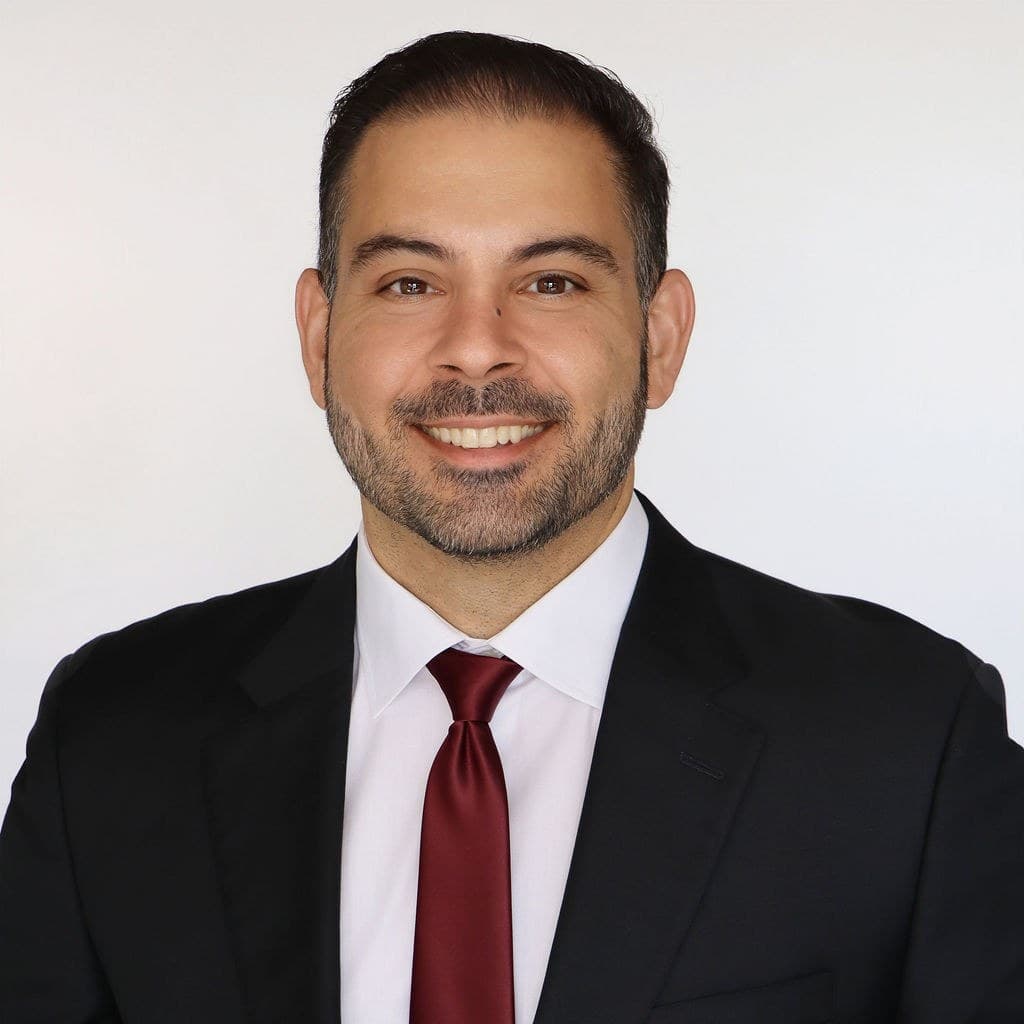
Eman Yazdchi, Esq., Certified Specialist in Workers' Compensation Law, California Board of Legal Specialization, State Bar of California.


California Board of Legal Specialization, State Bar of California
California Board of Legal Specialization, State Bar of California
- 14+
- Years of Practice
- 2,000+
- Cases handled over 14+ years
- $50M+
- Recovered over 14+ years
- 3
- Languages: English, Español, Farsi
Past results do not guarantee, warrant, or predict future cases. Each case is different and results depend on specific facts and circumstances.
Prepared by Yazdchi Law
If you were hurt on the job in Brentwood, you have real rights. You do not have to face the insurance company alone.
Work injuries flip your life fast. The paycheck stops. The bills do not. You worry about your job and whether the pain will ever go away. What most Brentwood workers do not know is that California law requires the insurance company to pay your medical bills, replace most of your income while you heal, and compensate you for any lasting damage. You pay nothing out of pocket for that care.
These rights belong to every Brentwood worker. That includes a nurse who tears her shoulder during a patient transfer at a medical office on San Vicente Boulevard near Barrington. It includes a cook who slips on a wet kitchen floor at the Brentwood Country Mart. It includes a Getty Center security guard whose knees break down after years of foot patrol on uneven hillside terrain. It includes a gardener who falls from a ladder on a Sunset Boulevard estate.
You have one year from the date of injury to file. That window closes faster than most people expect. Do these three things today:
- Tell your employer in writing. A text or email works. Write that you were injured at work and give the date it happened.
- Ask for the DWC-1 claim form. Your employer must hand it to you within one working day. If they stall, call us at (661) 273-1780. That delay can itself be a violation.
- See a doctor and say the injury is from work. Getting the cause on record from the first visit protects your claim.
Eman Yazdchi is a Certified Specialist in Workers' Compensation Law, certified by the California Board of Legal Specialization, State Bar of California (CA Bar #285231). He has represented hundreds of injured California workers. He appears regularly at the Los Angeles WCAB at 320 West 4th Street downtown, which hears all Brentwood claims from the 90049 ZIP code. Call (661) 273-1780 for a free case review.
Do you have a Brentwood workers' comp case?
If your injury happened while you were doing your job, you very likely have a valid claim. Fault does not matter. Immigration status does not matter.
California workers' comp is a no-fault system. You do not need to prove your employer was careless. You only need to show that the injury arose out of and in the course of your employment. That covers a wide range of situations in Brentwood.
A medical assistant at UCLA Health Brentwood who tears a rotator cuff during a patient transfer has a claim. So does a prep cook at a San Vicente restaurant who burns a hand on a faulty griddle. A Getty Center custodial worker who develops chronic low back pain from years of cleaning routes on sloped concrete paths also has a claim. So does a housekeeper in Brentwood Hills who slips carrying laundry down a steep staircase.
California covers both sudden injuries and slow build-up injuries. A wrist that fails after months of the same repetitive motion is just as valid as an injury that happened in one moment. The injury date for a build-up condition is the day you first felt the disability and knew, or should have known, that your job caused it. A doctor's written opinion usually sets that date.
Every worker in California is covered, including workers who are undocumented. The law is explicit: your immigration status cannot be used to deny your claim or reduce your benefits.
What benefits can you receive?
You can receive full medical care at no cost, wage checks while you heal, a cash award for lasting damage, mileage reimbursement, and a voucher to pay for job retraining.
Medical care: The insurer pays for all treatment your injury reasonably requires from the date it happened. That means doctor visits, specialists, imaging, physical therapy, surgery, and prescriptions. You do not owe a copay or a deductible for any of it.
Temporary disability: While you cannot work, you receive two-thirds of your average weekly wage, up to the state weekly cap. These payments continue for as long as 104 weeks within five years of the injury date.
Permanent disability: When your condition is as stable as it will get, a doctor rates the lasting damage as a percentage. That percentage converts to weeks of cash payments under the official state schedule. The rating system weighs your age and your occupation. A Sunset Boulevard groundskeeper with a knee injury may be rated differently than a front-office worker with the same underlying impairment, because the law accounts for what physical labor does to an already damaged body.
Mileage reimbursement: You can be reimbursed for every mile you drive to a medical appointment tied to your injury.
Retraining voucher: If your employer cannot offer modified work that fits your restrictions, you may be entitled to a voucher worth up to $6,000 for school or vocational training.
Labor Code §4600: "Medical, surgical, chiropractic, acupuncture, and hospital treatment, including nursing, medicines, medical and surgical supplies, crutches, and apparatuses, including orthotic and prosthetic devices and apparatus, that is reasonably required to cure or relieve the injured worker from the effects of his or her injury shall be provided by the employer."
This means the employer's insurance carrier pays the full cost of your medical recovery. You owe nothing.
How much is a Brentwood workers' comp claim worth?
Value depends on your permanent disability rating, your age, your occupation, and your future medical needs. No honest estimate exists without reviewing your specific situation.
Here is how the calculation works. Once you reach maximum medical improvement, a doctor scores the lasting damage as a whole-person impairment percentage using the AMA Guides. For injuries since 2013, the law then adjusts that number. It applies a 1.4 multiplier and weighs your age and the physical demands of your job. A Brentwood estate gardener or Getty Center custodial worker whose job requires constant physical output often ends up with a higher adjusted rating than an office worker with the same starting impairment. That final percentage converts to weeks of permanent disability payments under the official state schedule.
The table below shows general California ranges. It is not a prediction for your case.
| Injury severity | Typical permanent disability rating | Approximate value range |
|---|---|---|
| Minor strain or sprain, full recovery | 0% to 5% | $0 to $7,000 |
| Moderate soft-tissue injury, conservative care | 5% to 15% | $7,000 to $35,000 |
| Serious injury requiring surgery | 15% to 30% | $35,000 to $80,000 |
| Single-level spinal fusion | 30% to 60% | $80,000 to $175,000 |
| Severe multi-level fusion or complex injury | 60% to 70% | $175,000 to $350,000 |
| Catastrophic spinal cord injury or TBI | 70% and above | $350,000 and above; life pension possible |
These are general California ranges, not a prediction. Your actual award depends on your disability rating, age, occupation, and future medical care. Past results do not guarantee future outcomes.
The firm has recovered $5,000,000 for a catastrophic spinal cord injury and $1,500,000 for a cervical spine injury in past cases. Past results do not guarantee future outcomes. Call (661) 273-1780 for a free, honest review of your situation.
What if the insurer denies your claim?
A denial is not the final word. You still get up to $10,000 in medical care while they investigate, and you have clear appeal rights at every stage.
After you file the DWC-1 form, the insurer has 90 days to accept or deny your claim. If 90 days pass without a decision, California law presumes your injury is compensable. That presumption is difficult for the insurer to overcome. During those 90 days, up to $10,000 in medical care is owed to you right away. They cannot put your treatment on hold while they investigate.
If the insurer's review process says no to a treatment your physician ordered, such as an MRI, a cortisone injection, or a recommended surgery, you can appeal that denial to an independent reviewer within 30 days. That reviewer has no financial connection to the insurer. The reviewer's decision is binding on the insurer.
If the insurer denies your entire claim, your attorney can bring the dispute before a judge at the Los Angeles WCAB at 320 West 4th Street. From there, a Petition for Reconsideration goes to the full appeals board within 25 days of a mailed decision. After that, a Writ of Review to the Court of Appeal must be filed within 45 days. These deadlines are firm. Missing one forfeits the right to appeal at that level.
If your employer punishes you for filing a claim, California law prohibits it. Firing you, cutting your hours, changing your schedule, or threatening your immigration status in response to a claim are all illegal. A proven retaliation case can bring reinstatement, recovery of lost wages, and a penalty of up to $10,000 added to your workers' comp award.
Results in cases like this
Every case is different. Past results do not guarantee, warrant, or predict a similar outcome.
$5,000,000
Catastrophic spinal cord injury
$1,500,000
Cervical spine injury
$425,000
Slip and fall accident
Find Out What Your Brentwood Case May Be Worth
Two minutes. No fee unless we win; costs may apply.
Question 1 of 5
What type of injury do you have?
Not ready to fill this out? Just call (661) 273-1780 and we’ll ask the same questions by phone.
Free Consultation
Call or send the short form. We review your case, explain your rights, and outline your options. Free, no obligation.
We Build Your Case
We gather medical evidence, handle the insurance company, and file all the workers' comp court (WCAB) paperwork for you.
We Pursue Every Benefit
Medical care, lost wages, and permanent disability benefits. No fee unless we win your case; costs may apply.
How long do you have to file in Brentwood?
Report the injury within 30 days and file the formal claim within one year. Miss either deadline and the insurer gains a powerful legal defense.
Two clocks start running the moment you are injured. The first is a 30-day notice window. Tell your employer in writing within 30 days of the injury. A text or email counts. The second is a one-year filing deadline. Miss that year and your claim can be barred entirely.
For a build-up condition, such as a wrist injury from years of electronic-records entry at a UCLA Health Brentwood clinic, the one-year clock does not start on the first day the pain appeared. It starts the day a doctor puts in writing that the condition is work-related. That distinction can rescue a claim that looks late on the surface. Call (661) 273-1780 if you are not sure where your clock stands.
| What you must do | Deadline | Law |
|---|---|---|
| Tell your employer in writing | 30 days from injury | §5400 |
| File the formal workers' comp claim | 1 year from injury | §5405 |
| Build-up injury clock starts | Day you felt the disability and knew work caused it | §5412 |
| Insurer must accept or deny | 90 days from filing | §5402 |
| Appeal a denied treatment | 30 days from the denial | §4610.5 |
| Petition for Reconsideration | 25 days from mailed decision | §5903 |
Why Brentwood workers choose Yazdchi Law
Eman Yazdchi is a Certified Specialist in Workers' Compensation Law who appears regularly at the Los Angeles WCAB and has represented hundreds of California workers.
Eman Yazdchi holds the Certified Specialist credential in Workers' Compensation Law from the California Board of Legal Specialization, State Bar of California (CA Bar #285231). Fewer than one percent of California attorneys earn this designation. He has represented hundreds of injured California workers across the greater Los Angeles region.
Brentwood workers' comp cases are heard at the Los Angeles WCAB, 320 West 4th Street, downtown Los Angeles. The 90049 ZIP routes to the LA district. Yazdchi Law appears there regularly on cases involving UCLA Health Brentwood and Providence Saint John's Brentwood medical-office staff, San Vicente Boulevard commercial workers, Getty Center employees, and Sunset Boulevard residential-services workers. The firm handles everything from first filings through disputed treatment denials, apportionment contests, and retaliation petitions before the board.
You pay nothing to start. Attorney fees are set by the WCAB judge and typically run 12 to 15 percent of your recovery. If there is no recovery, there is no fee. Read more about Eman Yazdchi or verify his State Bar profile.
Where Brentwood workers' comp cases are heard
All Brentwood claims are filed and heard at the Los Angeles district office of the Workers' Compensation Appeals Board, 320 West 4th Street downtown. Yazdchi Law appears there on Brentwood cases including wage-replacement disputes for medical-office workers, cumulative trauma claims for residential-services staff, and retaliation petitions filed after employment changes tied to an injury report. Related Westside coverage: Pacific Palisades workers' comp. Bel-Air workers' comp. West Hollywood workers' comp. See also our California domestic worker injury practice.
Where workplace injuries happen in Brentwood
- UCLA Health Brentwood and Providence Saint John's Brentwood medical-office corridor on San Vicente near Barrington: nurses, medical assistants, and technicians who sustain patient-handling shoulder injuries and cumulative wrist strain from years of electronic-records entry
- San Vicente Boulevard and Barrington Avenue commercial spine: restaurant cooks and counter staff who sustain burns and slip-and-fall injuries, and retail workers who sustain lifting injuries from restocking heavy inventory
- The Getty Center on Sepulveda Pass: security officers, visitor services staff, and custodial workers who sustain cumulative knee and back injuries from foot patrol and cleaning routes on uneven hillside terrain
- Sunset Boulevard high-end residential services: gardeners, housekeepers, drivers, and maintenance workers who sustain ladder falls, struck-by injuries, and chronic low-back conditions from years of physical labor on large private properties
- Brentwood Country Mart and small-business retail on San Vicente: kitchen staff who sustain burns and cuts, and counter workers who develop repetitive wrist and shoulder strain
Emergency care near Brentwood
If a work injury in Brentwood requires emergency care, call 911 first. The nearest hospital emergency departments are Ronald Reagan UCLA Medical Center on Westwood Plaza, UCLA Health Santa Monica on 16th Street in Santa Monica, and Providence Saint John's Health Center on 23rd Street in Santa Monica. California law requires the employer to report any work-related death, hospitalization, amputation, or loss of an eye to Cal/OSHA within 8 hours.
Injured at work in Brentwood? Talk it through for free.
Most claims must be filed within one year under Labor Code section 5405. A free call tells you where your clock stands.
Frequently Asked Questions
Do I pay anything up front to hire a Brentwood workers' comp lawyer?
Can my Brentwood employer fire me for filing a workers' comp claim?
Does my immigration status affect my workers' comp claim in Brentwood?
How long does a Brentwood workers' comp case take to resolve?
Can I choose my own doctor for a Brentwood workers' comp injury?
What is apportionment and how can it reduce my Brentwood award?
What if the insurer denies the surgery my doctor ordered?
What happens if I cannot return to my old job after a Brentwood work injury?
Free case evaluation
Get your free Brentwood case evaluation
Three fields. We respond within one business day.
Talk to a Certified Specialist
Certified Specialist in Workers' Compensation Law, California Board of Legal Specialization, State Bar of California.
Takes 30 seconds. No obligation.
Eman really knows his stuff and we were very pleased with our end result.
I am glad and so very pleased...he made happen what no other attorney could do. So far he has proven his weight in gold.
Client testimonials. Testimonials are not a guarantee, warranty, or prediction of the outcome of your case.