
Crenshaw, California · Workers' Compensation
Crenshaw Workers' Compensation Appeal Lawyer
Hurt at work in Crenshaw? Workers' comp pays for medical care and part of your lost pay while you heal. A free call tells you where you stand.
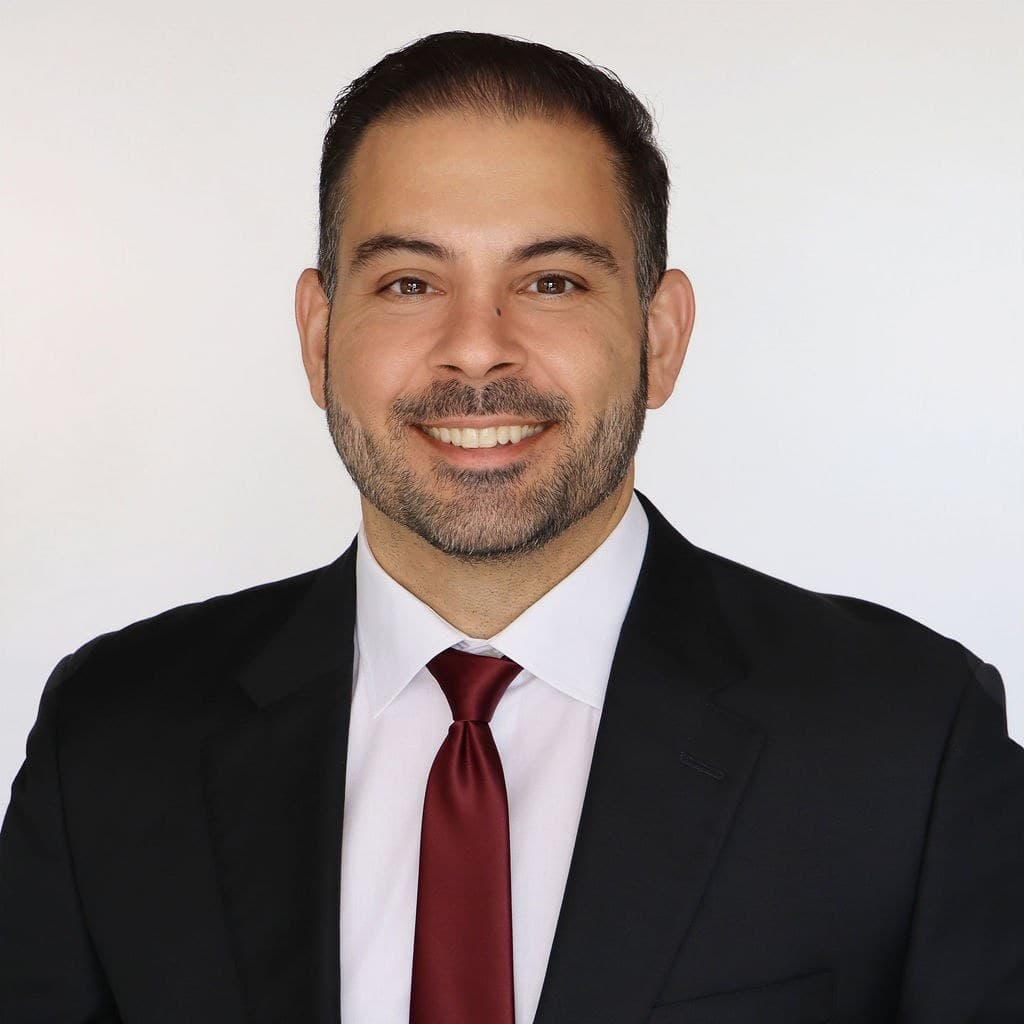
Eman Yazdchi, Esq., Certified Specialist in Workers' Compensation Law, California Board of Legal Specialization, State Bar of California.


California Board of Legal Specialization, State Bar of California
California Board of Legal Specialization, State Bar of California
- 14+
- Years of Practice
- 2,000+
- Cases handled over 14+ years
- $50M+
- Recovered over 14+ years
- 3
- Languages: English, Español, Farsi
Past results do not guarantee, warrant, or predict future cases. Each case is different and results depend on specific facts and circumstances.
Prepared by Yazdchi Law
Did a denial letter just land on your Crenshaw workers' comp claim? Read this first. A denial is not the end. It is the beginning of the fight for your benefits. The insurer is counting on you to walk away. You do not have to.
A denied claim, a treatment the insurer cut off, or a judge's ruling against you can each be challenged. Every one has its own appeal path and its own deadline. Blow the deadline and the door can close for good. So right now, the calendar matters more than anything.
Maybe you build the Metro K Line. Maybe you ring up sales at Baldwin Hills Crenshaw Plaza, or cook on Crenshaw Boulevard. The appeal rules are the same. You pay nothing up front to use them.
Do these three things today:
- Find the date on your denial letter. Your appeal clock starts on that date, not the day you opened it. Snap a photo of the envelope too.
- Sign nothing the insurer sends you. A "full and final" paper can close your case forever. Let a lawyer read it first.
- Call before your window shuts. An appeal filed even one day late is usually dead. Reach us at (661) 273-1780 for a free read on your deadline.
Was your Crenshaw claim denied? You can fight it.
Yes. Almost every denial can be appealed. A denied treatment goes to Independent Medical Review within 30 days. A denied claim or a bad ruling goes to a Petition for Reconsideration within 25 days.
The first question every hurt worker asks is simple. Can I actually fight this? Almost always, yes. California gives you a real appeal for each kind of denial. The catch is speed. These windows are short, and the insurer knows most people miss them.
A Crenshaw Boulevard line cook whose back treatment was refused has the same appeal rights as a Metro rail operator whose whole claim was tossed. What you cannot do is wait. The strongest appeal in the world fails if it lands late. Your rights here do not depend on your immigration status, and they do not depend on whose fault the injury was. They depend on you acting in time.
UR vs IMR vs a WCAB appeal: which path is yours?
Two denials, two roads. A refused treatment goes through Independent Medical Review. A denied claim or a judge's bad ruling goes to a Petition for Reconsideration at the WCAB.
Before you appeal, name what got denied. There are three common situations, and each one travels a different road.
Your treatment was denied: Independent Medical Review
Say your doctor ordered an MRI, a surgery, or more physical therapy, and the insurer's Utilization Review doctor said no. You do not argue that with the claims adjuster. You appeal it through Independent Medical Review, and you have just 30 days from the denial. An outside doctor then checks your records against the state treatment guidelines. If that review still says no, the decision is final and binding except on narrow grounds, such as fraud, bias, or a serious conflict of interest. That finality rule is §4610.6.
For a Metro K Line construction worker waiting on a shoulder repair, 30 days goes fast. We move quickly, pull the imaging and your treating doctor's report, and frame the appeal around the very guidelines the reviewer is required to follow.
Your claim or a judge's ruling was denied: a Petition for Reconsideration
A different road opens when the insurer denies your whole claim, or a workers' compensation judge issues a Findings and Award that goes against you. Here you file a Petition for Reconsideration under §5903. It goes to the seven-member Appeals Board in San Francisco, which reviews what the trial judge did.
Labor Code §5903: "At any time within 20 days after the service of any final order, decision, or award... any person aggrieved thereby may petition for reconsideration upon one or more of the following grounds and no other..."
The statute's base clock is 20 days. When the ruling is mailed, the law adds 5 days, which is why a mailed decision gives you 25. Served electronically, you get the bare 20. Either way, do not wait. If the Board denies your petition, you can take it higher, to the California Court of Appeal, by asking for a Writ of Review within 45 days.
Your case closed but you got worse: a Petition to Reopen
Settling a case does not always end it. If your injury gets worse after the case closes, you may be able to reopen it within five years of your original injury date. You will need solid medical proof that your disability actually increased. A Crenshaw Boulevard barber whose back held up at settlement, then failed two years later, may still have a road back to more benefits.
How long do you have to appeal?
Not long. A denied treatment gives you 30 days. A judge's ruling gives you 25 days if mailed, 20 if electronic. Miss the window and you usually lose the right to fight.
Every appeal runs on a clock, and the clocks are short. The table below lays out the common ones. Find your situation in the left column and note the deadline. When in doubt, treat the shorter number as your real deadline, and call us the same week.
| What was denied | Your appeal route | Deadline | Law |
|---|---|---|---|
| Treatment denied at Utilization Review | Independent Medical Review | 30 days from the denial | §4610.5 |
| IMR upheld the denial | Appeal only on narrow grounds (fraud, bias, conflict) | 30 days | §4610.6 |
| A judge's decision (Findings & Award) | Petition for Reconsideration | 25 days if mailed, 20 if electronic | §5903 |
| Reconsideration denied | Writ of Review to the Court of Appeal | 45 days | §5950 |
| New or worse disability after a closed case | Petition to Reopen | Within 5 years of the injury | §5803 |
Not sure which clock is yours? One free call sorts it out: (661) 273-1780.
What does the appeal process actually look like?
You file the petition, the other side answers, and a judge or the Appeals Board reviews the written record. Most appeals are decided on paper, not in a brand-new trial.
An appeal is not a do-over trial with fresh witnesses. It is a careful review of what already happened. Here is the path a Crenshaw case usually follows.
For a denied treatment, you submit your medical records into Independent Medical Review. An outside doctor reads them against the state guidelines and issues a written decision. There is no hearing. The quality of the paperwork is everything.
For a denied claim or a bad ruling, you file your Petition for Reconsideration at the Los Angeles district WCAB, where your trial orders were issued. You serve it on the judge and on the other side. The judge writes a report, and the seven-member Appeals Board in San Francisco decides whether to grant or deny review. If they deny it, your next step is the California Second District Court of Appeal, here in Los Angeles, by Writ of Review.
Each step has strict formatting and service rules. A petition with a faulty proof of service can be tossed on a technicality. That is one reason workers who appeal with a lawyer tend to fare better than those who go it alone.
What evidence wins a workers' comp appeal?
The medical record decides it. A clear doctor's report tying your injury to your job, plus proof the denial ignored the guidelines, is what moves a judge or an independent reviewer.
Appeals are won on evidence, not on anger. The single most important piece is substantial medical evidence. That means a report from a qualified doctor that explains the how and why of your injury, not just a bare conclusion. A reviewer or judge needs to see the reasoning behind the opinion.
When the medical opinions clash, your case often runs through a panel of three evaluators, where each side strikes one name, leaving a single Qualified Medical Evaluator. The report that doctor writes can make or break the appeal. For a denied-treatment appeal, the winning move is showing that the reviewer skipped or misread the state guidelines. For a reopening, you need proof your condition truly worsened since the case closed.
A restored claim can be worth real money. Once an appeal puts your benefits back on track, the value turns on how your permanent disability is rated and how many weeks of payments follow. Our firm has recovered up to $5,000,000 for a catastrophic spinal-cord injury and $1,500,000 for a cervical-spine injury. Past results do not guarantee future outcomes, because every case stands on its own facts. For a free read on yours, call (661) 273-1780.
Results in cases like this
Every case is different. Past results do not guarantee, warrant, or predict a similar outcome.
$5,000,000
Catastrophic spinal cord injury
$1,500,000
Cervical spine injury
$425,000
Slip and fall accident
Find Out What Your Crenshaw Case May Be Worth
Two minutes. No fee unless we win; costs may apply.
Question 1 of 5
What type of injury do you have?
Not ready to fill this out? Just call (661) 273-1780 and we’ll ask the same questions by phone.
Free Consultation
Call or send the short form. We review your case, explain your rights, and outline your options. Free, no obligation.
We Build Your Case
We gather medical evidence, handle the insurance company, and file all the workers' comp court (WCAB) paperwork for you.
We Pursue Every Benefit
Medical care, lost wages, and permanent disability benefits. No fee unless we win your case; costs may apply.
What is special about appeals at the Los Angeles WCAB?
It is one of the busiest boards in California. Eman Yazdchi files Reconsideration petitions and handles IMR appeals there often, and knows its judges and timelines.
Where is the LA WCAB, and who hears your appeal?
Crenshaw trial orders come out of the Los Angeles district office of the Workers' Compensation Appeals Board, at 320 West 4th Street downtown. You file and serve your Petition for Reconsideration on the judge there. The seven-member Appeals Board, which actually decides the petition, sits in San Francisco. If you need to go higher, the California Second District Court of Appeal hears Writ of Review cases right here in Los Angeles. Yazdchi Law files these petitions at the LA WCAB on Crenshaw cases regularly.
Which Crenshaw jobs produce the most appeals?
The appeals we see track the corridor's real economy:
- Crenshaw Boulevard small business: retail clerks, barbers, and restaurant cooks whose treatment requests get denied at Utilization Review.
- Baldwin Hills Crenshaw Plaza: retail and food-service workers fighting cut-off wage checks and denied claims.
- Metro K Line: construction and rail-operations staff with serious lifting, fall, and repetitive-strain injuries.
- South LA healthcare: home-health aides and clinic staff who commute across the district and strain backs and shoulders moving patients.
- Leimert Park: small-business and cultural-district workers whose claims the insurer tries to underrate.
Why LA appeals get denied, and how we answer it
The Los Angeles board carries a heavy caseload, so insurers lean on volume denials and Utilization Review cutoffs. They bet that workers will not appeal in time. We answer that with clean paperwork, the right medical evidence, and petitions filed well inside the deadline. The state QME directory is here.
What does a Crenshaw appeal lawyer cost?
Nothing up front, and nothing unless we win. Workers' comp fees in California are set by the judge, usually 12 to 15 percent of what we recover for you.
You never pay us by the hour, and nothing to start. The WCAB judge sets the fee, usually 12 to 15 percent of the back benefits or settlement we win, and only if we win. So if your appeal recovers $40,000 in withheld benefits, you keep roughly 85 to 88 percent of it. A Crenshaw Boulevard cook and a Metro rail operator get the same quality of representation, no money down.
About your attorney
Eman Yazdchi is a Certified Specialist in Workers' Compensation Law, certified by the California Board of Legal Specialization, State Bar of California (CA Bar #285231). Only a small fraction of California attorneys hold this credential. He has represented hundreds of injured California workers and appears regularly at the Los Angeles WCAB. More about Eman Yazdchi. Verify his State Bar profile.
Nearby South LA areas we serve
Injured at work in Crenshaw? Talk it through for free.
Most claims must be filed within one year under Labor Code section 5405. A free call tells you where your clock stands.
Frequently Asked Questions
Can I really appeal a denied workers' comp claim in Crenshaw?
The insurer denied the surgery my doctor ordered. What now?
A workers' comp judge ruled against me. Can I challenge it?
How long does a workers' comp appeal take?
What is the difference between a Stipulated Award and a Compromise and Release?
How much do I keep after the attorney fee?
Can I be fired for appealing my workers' comp claim?
Can I reopen my case if my injury got worse after it closed?
Free case evaluation
Get your free Crenshaw case evaluation
Three fields. We respond within one business day.
Talk to a Certified Specialist
Certified Specialist in Workers' Compensation Law, California Board of Legal Specialization, State Bar of California.
Takes 30 seconds. No obligation.
Eman at Yazdchi Law was extremely professional, responsive, and supportive at all times. He and his staff exceeded all of my expectations.
A fighting force both consistent and compassionate on a scale’s a 5 all around.
Client testimonials. Testimonials are not a guarantee, warranty, or prediction of the outcome of your case.