
Cudahy, California · Workers' Compensation
Workers' Comp Lawyer in Cudahy, California
Hurt at work in Cudahy? Workers' comp pays for medical care and part of your lost pay while you heal. A free call tells you where you stand.
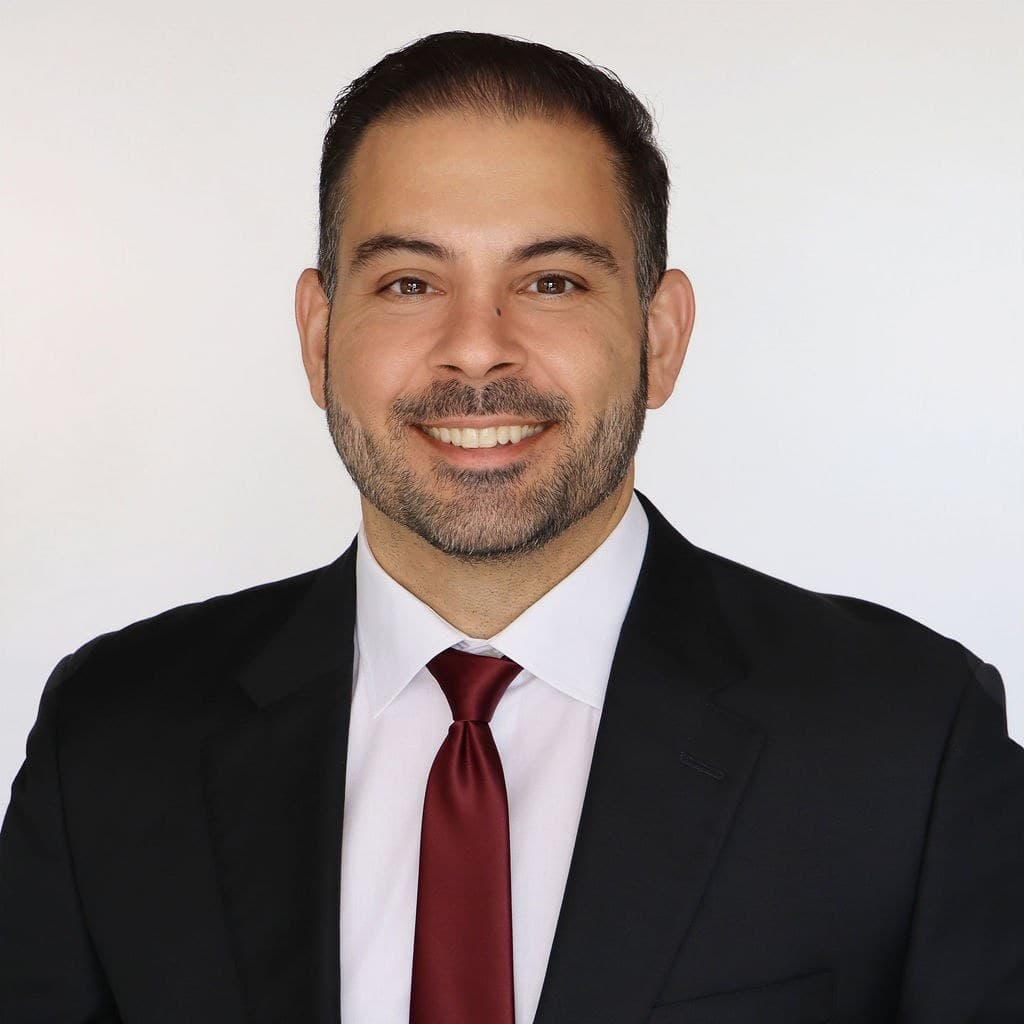
Eman Yazdchi, Esq., Certified Specialist in Workers' Compensation Law, California Board of Legal Specialization, State Bar of California.


California Board of Legal Specialization, State Bar of California
California Board of Legal Specialization, State Bar of California
- 14+
- Years of Practice
- 2,000+
- Cases handled over 14+ years
- $50M+
- Recovered over 14+ years
- 3
- Languages: English, Español, Farsi
Past results do not guarantee, warrant, or predict future cases. Each case is different and results depend on specific facts and circumstances.
Prepared by Yazdchi Law
If you were hurt on the job in Cudahy, you have rights. You do not have to face the insurance company alone.
Whether the injury happened in a single shift or built up over years of hard work, here is what California law gives you. Your medical bills are paid in full by the insurer. You receive two-thirds of your wage while you cannot work. If the damage is permanent, you receive a separate cash award. You have one year to file. Immigration status does not matter.
Take these three steps right now:
- Report the injury in writing today. A text to your supervisor counts. Write: "I was hurt at work on [date]." Keep a copy.
- Ask for the DWC-1 claim form. Your employer must give it to you within one working day. If they refuse, call (661) 273-1780. That refusal is itself a violation.
- See a doctor and say the injury is from work. Getting the cause on the medical record early protects your claim.
Eman Yazdchi is a Certified Specialist in Workers' Compensation Law, certified by the California Board of Legal Specialization, State Bar of California (CA Bar #285231). He handles every Cudahy case in Spanish and English and appears regularly at the Los Angeles WCAB.
Do you have a Cudahy workers' comp case?
If your injury happened at work or because of your job in Cudahy, you very likely qualify. Fault does not matter. The insurer pays even if you made a mistake.
California workers' comp is a no-fault system. You do not need to prove your employer did something wrong. You need to show that the injury arose out of your job. A food-processing worker who slips on a wet floor on Atlantic Avenue qualifies. So does a warehouse loader who tears a shoulder near the LA River after years of overhead lifts.
Two kinds of injuries qualify. A specific injury happens on one day: a fall, a cut, a burn, or a crush. A cumulative injury builds up over time from repeated motion. A garment cutter whose wrists break down after years of repetitive cutting has a cumulative claim. An auto-parts stocker whose lower back gives out from years of daily lifting has one too. California covers both.
Coverage reaches every worker, including those paid in cash and those who are undocumented. California's coverage law treats every person performing services for an employer as an employee unless the employer can prove otherwise. An undocumented day-laborer on a Cudahy construction crew has the same rights as any other worker. Those rights include medical care, wage replacement, and a disability rating. Your employer cannot threaten your immigration status for filing a claim. That threat is a separate violation of California law.
What benefits can you receive?
Full medical care at no cost to you, two-thirds of your lost wage for up to 104 weeks, a permanent disability cash award, and a retraining voucher worth up to $6,000.
Labor Code §4600: "Medical, surgical, chiropractic, acupuncture, and hospital treatment, including nursing, medicines, medical and surgical supplies, crutches, and apparatus, including orthotic and prosthetic devices and services, that is reasonably required to cure or relieve the injured worker from the effects of his or her injury shall be provided by the employer."
That law means no copays, no deductibles, and no bills sent to your door. From the day of your injury, the insurer covers specialists, surgery, physical therapy, prescriptions, and imaging. You pay nothing out of pocket.
While you are off work and recovering, you receive temporary disability checks equal to two-thirds of your average weekly wage. A Cudahy cold-storage loader earning $900 a week, for example, would receive about $600 per week. These checks run for up to 104 weeks within a five-year window from the date of injury.
Once your condition stabilizes and lasting damage is confirmed, a doctor rates the impairment as a percentage. That percentage drives a permanent disability award paid as weekly checks. For injuries since 2013, the formula applies a 1.4 multiplier. It then adjusts for your age and occupation. That adjustment can go up or down depending on your profile.
The insurer also reimburses your mileage to every medical appointment at the state rate. If your employer cannot offer you modified or alternative work after the injury, you may qualify for a Supplemental Job Displacement Benefit voucher worth up to $6,000 for approved retraining or education.
How much is a Cudahy workers' comp claim worth?
Value depends on your lasting damage, your age, your job type, and future medical needs. The table below shows California reference ranges by injury severity.
No honest attorney gives a firm dollar figure before seeing your records. These California ranges show what similar injuries have produced across the state. The value comes from the permanent disability rating, the weekly payment schedule that rating produces, the cost of future medical care, and the negotiated settlement.
| Injury severity | Typical permanent-disability rating | Approximate value range |
|---|---|---|
| Minor strain or sprain, full recovery | 0 to 8% | $3,000 to $15,000 |
| Moderate injury requiring surgery or injections | 10 to 25% | $20,000 to $60,000 |
| Serious injury with single-level spinal fusion or major joint damage | 28 to 45% | $55,000 to $130,000 |
| Severe injury with multi-level fusion or major limb damage | 48 to 70% | $120,000 to $300,000+ |
| Catastrophic spinal cord injury or traumatic brain injury | 70 to 100% | $400,000 to $5,000,000+ |
These are general California ranges, not a prediction. Your actual award depends on your disability rating, age, occupation, and future medical care. Past results do not guarantee future outcomes.
Yazdchi Law has recovered $5,000,000 for a catastrophic spinal-cord injury and $1,500,000 for a cervical-spine injury. Past results do not guarantee future outcomes. Call (661) 273-1780 for a free review of your Cudahy claim.
What if the insurer denies your claim?
A denial is not the end. While the insurer decides, you still have up to $10,000 in medical care coming to you. You have 30 days to challenge any denied treatment.
After you file the DWC-1 form, the insurer has 90 days to accept or deny your claim. That is the 90-day decision rule. If they miss that window, California law presumes your injury is covered. During those 90 days, up to $10,000 in medical care must be provided right away. The insurer cannot freeze your treatment while it investigates.
If the insurer denies a treatment your doctor ordered, like an MRI, surgery, or physical therapy, you can challenge that decision through Independent Medical Review within 30 days of the denial. An independent physician reviews your file against state treatment guidelines and either upholds or reverses the insurer's call.
If the claim itself is denied, the dispute moves to the Los Angeles WCAB for a hearing before a workers' comp judge. A judge reviews all the evidence and decides whether the injury is work-related. Many denials are reversed at this stage. Having an attorney matters most at this point.
If your employer fires you, cuts your hours, or treats you worse after you file, that is illegal retaliation. The remedy includes getting your job back, recovering your lost wages, and adding a 50 percent penalty to your award up to $10,000. Call us right away if this happens.
How long do you have to file in Cudahy?
Report the injury within 30 days. File your formal claim within one year. For a build-up injury, the clock starts when a doctor links your condition to your job.
Missing a deadline gives the insurer an opening to deny the entire claim. Two clocks run from the date of injury. The table below maps every key deadline on a California workers' comp claim.
| Action | Deadline | Law |
|---|---|---|
| Report the injury to your employer in writing | 30 days from the injury date | §5400 |
| File your formal workers' comp claim | 1 year from the injury date | §5405 |
| Build-up injury: clock starts | Day you feel disability and a doctor ties it to work | §5412 |
| Insurer must accept or deny | 90 days after you file | §5402 |
| Challenge a denied treatment through IMR | 30 days from the denial | §4610.5 |
| Petition for Reconsideration of a WCAB decision | 25 days (mailed) or 20 days (electronic) | §5903 |
Not sure where your clock stands? A free call will give you a clear answer: (661) 273-1780.
Why Cudahy workers choose Yazdchi Law
Certified Specialist Eman Yazdchi has represented hundreds of California workers, appears regularly at the Los Angeles WCAB, and handles every Cudahy case in Spanish.
Eman Yazdchi is a Certified Specialist in Workers' Compensation Law, certified by the California Board of Legal Specialization, State Bar of California (CA Bar #285231). Fewer than one percent of California attorneys hold this credential. He has represented hundreds of injured California workers and appears regularly at the Los Angeles WCAB on cases from Cudahy and the surrounding Southeast Los Angeles communities.
Cudahy's workforce is predominantly Spanish-speaking. Every intake at Yazdchi Law is conducted in Spanish. Qualified interpreters are confirmed for every medical-legal evaluation and every WCAB proceeding. The defendant pays that interpreter cost, not you.
There is no charge to start. Attorney fees in California workers' comp are set by the WCAB judge, typically 12 to 15 percent of what is recovered. If there is no recovery, you owe nothing. More about Eman Yazdchi. Verify his State Bar profile.
The authorities supporting this page:
Results in cases like this
Every case is different. Past results do not guarantee, warrant, or predict a similar outcome.
$5,000,000
Catastrophic spinal cord injury
$1,500,000
Cervical spine injury
$425,000
Slip and fall accident
Find Out What Your Cudahy Case May Be Worth
Two minutes. No fee unless we win; costs may apply.
Question 1 of 5
What type of injury do you have?
Not ready to fill this out? Just call (661) 273-1780 and we’ll ask the same questions by phone.
Free Consultation
Call or send the short form. We review your case, explain your rights, and outline your options. Free, no obligation.
We Build Your Case
We gather medical evidence, handle the insurance company, and file all the workers' comp court (WCAB) paperwork for you.
We Pursue Every Benefit
Medical care, lost wages, and permanent disability benefits. No fee unless we win your case; costs may apply.
Local information for Cudahy injured workers
Cudahy claims are heard at the Los Angeles WCAB at 320 W. 4th Street. Yazdchi Law appears there regularly and handles every Cudahy case in Spanish with a confirmed interpreter at every hearing.
Which WCAB office handles Cudahy claims?
Workers' compensation cases from Cudahy are filed at the Los Angeles district office of the Workers' Compensation Appeals Board at 320 W. 4th Street, 9th Floor, Los Angeles 90013. This office covers Cudahy, Bell, Bell Gardens, Maywood, Huntington Park, Commerce, Vernon, Pico Rivera, and most of central and Southeast Los Angeles County. Yazdchi Law appears there regularly on Cudahy cases. That includes initial hearings, Petitions for Reconsideration, and retaliation filings. Related: California workers' comp lawyer services.
Where do Cudahy work injuries happen?
Cudahy packs industrial and service jobs into just 1.18 square miles. These are the injury zones we see most often:
- Food-processing plants near Atlantic Avenue and the Bell and Vernon edges: Cold-storage loading injuries, commercial kitchen burns, lacerations from slicers and cutters, and slip-and-fall injuries on wet plant floors.
- Warehouse and auto-parts storage on the LA River industrial belt: Forklift incidents, repetitive lifting injuries to the lower back and shoulders, and falls from loading docks.
- Garment and light-manufacturing shops: Repetitive-stress injuries to the hands, wrists, and shoulders from years of cutting, sewing, and assembly work.
- Atlantic Avenue and Slauson Avenue retail and restaurant corridor: Kitchen burns, slip-and-fall injuries, and overuse claims from cooks and cashiers on long shifts.
- Day-labor construction and landscaping crews on Wilcox and Otis streets: Falls from height, tool injuries, heat illness, and cumulative back injuries from years of heavy manual work.
- Auto-repair shops along Atlantic Avenue: Crush injuries, chemical exposure, and back and knee injuries from working under vehicles in cramped positions.
Emergency care near Cudahy
For a serious work injury, call 911 first. The closest emergency departments are St. Francis Medical Center in Lynwood at 3630 E. Imperial Highway, PIH Health Hospital Downey on Telegraph Road in Downey, and Los Angeles General Medical Center (LAC+USC) in Boyle Heights for major trauma. Your employer must report any work-related death, hospitalization, amputation, or loss of an eye to Cal/OSHA within eight hours of the event.
The interpreter right every Cudahy worker has at the WCAB
Cudahy is one of the most densely Spanish-speaking cities in California. Roughly 95 percent of residents speak Spanish as a primary language. Under California law, every Spanish-speaking worker has the right to a qualified interpreter at every WCAB hearing, deposition, and medical evaluation. The defendant pays that cost. Yazdchi Law confirms a qualified interpreter for every Cudahy client at every step of the case, from the initial medical evaluation through the final WCAB hearing.
What if your Cudahy employer has no workers' comp insurance?
California requires every employer to carry a workers' comp policy. Many of Cudahy's smallest food shops, garment workshops, and day-labor contractors operate without one. If your employer has no coverage, you have two paths. First, file against the Uninsured Employers Benefits Trust Fund. The Fund pays your benefits and then pursues the employer for reimbursement. Second, consider a civil lawsuit against the employer directly. In civil court you can recover pain and suffering damages, full lost wages, and potentially punitive damages. We evaluate both options on every uninsured Cudahy case.
Nearby cities we serve: Bell workers' comp · Bell Gardens workers' comp · Huntington Park workers' comp · Maywood workers' comp · Commerce workers' comp
Injured at work in Cudahy? Talk it through for free.
Most claims must be filed within one year under Labor Code section 5405. A free call tells you where your clock stands.
Frequently Asked Questions
Do I pay anything up front to hire a Cudahy workers' comp lawyer?
Can my employer fire me for filing a workers' comp claim in Cudahy?
Can I file a workers' comp claim in Cudahy if I am undocumented?
How long does a Cudahy workers' comp case take?
Can I choose my own doctor for a Cudahy workers' comp injury?
What if the insurer denies my Cudahy workers' comp claim?
How does cumulative trauma work for Cudahy garment and food workers?
How do I file a workers' comp claim if my Cudahy employer has no insurance?
Free case evaluation
Get your free Cudahy case evaluation
Three fields. We respond within one business day.
Talk to a Certified Specialist
Certified Specialist in Workers' Compensation Law, California Board of Legal Specialization, State Bar of California.
Takes 30 seconds. No obligation.
Eman really knows his stuff and we were very pleased with our end result.
I am glad and so very pleased...he made happen what no other attorney could do. So far he has proven his weight in gold.
Client testimonials. Testimonials are not a guarantee, warranty, or prediction of the outcome of your case.