
Fairfax, California · Workers' Compensation
Fairfax District Workers' Compensation Lawyer
Hurt at work in Fairfax? Workers' comp pays for medical care and part of your lost pay while you heal. A free call tells you where you stand.
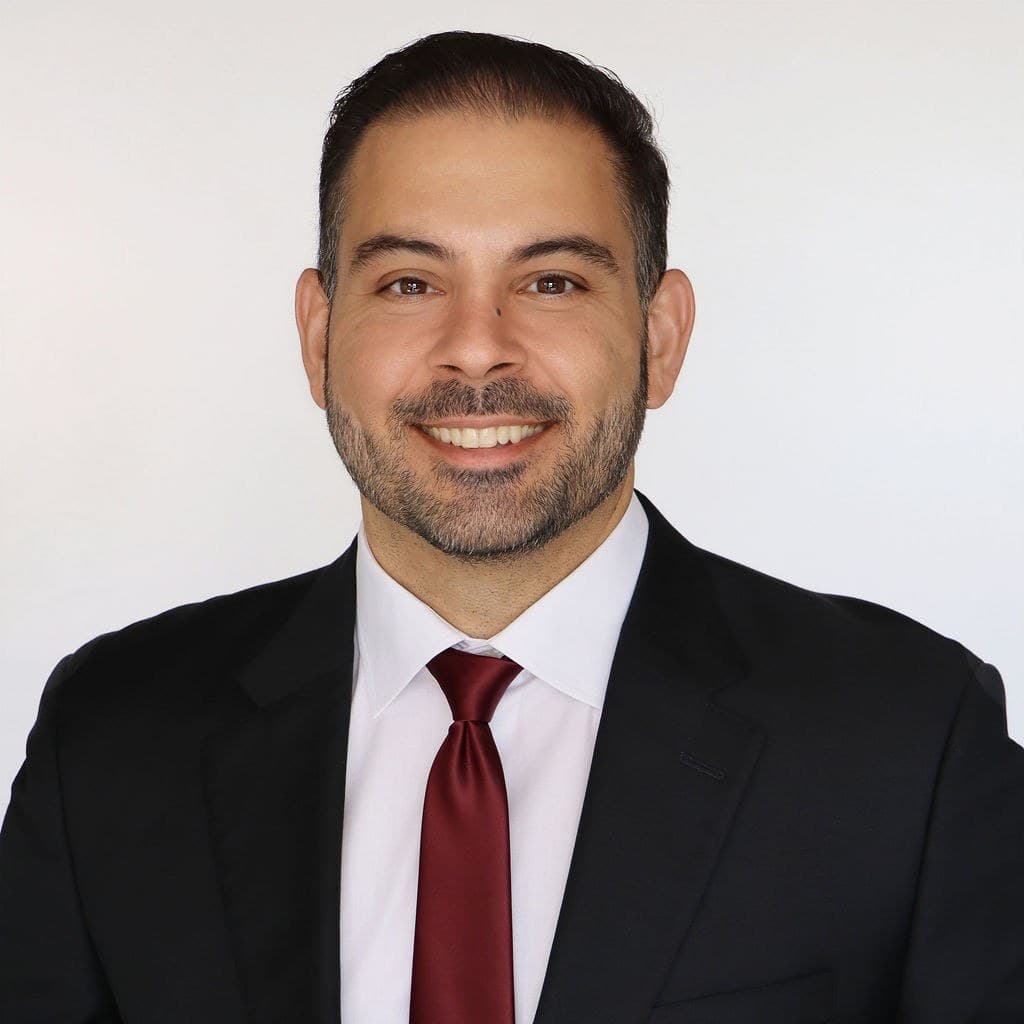
Eman Yazdchi, Esq., Certified Specialist in Workers' Compensation Law, California Board of Legal Specialization, State Bar of California.


California Board of Legal Specialization, State Bar of California
California Board of Legal Specialization, State Bar of California
- 14+
- Years of Practice
- 2,000+
- Cases handled over 14+ years
- $50M+
- Recovered over 14+ years
- 3
- Languages: English, Español, Farsi
Past results do not guarantee, warrant, or predict future cases. Each case is different and results depend on specific facts and circumstances.
Prepared by Yazdchi Law
If you were hurt on the job in Fairfax, you have rights, and you do not have to face the insurance company alone.
Maybe a shelf gave way in a Grove stockroom. Maybe you burned your arm at a Farmers Market food stall. Maybe years of moving television rigging at CBS Television City caught up with your shoulder. Whatever happened, California law says the insurer must pay your medical bills in full, replace two-thirds of your wages while you cannot work, and pay a settlement if the damage is permanent. None of that costs you anything up front.
Here is what to do today:
- Tell your supervisor in writing. A text or email is fine. Say the injury happened at work and include the date.
- Ask for the DWC-1 claim form. Your employer must give it to you within one working day. If they delay, call (661) 273-1780. That delay can itself be a violation.
- See a doctor and say the injury is from work. This creates a record of the cause before the insurer can write a different story.
Do you have a Fairfax workers' comp case?
If you were hurt doing your job in Fairfax, you very likely qualify. Fault does not matter, and neither does immigration status.
Most hurt workers ask the same question: do I really have a case? If you were injured while doing your job, the answer is almost always yes. It does not matter whether the injury was your fault. It does not matter whether anyone witnessed it.
California workers' comp is a no-fault system. The law creates a clear deal. The worker gives up the right to sue the employer. In return, the employer's insurer pays benefits when the injury arose out of the job. Fault is not part of the question. A Nordstrom stockroom worker at The Grove, a CBS Television City grip on a stage, a Canter's Deli cook, and a Loteria Grill prep worker at the Original Farmers Market all qualify on the same terms.
Two kinds of injury count. A specific injury happens in one event: a fall, a burn, a collision. A cumulative injury builds up over time. A Whole Foods stocker who lifts heavy cases every shift may not notice the damage for months. A CBS camera operator whose wrist aches after years of steady work has the same rights as someone hurt in a single accident.
Undocumented workers qualify too. California law covers every employee regardless of immigration status. A claim cannot be denied because of where you were born.
What benefits can you receive?
Medical care at no cost, two-thirds of your wages while you cannot work, a cash award for lasting damage, and a retraining voucher if your old job is gone.
A valid claim opens four main benefits.
Medical care. The insurer pays every bill from the date of injury. Doctor visits, specialist appointments, imaging, surgery, physical therapy, and prescriptions are all covered. You pay no copays and no deductibles.
Temporary disability. While you are off work and your doctor confirms you cannot do your job, you receive two-thirds of your average weekly wage. Payments can continue for up to 104 weeks within a five-year window. If you earn tips at a Fairfax restaurant, your average wage must include regular tip income, not just the hourly base rate.
Permanent disability. Once your condition has stabilized, a doctor scores the lasting damage as a percentage. That percentage converts to weekly payments. A minor strain may settle quickly. A serious shoulder tear or a knee that needs surgery can carry a much higher rating and a larger cash award.
Retraining voucher. If your employer cannot return you to the same or a similar job, you may be entitled to a Supplemental Job Displacement Benefit voucher worth up to $6,000 for approved training programs.
How much is a Fairfax workers' comp claim worth?
It depends on your lasting damage, your age, your occupation, and your future care needs. No honest lawyer gives a number without seeing your records.
Your award depends on a few key facts. These include the lasting damage the injury caused, how physically demanding your job is, your age, and future medical costs. Once a doctor scores your permanent damage, that score becomes money through California's rating system. For injuries since 2013, the rating law applies a 1.4 multiplier, then adjusts the result up or down based on your age and occupation. The final percentage sets the number of payment weeks you receive.
| Injury severity | Typical PD rating | Approximate value range |
|---|---|---|
| Minor strain or sprain, full recovery | 1% to 8% | $3,000 to $20,000 |
| Moderate injury requiring surgery or extended therapy | 9% to 24% | $21,000 to $80,000 |
| Serious injury or single-level spinal fusion | 25% to 44% | $81,000 to $175,000 |
| Severe or multi-level injury with ongoing care needs | 45% to 69% | $176,000 to $400,000 |
| Catastrophic injury (spinal cord, TBI, amputation) | 70% and above | $400,000 and above |
These are general California ranges, not a prediction. Your actual award depends on your disability rating, age, occupation, and future medical care. Past results do not guarantee future outcomes.
Our firm has recovered $5,000,000 for a catastrophic spinal-cord injury and $1,500,000 for a cervical-spine injury. Past results do not guarantee future outcomes. For a free review of your Fairfax situation, call (661) 273-1780.
What if the insurer denies your claim?
A denial is not the final word. You still receive up to $10,000 in care while they decide, and you can appeal any rejected treatment within 30 days.
After you file the DWC-1 form, the insurer has 90 days to accept or deny your claim. That deadline is firm. If the insurer misses it, the law treats your injury as covered. During those 90 days, up to $10,000 in medical care is owed right away. The insurer cannot freeze your treatment while it investigates.
If the insurer rejects a treatment your doctor ordered, such as surgery for a Canter's cook's burned hand or a shoulder repair for a CBS grip, you can appeal through Independent Medical Review within 30 days. An independent state doctor reviews your records against official treatment guidelines. That outcome is usually binding on the insurer.
If your employer fires you, cuts your hours, or changes your schedule because you filed a claim, that is illegal. California's anti-retaliation law entitles you to reinstatement, your lost wages, and a penalty of up to $10,000 added to your award. Let us know right away if your employer's treatment of you changes after you report your injury.
How long do you have to file in Fairfax?
Report the injury within 30 days. File your claim within one year. For cumulative injuries, the clock starts when a doctor ties your condition to your job.
Two deadlines run the moment you are hurt. Miss either one and the insurer has an opening to deny the whole claim. Tell your employer within 30 days. File your formal claim within one year of the injury. For a cumulative injury, the one-year clock does not start until the day you first felt the disability and knew, or reasonably should have known, that your work caused it. That is typically the first time a doctor puts it in writing.
| What you must do | Deadline | Law |
|---|---|---|
| Tell your employer in writing | 30 days from injury | §5400 |
| File your claim form | 1 year from injury | §5405 |
| Cumulative injury clock starts | When you feel it and know work caused it | §5412 |
| Insurer must accept or deny | 90 days from filing | §5402 |
| Appeal a denied treatment | 30 days from the denial | §4610.5 |
Not sure where your deadline stands? A free call can clarify it: (661) 273-1780.
Labor Code §4600: "Medical, surgical, chiropractic, acupuncture, and hospital treatment, including nursing, medicines, medical and surgical supplies, crutches, and apparatus, including orthotic and prosthetic devices and orthotics and prosthetics accessories, that is reasonably required to cure or relieve the injured worker from the effects of his or her injury shall be provided by the employer."
Results in cases like this
Every case is different. Past results do not guarantee, warrant, or predict a similar outcome.
$5,000,000
Catastrophic spinal cord injury
$1,500,000
Cervical spine injury
$425,000
Slip and fall accident
Find Out What Your Fairfax Case May Be Worth
Two minutes. No fee unless we win; costs may apply.
Question 1 of 5
What type of injury do you have?
Not ready to fill this out? Just call (661) 273-1780 and we’ll ask the same questions by phone.
Free Consultation
Call or send the short form. We review your case, explain your rights, and outline your options. Free, no obligation.
We Build Your Case
We gather medical evidence, handle the insurance company, and file all the workers' comp court (WCAB) paperwork for you.
We Pursue Every Benefit
Medical care, lost wages, and permanent disability benefits. No fee unless we win your case; costs may apply.
Why Fairfax workers choose Yazdchi Law
Eman Yazdchi is a Certified Specialist who files and tries Fairfax cases at the Los Angeles WCAB and knows the Fairfax workplace well.
Where do Fairfax claims get heard?
All Fairfax workers' comp claims go to the WCAB Los Angeles district office at 320 W 4th Street in downtown Los Angeles. Yazdchi Law files Applications for Adjudication, attends Mandatory Settlement Conferences, and tries contested cases at that office regularly. The Los Angeles WCAB handles a high volume of entertainment and retail industry claims, which reflects the Fairfax workforce closely.
Who files the most claims in the Fairfax District?
The Fairfax corridor runs along Fairfax Avenue between Beverly and Wilshire. It is anchored by The Grove, the Original Farmers Market, and CBS Television City. The workers who come to Yazdchi Law most often include:
- CBS Television City production and facility staff: grips, lighting technicians, camera operators, audience coordinators, and stage crew. Falls from rigging, repetitive shoulder strain, and slip-and-falls on wet stage floors are the most common injuries.
- Grove retail and stockroom workers: associates at Nordstrom, Anthropologie, Sephora, and food-court tenants. Lifting injuries, floor slip-and-falls, and scanner-related repetitive strain top the list.
- Original Farmers Market vendor employees: kitchen prep and counter staff at individual stalls such as Loteria Grill and Bryan's Pit Barbecue. Each stall is a separate employer with its own policy.
- Canter's Deli kitchen and service staff: burns, lacerations, and back injuries from a round-the-clock operation on Fairfax Avenue.
- Little Ethiopia restaurant workers: kitchen-burn and laceration claims along the corridor south of Olympic Boulevard. Bilingual handling is available.
- Whole Foods Fairfax receiving and stocking crew: lifting injuries and cumulative back strain from consistent heavy-freight work.
A note on CBS Television City and independent productions
Most CBS staff at Television City are W-2 employees covered by the CBS workers' comp carrier. Independent productions that rent stages, such as game shows, talk programs, and music recordings, typically carry comp through a payroll-services company like Cast and Crew or Entertainment Partners. That production company, not CBS, is the correct named employer on the claim. Filing against the wrong entity can waste weeks at the Los Angeles WCAB. Yazdchi Law confirms the right carrier before the DWC-1 goes in.
What does a Fairfax workers' comp lawyer cost?
Nothing up front. California workers' comp attorney fees are set by the judge, typically 12 to 15 percent of what we recover for you, and only if we win.
You do not pay by the hour. You do not pay a retainer. WCAB judges set the fee, typically 12 to 15 percent of your award or settlement. If there is no recovery, you owe nothing. A Grove stockroom worker and a CBS grip receive the same quality of legal work on that arrangement.
About your attorney
Eman Yazdchi is a Certified Specialist in Workers' Compensation Law, certified by the California Board of Legal Specialization, State Bar of California (CA Bar #285231). Only a small fraction of California attorneys hold this credential. He has represented hundreds of injured California workers and appears regularly at the Los Angeles WCAB. More about Eman Yazdchi. Verify his State Bar profile.
Nearby areas and related pages
Injured at work in Fairfax? Talk it through for free.
Most claims must be filed within one year under Labor Code section 5405. A free call tells you where your clock stands.
Frequently Asked Questions
Do I pay anything up front to hire a workers' comp lawyer in Fairfax?
No. You pay nothing to start. California workers' comp attorney fees are set by the WCAB judge at the end of the case, typically 12 to 15 percent of the money we recover for you. If we do not recover anything, you owe nothing. A Grove retail associate and a CBS Television City grip receive the same quality of legal representation on that arrangement.
Can my employer fire me for filing a workers' comp claim?
No. Firing, threatening, cutting hours, or punishing a worker for reporting an injury or filing a claim is illegal retaliation under California law. If it happens, you may be entitled to reinstatement, your lost wages, and a penalty of up to $10,000 added to your award. Tell us right away if your employer's treatment of you changes after you report your injury.
Can I file a claim if I am undocumented and work in Fairfax?
Yes. California workers' comp covers every employee regardless of immigration status. Your rights to medical care, wage replacement, and a permanent disability award are the same as any documented worker. Your employer cannot threaten to report you to immigration authorities for filing a claim. That threat is its own legal violation. Yazdchi Law does not share immigration information with employers or carriers during the claims process.
How long does a Fairfax workers' comp claim take?
Simple claims that reach a quick settlement can close in a few months. Claims involving surgery, a disputed injury, or an independent medical evaluation typically take one to three years. The insurer has 90 days from your filing to accept or deny. If the claim is disputed, it is heard at the Los Angeles WCAB. We keep you informed at every step and track all deadlines on your behalf.
Can I choose my own doctor after a Fairfax workplace injury?
It depends on whether your employer has a Medical Provider Network. If your employer enrolled in an MPN and you did not predesignate a personal physician before the injury, the insurer initially controls your treating doctor. If your employer has no MPN, or if you predesignated a doctor in writing before the injury, you may treat with a doctor of your choosing. After a medical dispute, a state panel provides three evaluator names and each side strikes one. We explain your specific options in a free review.
Are CBS Television City workers covered by workers' comp?
Yes. CBS staff employees are covered by the CBS workers' comp policy. Independent productions renting CBS stages, including game shows, talk programs, and music recordings, typically carry comp through a payroll-services company such as Cast and Crew or Entertainment Partners. That production company is the correct employer on the claim form. Naming the wrong entity delays the case at the Los Angeles WCAB. Yazdchi Law identifies the right carrier before the DWC-1 is filed.
What if the insurer denies the treatment my doctor ordered?
You can appeal through Independent Medical Review within 30 days of the written denial. An independent state doctor reviews your medical records against the official treatment guidelines for your type of injury. If they overturn the denial, the insurer must authorize the treatment. If the IMR upholds the denial, you can challenge that finding for legal error. We prepare every appeal with the medical support needed to give you the strongest possible chance of approval.
How are tips counted in wage benefits for Fairfax restaurant workers?
Your average weekly wage for both temporary and permanent disability should include regular tip income, not just the hourly base pay. Many carriers compute wages using only the W-2 hourly rate, which can understate a restaurant worker's actual earnings by 30 to 60 percent. Yazdchi Law requests tip credit records, point-of-sale data, and credit-card receipts from the employer to establish the correct average wage. Getting the wage right raises both your weekly checks while you heal and your final disability award.
Free case evaluation
Get your free Fairfax case evaluation
Three fields. We respond within one business day.
Talk to a Certified Specialist
Certified Specialist in Workers' Compensation Law, California Board of Legal Specialization, State Bar of California.
Takes 30 seconds. No obligation.
I am glad and so very pleased...he made happen what no other attorney could do. So far he has proven his weight in gold.
Eman at Yazdchi Law was extremely professional, responsive, and supportive at all times. He and his staff exceeded all of my expectations.
Client testimonials. Testimonials are not a guarantee, warranty, or prediction of the outcome of your case.