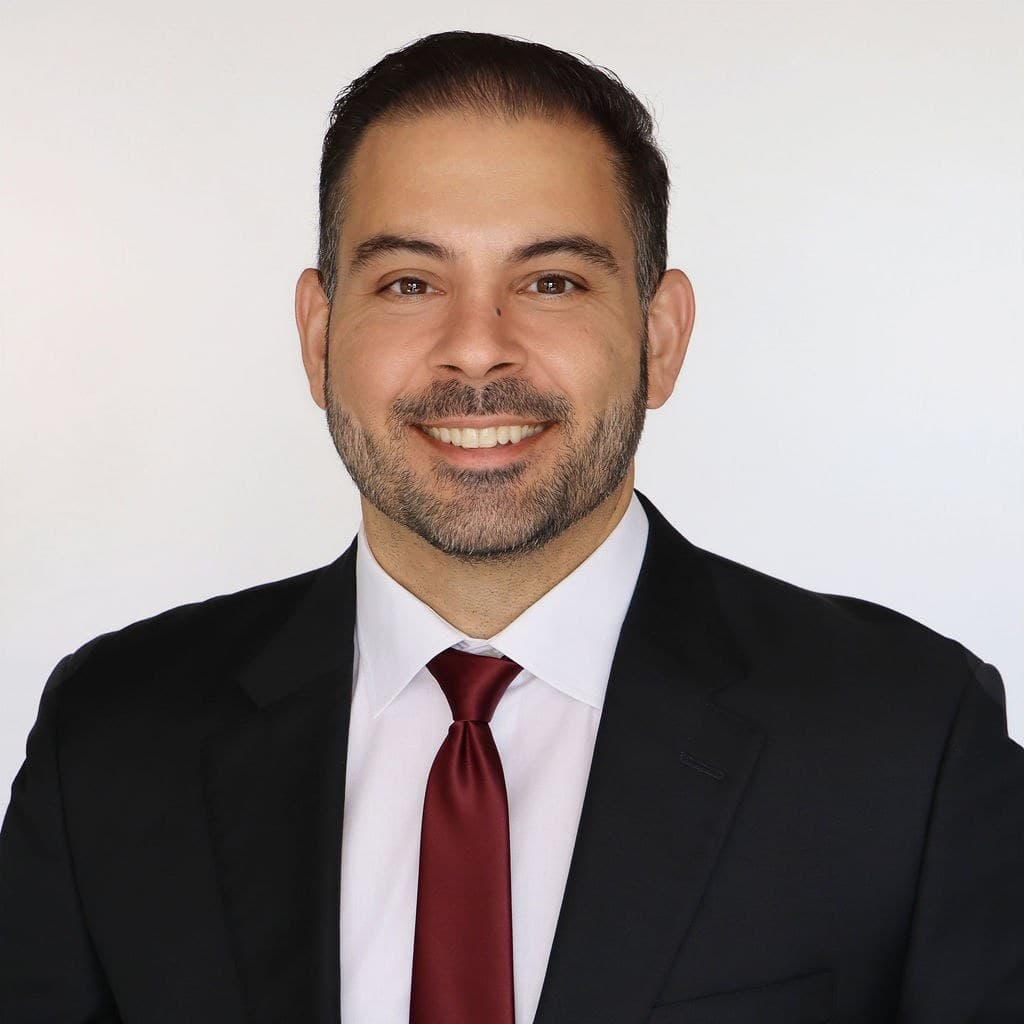
“Eman by far exceeds the basic requirements other lawyers give to clients and surpasses all expectations.”
Briana Norman
✦ Certified Specialist in Workers’ Compensation Law — Certified by the State Bar of California, Board of Legal Specialization ✦
Serving injured workers across California. Board-certified specialist; no fee unless we win.
By Eman Yazdchi, Esq. · Certified Specialist in Workers' Compensation Law, State Bar of California Board of Legal Specialization
In California, an injured agricultural worker can recover medical care, lost wages, and permanent disability benefits — regardless of immigration status under §3351 — and may stack a §4553 serious-and-willful penalty for heat-illness or known-hazard injuries. Yazdchi Law, a Certified Specialist in Workers' Compensation Law firm, handles California ag injury claims statewide. Request a free case review.
California's agricultural workforce is one of the largest and most-injured workforces in the country, and the legal framework has layers no other practice area carries at the same density. The Cal/OSHA Heat Illness Prevention Standard at Title 8 of the California Code of Regulations §3395 imposes statewide outdoor-work protections that incorporate into the California Labor Code §4553 serious-and-willful analysis when documented disregard produces a heat-illness injury or death. California Labor Code §2810 reaches above the immediate farm-labor contractor and creates liability against the grower that knew or should have known the contract lacked funds for compliance. California Labor Code §2775 applies the ABC test to ag misclassification when a grower or FLC calls a crew "independent contractors." And the California Labor Code §3351 + California Labor Code §244 + California Labor Code §132a + California Labor Code §5811 statutory quartet anchors a workforce that includes hundreds of thousands of undocumented Californians with full workers' compensation rights regardless of status.
California recognizes ag-worker injuries under the no-fault rule of California Labor Code §3600. Three injury patterns dominate. A single specific event — a citrus ladder fall in Tulare County, a vineyard tractor incident in Modesto, a knife laceration on a Salinas Valley salad-mix crew — produces a specific injury under California Labor Code §3600. A pattern of repetitive stoop, bending, lifting, and reaching across harvest seasons produces a cumulative-trauma injury under California Labor Code §3208.1, with the date of injury fixed by California Labor Code §5412 and liability allocated under California Labor Code §5500.5 on the last year of injurious exposure. And heat-illness sits in its own category under the Title 8 §3395 framework, with California Labor Code §4553 serious-and-willful exposure on every documented heat-illness death or serious heat injury where the standard's elements were not in place.
Yazdchi Law represents California ag workers statewide, from a home office at 1125 W Avenue M-14 in Palmdale, with regular appearances at the Bakersfield, Fresno, Oxnard, Riverside, San Bernardino, Pomona, Long Beach, Van Nuys, and Los Angeles WCAB district offices. Eman Yazdchi is a Certified Specialist in Workers' Compensation Law, certified by the California Board of Legal Specialization, State Bar of California. The firm regularly handles claims involving heat illness, ladder falls in citrus and stone-fruit harvest, harvest cumulative trauma, pesticide-exposure framing, undocumented-worker coverage under California Labor Code §3351, and FLC uninsured-employer exposure under California Labor Code §3706 and California Labor Code §2810.
The California ag workforce is roughly 92% Hispanic statewide, and in the Coachella Valley and Imperial Valley a significant share — commonly estimated around 50% — speak an indigenous Mexican or Central American language as their first: Mixteco, Zapoteco, Triqui, or Purépecha. California Labor Code §5811 provides a qualified interpreter at no cost to the worker in every one of those languages. The Reyes v. Van Elk line of California cases has repeatedly confirmed immigration status is not a defense an employer or insurer may use to defeat, reduce, or condition a workers' compensation claim. This page does not promise what any government agency will do; it explains what California law actually provides.
The major ag-industry employers California workers encounter are well-known operations whose names mark the workforce. Wonderful Pistachios in Lost Hills is the largest pistachio processor in the United States; Grimmway Farms (Bakersfield/Lamont) is the largest carrot grower in the country; Sun Pacific in Bakersfield runs major citrus operations; Foster Farms in Livingston anchors Central Valley poultry; Driscoll's partners with growers statewide on strawberries; Dole and Reiter Berry Farms operate strawberry production out of Oxnard and the Santa Maria Valley; E. & J. Gallo in Modesto is the dominant California wine-grape buyer; Dreyer's and Mariani run production-side workforces. These are named as industry context — not as the firm's adverse-party history. The same statutory framework applies identically to every ag employer regardless of brand or scale.
A California ag-worker injury claim moves through the same statutory framework as any other workers' compensation case, with several ag-specific overlays: the Cal/OSHA Heat Illness Prevention Standard at Title 8 §3395 and the California Labor Code §4553 serious-and-willful analysis it anchors; the California Labor Code §3208.1 cumulative-trauma framework; the California Labor Code §5500.5 last-injurious-exposure rule for workers who rotated between growers and FLCs; California Labor Code §2810 grower-level due diligence; the California Labor Code §3351 + California Labor Code §244 + California Labor Code §132a + California Labor Code §5811 protective quartet for workers regardless of immigration status; and the California Labor Code §3706 uninsured-employer civil-action option, which carries unusually high relevance in the ag context.
Under California Labor Code §3600, California workers' compensation covers every ag-worker injury arising out of and in the course of employment — the AOE/COE rule — without proof of employer fault. AOE/COE reaches every work-produced injury: a citrus ladder fall in Tulare County, a vineyard tractor incident in Modesto, a knife laceration on a Salinas salad-mix crew, a heat-illness collapse during a Cal/OSHA Title 8 §3395 trigger day. Coverage is no-fault — the trade for workers' comp being the exclusive remedy against the employer under California Labor Code §3601, except in narrow carve-outs (uninsured employer under California Labor Code §3706, intentional act, dual-capacity). Independent third-party negligence — a different sub's crew, a defective ladder or tractor, a chemical-supplier product — opens a parallel civil tort claim under California Labor Code §3852, with proceeds allocated under California Labor Code §3856.
The Cal/OSHA Heat Illness Prevention Standard at Title 8 of the California Code of Regulations §3395 — a regulation, not a Labor Code section — imposes statewide outdoor-work protections any time the temperature reaches 80°F: potable cool drinking water at no cost; shade large enough for every employee on rest break; a written heat illness prevention plan in a language the workers understand; cool-down rest periods on request; high-heat procedures triggered at 95°F (observation, ten-minute preventative cool-down every two hours, effective communication); acclimatization protocols; and emergency response procedures. Title 8 §3395 is the implementing regulation under the general-duty clause of California Labor Code §6400. The standard reaches every outdoor ag worker statewide — Coachella, Imperial, Kern, Tulare, Fresno, Salinas, Ventura, and Santa Maria.
Under California Labor Code §4553, when a California employer knew of a dangerous condition and deliberately failed to remedy it, the worker's compensation award is increased by 50%. On a California ag heat-illness death or serious heat injury, the Title 8 §3395 standard provides the knowledge anchor California Labor Code §4553 requires. The Vasquez Jimenez 2008 Bakersfield-area heat-illness death — a widely-publicized California incident that catalyzed the strengthened Title 8 §3395 high-heat procedures — illustrates the pattern generally, without overstating any specific case citation. The evidentiary anchors are documentary: the heat illness prevention plan (or absence of one); shade and water logs; cool-down records; prior Cal/OSHA citations; foreman testimony; weather-station data on the date of injury. A Cal/OSHA citation for the same Title 8 §3395 violation is often dispositive of the California Labor Code §4553 actual-knowledge element. The 50% increase applies across TD, PD, future medical, and the California Labor Code §4702 death benefit.
Under California Labor Code §3208.1, a California ag worker who developed back, shoulder, knee, hip, or hand pathology over repeated harvest seasons of stooping, bending, lifting, and reaching has a cumulative-trauma injury — separate from any single specific incident. Common patterns: lumbar disc herniation from stoop labor; knee meniscal tears from squatting in strawberry and lettuce work; rotator-cuff tears from overhead citrus picking; epicondylitis from pruning; carpal tunnel from packing. The medical-legal evaluation under California Labor Code §4062.2 draws on AMA Guides 5th Edition; the PD rating builds under California Labor Code §4660. California Labor Code §5412 fixes the date of injury at the date the worker first suffered disability AND knew, or reasonably should have known, the disability was caused by the agricultural work; California Labor Code §5405 runs the one-year SOL from that date — typically the first medical visit linking the symptoms to harvest work.
Under California Labor Code §5500.5, California cumulative-trauma liability falls on the last year of injurious exposure — central to ag claims because the workforce routinely rotates among growers, packing houses, and FLCs. A worker who picked Coachella table grapes in spring, moved to Kern County for summer stone-fruit, worked Tulare and Fresno tree-nut harvest in fall, and finished in the Imperial Valley winter-vegetable harvest will typically have California Labor Code §5500.5 liability allocated to the carrier covering the last contributing grower or FLC. The rule simplifies what would otherwise be a multi-defendant allocation problem and aligns the California Labor Code §4062.2 QME panel against the right insurer. Specific-injury claims under California Labor Code §3600 run against the employer on the date of injury.
Under California Labor Code §2810, a California person or entity may not enter a farm-labor contract — the statute enumerates farm labor alongside construction, garment, janitorial, security, port-drayage, and warehouse labor contracts — if it knows or should know the contract lacks funds sufficient for the FLC to comply with wage, workers' comp, and labor-law obligations. The rule reaches above the immediate FLC and creates exposure for the grower, packing house, or hiring entity that signed an under-funded labor agreement. On a California ag injury where the direct FLC turns out to be uninsured under California Labor Code §3700, California Labor Code §2810 is a separate route to recovery against the higher-tier grower. The evidence pattern is the labor contract itself, the FLC's DIR registration, the FLC's workers' compensation policy declaration page (or absence of one), and the grower's documented contract-administration practice.
Under California Labor Code §2775, the California ABC test codifies the Dynamex framework and presumes a worker is an employee unless the hiring entity proves all three prongs: (A) freedom from the hiring entity's control and direction; (B) the work is outside the hiring entity's usual course of business; and (C) the worker is customarily engaged in an independently established trade. The ABC test forecloses the routine grower or FLC defense that a "1099" crew is outside workers' compensation coverage. Prong (B) is structurally fatal in most ag classification disputes: harvest labor is the usual course of business of a grower, and packing labor is the usual course of business of a packing house. California Labor Code §2775 pairs with California Labor Code §3351 — a worker presumed an employee is fully covered regardless of immigration status, and the California Labor Code §3700 insurance requirement applies retroactively to the date of injury.
California Labor Code §3351 defines "employee" for California workers' compensation purposes to reach every person providing services for an employer — regardless of immigration status. The Reyes v. Van Elk Ltd. line of California cases confirms an undocumented ag worker is entitled to medical care under California Labor Code §4600, TD under California Labor Code §4653, PD rating under California Labor Code §4660, lifetime future medical, and death benefits under California Labor Code §4702. California Labor Code §244 prohibits the employer from threatening to report immigration status — the worker's or a family member's — in retaliation for any Labor Code right. California Labor Code §132a provides reinstatement, back wages, a $10,000 increase in the underlying compensation award, and costs up to $250 against a retaliating employer. California Labor Code §5811 provides a qualified interpreter at every hearing, deposition, and medical-legal exam at no cost — Spanish, Mixteco, Zapoteco, Triqui, Purépecha, or whichever language the worker speaks. This page does not promise what any government agency will do; it explains what California law provides.
Acute and chronic chemical-exposure injuries are compensable when the exposure arose out of and in the course of the agricultural employment under California Labor Code §3600 and the medical-legal evidence supports causation. Compensable patterns include acute pesticide poisoning, dermatitis and chemical burns, respiratory injury from drift exposure, and chronic systemic conditions where the medical-legal evaluator under California Labor Code §4062.2 supports causation to within reasonable medical probability. The evidentiary record builds on the pesticide use report filed with the County Agricultural Commissioner, safety data sheets, buffer-zone records, PPE provided (or not), and the worker's exposure timeline. The cumulative-trauma framework under California Labor Code §3208.1 applies to chronic exposure, with the date of injury fixed by California Labor Code §5412. This page makes no specific causal claim about any chemical or product; causation is a medical-legal question under California Labor Code §4062.2.
Under California Labor Code §3700, every California employer must carry workers' compensation insurance; failure to do so is a misdemeanor under California Labor Code §3700.5. When a California ag-worker injury involves an uninsured employer or FLC — a structurally higher risk in the small-operator, seasonal-crew, and labor-broker context — the worker has two parallel remedies under California Labor Code §3706: a claim against the Uninsured Employers Benefits Trust Fund administered by DWC, and a civil tort action against the uninsured employer outside the exclusive-remedy bar of California Labor Code §3601. The civil claim allows general damages (pain and suffering) not available in workers' compensation. The grower or hiring entity above the uninsured FLC may have separate exposure under California Labor Code §2810.
When a California ag-worker injury is fatal — heat-illness death on a Title 8 §3395 trigger day, vineyard tractor rollover, struck-by-equipment fatality — death benefits flow to dependents under California Labor Code §4700 and California Labor Code §4702. California Labor Code §4700 passes accrued unpaid compensation to dependents (or the estate). California Labor Code §4702 sets the death-benefit amount by the number of dependents and the date of injury — post-2006: $250,000 for one total dependent, $290,000 for two, $320,000 for three or more. California Labor Code §4706 authorizes reasonable burial expenses and routes remaining payments to heirs at law when no surviving dependent remains. A heat-illness death where the Title 8 §3395 standard's elements were not in place commonly supports the California Labor Code §4553 50% increase. California Labor Code §3351 confirms coverage regardless of status.
California Labor Code §6403.5 is the California safe-patient-handling rule for general acute-care hospitals: it requires lift teams, lift-equipment training, and a written patient-protection and healthcare-worker injury-prevention plan. California Labor Code §6403.5 does NOT apply to agricultural worker injuries. The statute is hospital-specific by its terms and is explicitly noted here to dispel the occasional confusion: California ag-worker injuries are governed by the general-duty clause of California Labor Code §6400, the Title 8 safety orders that implement it (the Title 8 §3395 Heat Illness Prevention Standard, the Title 8 §3437 ag-ladder safety rule, the Title 8 §3441 field-sanitation rule), and the California Labor Code §4553 S&W framework.
Under California Labor Code §4653, a California ag worker who is temporarily totally disabled receives TTD at two-thirds of average weekly earnings, subject to the statutory weekly maximum DWC resets each year. The California Labor Code §4650 timing rule requires TD payments to begin within fourteen days of disability and continue every two weeks; late payments carry a self-imposed 10% increase. Total TD is capped at 104 compensable weeks within five years for most ag claims. Under California Labor Code §4660, the PD rating builds on the AMA Guides 5th Edition, adjusted by the occupational variant (heavy-laborer ag workers receive the largest upward adjustments) and the age adjustment. Under California Labor Code §4663, apportionment is the predictable insurance defense — pre-existing degenerative findings, prior work — with the burden on the employer; Brodie holds that asymptomatic pre-existing findings standing alone are a weak basis. The California Labor Code §4658 schedule controls PD indemnity disbursement.
Under California Labor Code §4658.7, a California ag worker who cannot return to the pre-injury job and is not offered regular, modified, or alternative work within 60 days of the permanent-and-stationary date is entitled to a Supplemental Job Displacement Benefit voucher worth up to $6,000 for training, tuition, books, certification fees, computer equipment, or licensing at an approved school. Ag workers commonly qualify because heavy lifting, prolonged stooping, ladder climbing, and exposure to extreme outdoor conditions are often medically restricted after a serious lumbar, shoulder, or knee injury. The voucher runs in addition to indemnity, survives a C&R under California Labor Code §5001, and reaches CDL, forklift certification, ESL, GED, vocational training, and community-college credentials.
Under California Labor Code §4600, the California employer must provide all medical treatment reasonably required to cure or relieve the effects of the ag-worker injury. Up to $10,000 in immediate treatment must be authorized within one day of the DWC-1 under California Labor Code §5402(c). Treatment requests are screened by Utilization Review under California Labor Code §4610 against the Medical Treatment Utilization Schedule; UR denials are appealed via Independent Medical Review within 30 days under California Labor Code §4610.5. Unreasonable delay or denial supports a 25% penalty under California Labor Code §5814. The medical-legal evaluation under California Labor Code §4062.2 typically requires an interpreter under California Labor Code §5811 — Spanish, Mixteco, Zapoteco, Triqui, Purépecha, or whichever language the worker speaks.
A California ag-worker claim resolves under California Labor Code §5001 through a Compromise & Release (closes every component — indemnity, future medical under California Labor Code §4600, reopening rights — for a single lump-sum, subject to WCAB judicial approval) or Stipulations with Request for Award (pays PD over time per California Labor Code §4658 while leaving future medical open). The California Labor Code §4658.7 voucher survives either. If the WCAB judge rules against the worker on causation, apportionment under California Labor Code §4663, the rating under California Labor Code §4660, or the California Labor Code §5500.5 CT allocation, the worker has 25 days from mailed service (20 days electronic) to file a Petition for Reconsideration under California Labor Code §5903. A denial of reconsideration is reviewable via Writ of Review within 45 days under California Labor Code §5950.
Injured at work? Call (661) 273-1780
Tap to call →California ag-worker claims are heard at the WCAB district office nearest the worker's home or worksite. Yazdchi Law appears at the Bakersfield, Fresno, Oxnard, Riverside, San Bernardino, Pomona, Long Beach, Van Nuys, and Los Angeles districts. The Division of Workers' Compensation publishes the procedural rules; Cal/OSHA publishes the Title 8 safety orders that incorporate into the California Labor Code §4553 analysis — the Title 8 §3395 Heat Illness Prevention Standard, the Title 8 §3437 ag-ladder safety rule, and the Title 8 §3441 field-sanitation rule.
The firm's historical case-result range — $300,000 failed-back, $415,000 CT, $425,000 catastrophic, $1,500,000 cervical, $5,000,000 catastrophic spinal cord — reflects the magnitudes serious California ag-worker spine, ladder-fall, and heat-illness cases can reach when California Labor Code §4660 PD, California Labor Code §4600 future medical, California Labor Code §4659 life pension at 70%+ PD, the California Labor Code §4553 50% increase, and California Labor Code §4702 death benefits are properly valued.
This firm does not make promises about immigration authorities — no California attorney can. What the law provides: California Labor Code §3351 coverage regardless of status; California Labor Code §244 prohibition on the employer threatening status enforcement in retaliation; the Reyes v. Van Elk line barring status as a defense; California Labor Code §5811 qualified-interpreter rights at no cost in Spanish, Mixteco, Zapoteco, Triqui, Purépecha, and every other language; California Labor Code §132a remedies if the employer retaliates; confidential initial consultation.
Yazdchi Law P.C., 1125 W Avenue M-14, Suite A, Palmdale, CA 93551. (661) 273-3939. Free, confidential consultations on California ag-worker claims statewide. Workers' compensation attorney fees are contingent and set by the WCAB under California Labor Code §4906 — nothing owed unless the case recovers. Spanish-language consultations available. Eman Yazdchi, Esq., is a Certified Specialist in Workers' Compensation Law, certified by the California Board of Legal Specialization, State Bar of California.
Last reviewed by Eman Yazdchi, Esq., May 2026.
Ready to discuss your case? Schedule a free consultation.
Schedule Free ConsultationRead more testimonials →“Eman by far exceeds the basic requirements other lawyers give to clients and surpasses all expectations.”