
Florence Firestone, California · Workers' Compensation
Florence-Firestone Workers' Comp Appeal Lawyer
Hurt at work in Florence Firestone? Workers' comp pays for medical care and part of your lost pay while you heal. A free call tells you where you stand.
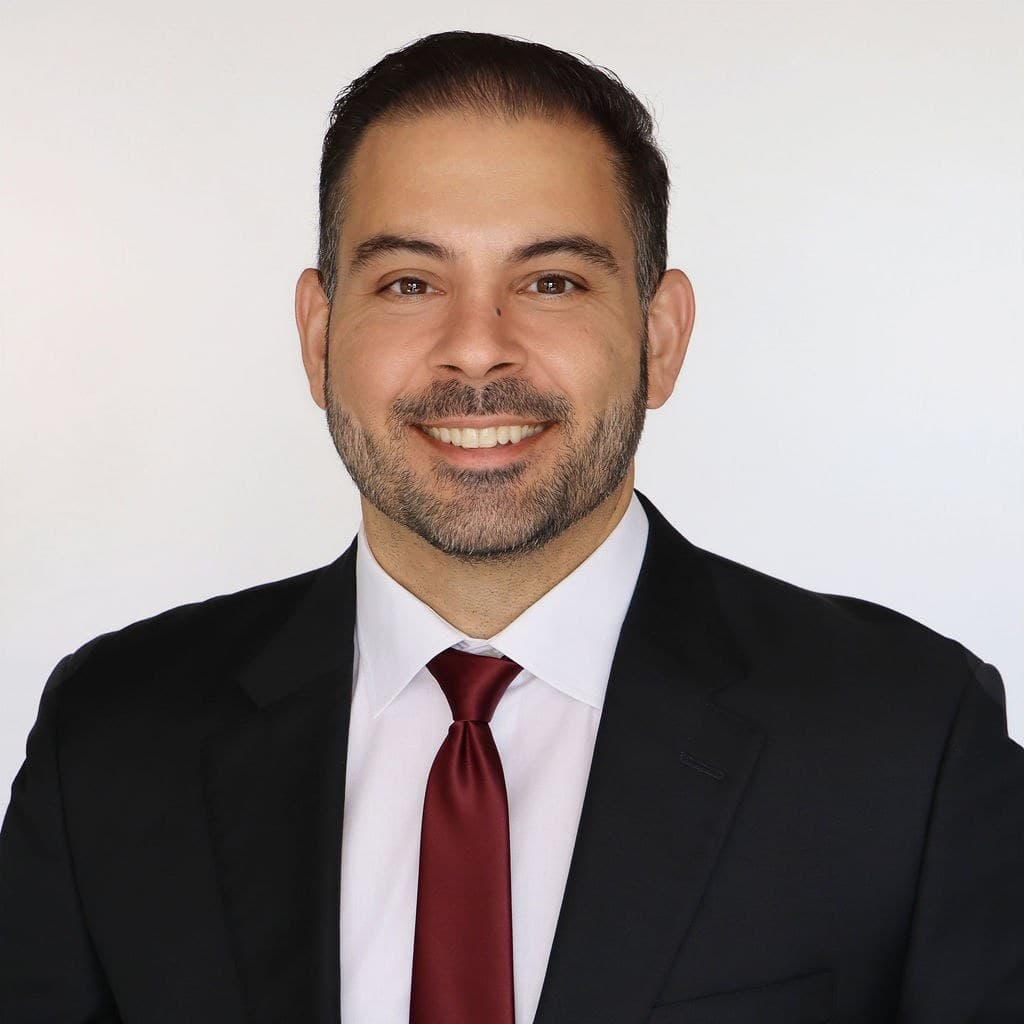
Eman Yazdchi, Esq., Certified Specialist in Workers' Compensation Law, California Board of Legal Specialization, State Bar of California.


California Board of Legal Specialization, State Bar of California
California Board of Legal Specialization, State Bar of California
- 14+
- Years of Practice
- 2,000+
- Cases handled over 14+ years
- $50M+
- Recovered over 14+ years
- 3
- Languages: English, Español, Farsi
Past results do not guarantee, warrant, or predict future cases. Each case is different and results depend on specific facts and circumstances.
Prepared by Yazdchi Law
Did the insurance company deny your workers' comp claim in Florence-Firestone, or cut off the treatment your doctor ordered? Take a breath. A denial is not the end. It is the beginning of the fight for your benefits, and you do not have to wage it alone.
Here is what insurers hope you never learn. Almost every denial can be appealed, and the appeal costs you nothing up front. Maybe they rejected your claim outright. Maybe they blamed an old injury or refused your surgery. Either way, California gives you a path to challenge that call. The one catch is time. Appeal windows are short, and they do not forgive a late filing.
Do these three things today:
- Find the service date on the denial. Your clock starts the day the decision was served, not the day it reached your mailbox.
- Mark your deadline now. A denied treatment gives you 30 days. A judge's decision gives you 25 days if mailed, 20 if served electronically.
- Call before the clock runs. Reach us at (661) 273-1780. A missed appeal deadline usually cannot be undone.
Was your Florence-Firestone claim denied? You can fight it.
Yes, you can fight it. A denied treatment goes to Independent Medical Review within 30 days. A denied claim or judge's ruling goes to reconsideration within 25 days.
When that denial letter shows up, most workers think the door has closed. It has not. A denial is the insurer's opening move, not the last word. Many denials get reversed once the right medical proof reaches a judge. Insurers count on workers giving up or missing the deadline. Do not give them that. The work starts with one free phone call, and we handle the paperwork and the filing from there.
UR vs IMR vs a WCAB appeal: which path is yours?
It depends on what got denied. A denied treatment follows the Utilization Review then Independent Medical Review track. A denied claim or judge's ruling follows the reconsideration track.
California gives you more than one appeal door, and the right one depends on what the insurer rejected. Choose wrong and you can burn the only time you have. There are three main paths.
Your treatment was denied. When your doctor asks for surgery, therapy, or an MRI, the insurer sends the request to Utilization Review. That is a paper review by a doctor you never meet. If that doctor says no, you appeal to Independent Medical Review within 30 days. An outside physician then weighs the request against the state treatment guidelines.
One hard truth about this track. Once Independent Medical Review rules, the decision is close to final. Under §4610.6, you can overturn it only on narrow grounds, such as fraud, a clear conflict of interest, or plain bias. That is why the first medical fight matters so much.
Your claim or your award was denied. When the insurer rejects the whole claim, or a workers' comp judge issues a decision you believe is wrong, you file a Petition for Reconsideration under §5903. A panel of Appeals Board commissioners then reviews the judge's work. If they uphold the denial, you can ask the California Court of Appeal for a Writ of Review within 45 days.
Your case already closed. If your injury got worse after a settlement or award, you may be able to reopen the case within five years of the date you were hurt. New medical evidence drives that path.
Why does the door matter so much? Say a warehouse loader near the Alameda Corridor needs back surgery, and the insurer's review doctor says no. That worker belongs on the Independent Medical Review track, not the reconsideration track. A sewing-shop worker whose entire claim was rejected belongs on the reconsideration track. Send your fight to the wrong board and the real deadline can pass while you wait. We pick the right path on day one.
How long do you have to appeal?
Not long. A denied treatment: 30 days. A judge's decision: 25 days if mailed, 20 if electronic. A writ to the Court of Appeal: 45 days. Miss it and you usually lose.
Appeal deadlines in California are short, and most are jurisdictional. That is the legal way of saying no one can extend them. Not the judge, not the insurer, and not the Appeals Board. The clock starts the day the decision is served, so read the proof of service first. Here is every appeal route on one page.
| What was denied | Your appeal route | Deadline | Law |
|---|---|---|---|
| Treatment denied at Utilization Review | Independent Medical Review | 30 days from the denial | §4610.5 |
| IMR upheld the denial | Appeal only on narrow grounds (fraud, bias, conflict) | 30 days | §4610.6 |
| A judge's decision (Findings & Award) | Petition for Reconsideration | 25 days if mailed, 20 if electronic | §5903 |
| Reconsideration denied | Writ of Review to the Court of Appeal | 45 days | §5950 |
| New or worse disability after a closed case | Petition to Reopen | Within 5 years of the injury | §5803 |
Notice the gap between a mailed ruling and an electronic one. If the Los Angeles WCAB served your decision by email, you lose five days off the front. When you are unsure, treat the shorter window as your deadline. A quick call sorts out which clock you are on at (661) 273-1780.
What does the appeal process actually look like?
You file a written petition that names the legal error. The judge writes a report, and a panel of three Appeals Board commissioners reviews the record and rules.
A Petition for Reconsideration is not a brand-new trial. It is a written argument that the decision got the law or the facts wrong. You file it with the same district office that issued the ruling. For Florence-Firestone, that is the Los Angeles WCAB, and the filing runs through the state EAMS system. The trial judge then writes a report that recommends granting or denying your petition.
Reconsideration is only for a final order, decision, or award, such as a Findings and Award or an approved settlement. It is not for every smaller ruling along the way. From there, a three-commissioner panel of the Appeals Board reviews the whole record. They can affirm the decision, change it, or send the case back for more evidence. The law that opens this door is short.
Labor Code §5903: "At any time within 25 days after the service of any final order, decision, or award ... any party aggrieved thereby may petition for reconsideration ...."
What happens if the panel agrees with you? It can change the award in your favor, or send the case back to the trial judge with instructions. Many cases then settle on better terms. Reconsideration is not a delay tactic. Done right, it is how a wrong decision gets fixed.
If the panel still rules against you, the last step is the Court of Appeal. We map this whole chain at your first call, so you always know which stage you are on and what comes next.
What evidence wins a workers' comp appeal?
Substantial medical evidence. A clear report from the panel doctor or your treating physician that explains the how and why of your injury usually decides it.
Appeals are won on the record, not on feelings. The strongest piece is a well-reasoned medical report. In most disputed cases that report comes from a Qualified Medical Evaluator picked through a state panel, where each side strikes one of three names. A report that spells out the how and why of your injury carries real weight. A vague one does not.
Sometimes both sides agree on one doctor instead of using the panel, called an Agreed Medical Evaluator. That report can carry even more weight, because no one can claim the doctor was one-sided. Whether your case turns on a panel QME or an AME, we know the evaluators who work the Los Angeles area. We prepare your file so the report lands in your favor.
Winning appeals also lean on complete treatment records, imaging that backs the diagnosis, and your treating doctor's opinion. For a denied treatment, the IMR file should show that conservative care failed and that the request fits the guidelines. For a reopening, you need proof that your condition truly worsened. We build that record for you, then argue it at the Los Angeles WCAB.
Results in cases like this
Every case is different. Past results do not guarantee, warrant, or predict a similar outcome.
$5,000,000
Catastrophic spinal cord injury
$1,500,000
Cervical spine injury
$425,000
Slip and fall accident
Find Out What Your Florence Firestone Case May Be Worth
Two minutes. No fee unless we win; costs may apply.
Question 1 of 5
What type of injury do you have?
Not ready to fill this out? Just call (661) 273-1780 and we’ll ask the same questions by phone.
Free Consultation
Call or send the short form. We review your case, explain your rights, and outline your options. Free, no obligation.
We Build Your Case
We gather medical evidence, handle the insurance company, and file all the workers' comp court (WCAB) paperwork for you.
We Pursue Every Benefit
Medical care, lost wages, and permanent disability benefits. No fee unless we win your case; costs may apply.
What's special about appeals at the Los Angeles WCAB?
The LA district office handles a heavy volume of South LA claims and files everything through EAMS. Eman Yazdchi appears there often and knows its judges and panel doctors.
Where is the Los Angeles WCAB, and who does it cover?
Florence-Firestone appeals are heard at the Los Angeles district office of the Workers' Compensation Appeals Board. The office sits at 320 West Fourth Street downtown. It is one of the busiest comp courts in the state. It hears claims from across central and South Los Angeles, including Huntington Park, South Gate, and Walnut Park. Filings move through EAMS, the state's electronic case system. Yazdchi Law appears there regularly on denied claims, reconsideration petitions, and Independent Medical Review disputes.
Which Florence-Firestone jobs see the most denied claims?
The neighborhood runs on industrial and service work, and a few of those jobs generate most of the denials we challenge:
- Warehouse and freight: forklift drivers and loaders along the Alameda Corridor and Slauson Avenue, whose back and shoulder claims often get tagged as pre-existing.
- Food processing: line and cold-storage workers at the Vernon plants just north, where repetitive-motion claims are often denied as not work-related.
- Garment and sewing: machine operators in the local shops and the nearby Fashion District, whose hand, neck, and back injuries build up over years.
- Auto and tire shops: mechanics along Florence Avenue and Pacific Boulevard with lifting and chemical-exposure claims.
- Scrap, recycling, and construction: heavy-lifting jobs and day labor where a late report gives the insurer an excuse to deny.
Why do so many of these claims get denied?
The reasons repeat, and we have answers for each. The insurer calls a build-up injury "not work-related." It blames an old injury or normal aging to shrink the award. It points to a late report or a gap in treatment. Picture a Vernon cold-storage worker whose shoulder wore out over years, denied because a records doctor called it "degenerative." Or a forklift driver denied for reporting a week late. None of these is the end of the case. Each is an argument you can answer on appeal with the right medical proof. That is the work we do at the Los Angeles WCAB.
Can you appeal if you are undocumented?
Yes. California law protects every worker no matter their immigration status, and that shield follows you through an appeal. Your employer cannot use your status to fight your claim. A threat to report you for filing or appealing is illegal retaliation on its own. Our office is bilingual, and many of the workers we represent in this community are immigrants.
What does a Florence-Firestone appeal lawyer cost?
Nothing up front, and nothing unless we win. The judge sets the fee, usually 12 to 15 percent of what we recover for you.
You pay no hourly bill and nothing to begin. In California workers' comp, the WCAB judge sets the attorney fee. It is normally 12 to 15 percent of your award or settlement, and you owe it only if we recover for you. If the appeal brings in nothing, you owe no fee. That keeps strong representation within reach of every worker in Florence-Firestone.
About your attorney
Eman Yazdchi is a Certified Specialist in Workers' Compensation Law, California Board of Legal Specialization, State Bar of California (CA Bar #285231). Only a small fraction of California lawyers hold this credential. He has represented hundreds of injured California workers and appears regularly at the Los Angeles WCAB. The firm has recovered up to $5,000,000 for a catastrophic spinal-cord injury and $1,500,000 for a cervical-spine injury. Past results do not guarantee future outcomes, since every case is different. More about Eman Yazdchi. Verify his State Bar profile.
Nearby communities we serve
Injured at work in Florence Firestone? Talk it through for free.
Most claims must be filed within one year under Labor Code section 5405. A free call tells you where your clock stands.
Frequently Asked Questions
My Florence-Firestone claim was denied. Can I really appeal?
How long do I have to appeal in Florence-Firestone?
Independent Medical Review upheld the denial. Is that the end?
Can I reopen my workers' comp case if my injury got worse?
How long does a workers' comp claim take to settle?
What is the difference between a Stipulated Award and a Compromise and Release?
How much of my settlement do I keep after the attorney fee?
Can I appeal if I am undocumented?
Free case evaluation
Get your free Florence Firestone case evaluation
Three fields. We respond within one business day.
Talk to a Certified Specialist
Certified Specialist in Workers' Compensation Law, California Board of Legal Specialization, State Bar of California.
Takes 30 seconds. No obligation.
A fighting force both consistent and compassionate on a scale’s a 5 all around.
Very thankful for everything they did for us. Always responsive, reassured us every step of the way and obtained a great result.
Client testimonials. Testimonials are not a guarantee, warranty, or prediction of the outcome of your case.