
California · Workers' Compensation
California Paramedic and EMT Workers Comp Lawyer
Hurt at work? Workers' comp pays for medical care and part of your lost pay while you heal. A free call tells you where you stand.
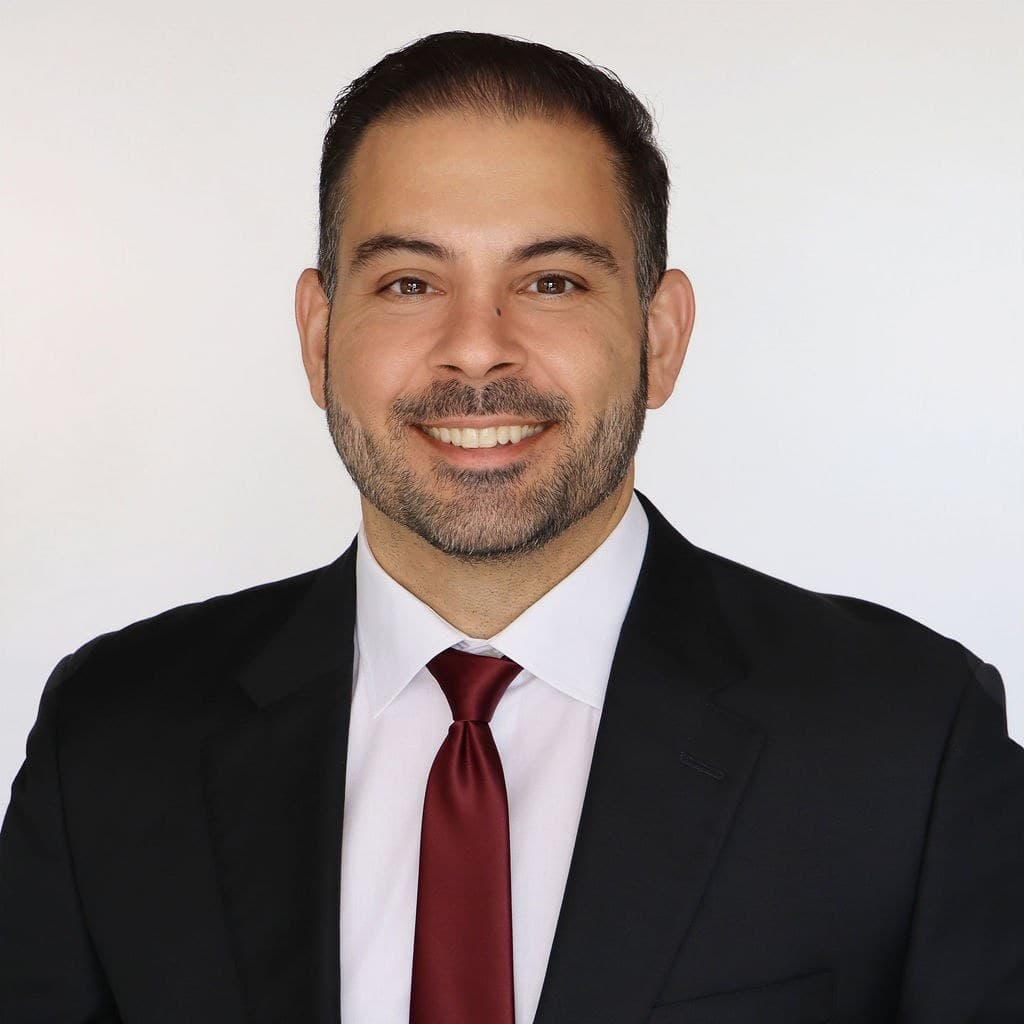
Eman Yazdchi, Esq., Certified Specialist in Workers' Compensation Law, California Board of Legal Specialization, State Bar of California.


California Board of Legal Specialization, State Bar of California
California Board of Legal Specialization, State Bar of California
- 14+
- Years of Practice
- 2,000+
- Cases handled over 14+ years
- $50M+
- Recovered over 14+ years
- 3
- Languages: English, Español, Farsi
Past results do not guarantee, warrant, or predict future cases. Each case is different and results depend on specific facts and circumstances.
Prepared by Yazdchi Law
Hurt as a California paramedic or EMT?
A paramedic or EMT claim may involve a medical presumption, a crash claim, a treatment dispute, and a permanent disability rating.
Paramedics and EMTs do not have ordinary jobs. They lift patients in tight spaces. They work around blood and needles. They ride in traffic. They respond to violence, fatal scenes, and repeated trauma. A single shift can create a claim. A career can create more than one.
California workers' compensation can cover medical care, wage replacement, permanent disability, and retraining. Some responder claims also use special presumptions. Ambulance crashes may create a separate civil case against a negligent driver.
Yazdchi Law handles California paramedic and EMT claims involving bloodborne exposure, PTSD, ambulance crashes, back injuries, shoulder injuries, knee injuries, patient lifting, assault injuries, and treatment denials.
What benefits can a California paramedic or EMT claim?
A covered responder can claim medical care, temporary disability, permanent disability, mileage, retraining, death benefits, and sometimes a separate third-party recovery.
Labor Code 4600 covers reasonable medical care. For paramedics and EMTs, care may include emergency treatment, infectious disease testing, post-exposure treatment, orthopedic care, mental health treatment, imaging, surgery, therapy, and medication.
Temporary disability may apply when the responder cannot safely work. Permanent disability is rated after the condition stabilizes. If the worker cannot return to field work, the retraining voucher can matter.
| Benefit | What it pays in 2026 |
|---|---|
| Temporary disability | Two-thirds of your wage, $264.61 to $1,764.11 per week, up to 104 weeks (Labor Code 4656) |
| Permanent disability | Two-thirds of your wage, $160 to $290 per week, set by your rating (Labor Code 4658) |
| Medical care | 100 percent of approved care, no copay (Labor Code 4600) |
| Medical mileage | 76 cents per mile to your appointments for trips on or after July 1, 2026 (72.5 cents earlier in 2026) |
| Job retraining voucher | $6,000 if you cannot return to your old job (Labor Code 4658.7) |
| Death benefits | $250,000 to $320,000 to dependents, plus $10,000 burial (Labor Code 4702) |
How do bloodborne exposure and needle stick claims work?
The claim should document the exposure, source risk, immediate medical care, testing, work status, and any later diagnosis tied to the exposure.
Paramedics and EMTs face sharps injuries, blood splash, saliva exposure, and body fluid contact. Labor Code 3212.8 provides a bloodborne disease presumption for qualifying public safety and emergency medical personnel. The presumption can help when the worker later develops a covered infectious disease.
Fast documentation matters. The worker should report the exposure, identify the source patient when possible, follow the agency exposure plan, and get medical evaluation quickly. Cal/OSHA Title 8 section 5193 requires bloodborne pathogen protections and exposure control planning.
| Exposure step | Why it matters |
|---|---|
| Immediate report | Creates proof that the exposure happened at work |
| Medical evaluation | Documents risk, testing, medication, and work status |
| Follow-up testing | Tracks whether a bloodborne disease develops |
| DWC-1 claim form | Starts the workers compensation claim process |
How does the PTSD presumption apply to paramedics and EMTs?
Qualifying responders may use the PTSD presumption when the diagnosis and service requirements are met and the employer cannot rebut causation.
Labor Code 3212.15 creates a PTSD presumption for specified first responders, including qualifying paramedics and EMTs. The diagnosis must be made under accepted mental health standards. The medical record should describe the work exposures, symptoms, treatment, and effect on function.
Even with a presumption, the record matters. Incident reports, therapy records, peer support notes, supervisor reports, and time-off records can help. The employer may dispute qualifying status, diagnosis, or causation. A clear record keeps the case grounded.
What if the injury happened in an ambulance crash?
An ambulance crash can create a comp claim against the employer and a separate civil claim against a negligent third party.
Labor Code 3852 preserves a worker's right to sue a third party who caused the same injury. For a paramedic or EMT, that often means a civil claim against an at-fault driver after an ambulance crash. The comp case pays work injury benefits. The civil case may address damages not paid in comp.
Labor Code 3856 governs allocation when a third-party case recovers money and the comp carrier has a lien. The two cases should be coordinated from the start. Crash photos, traffic reports, dash or body camera records, dispatch logs, and witness names should be preserved.
How are treatment disputes and ratings handled?
Treatment disputes move through Utilization Review and Independent Medical Review, while ratings depend on impairment, work limits, and medical causation.
Labor Code 4610 and Labor Code 4610.5 control many treatment review disputes. Denials of therapy, imaging, counseling, surgery, or specialist care should be reviewed quickly because the appeal deadline is short.
Labor Code 4660.1 governs many current permanent disability ratings. A responder's rating may involve spine injury, shoulder damage, knee injury, infectious disease effects, PTSD, or combined conditions. Labor Code 4663 apportionment should be supported by a real medical explanation.
| PD rating | Benefit weeks | Award at the 2026 max ($290/wk) |
|---|---|---|
| 10 percent | 30 weeks | $8,700 |
| 20 percent | 75 weeks | $21,750 |
| 30 percent | 130 weeks | $37,700 |
| 40 percent | 200 weeks | $58,000 |
| 50 percent | 270 weeks | $78,300 |
| 60 percent | 350 weeks | $101,500 |
| 70 percent | 430 weeks | $124,700 plus a life pension |
| Step | What happens | Your deadline |
|---|---|---|
| Treatment request | Your doctor asks the insurer to approve care | None |
| Utilization Review | A reviewer approves, modifies, or denies it | Days |
| Denied | You request Independent Medical Review | 30 days to appeal |
| IMR decision | A neutral doctor decides on the records | Final and binding |
What should a paramedic or EMT document right away?
The responder should document the call, exposure, crash, lift, witnesses, treatment, restrictions, and any agency report before records become hard to get.
Responder claims depend on detail. Write down the call type. Save the run number if allowed. Note the station, unit, partner, scene, hospital, and supervisor. If the claim involves a crash, save the report number and photos. If it involves exposure, save the exposure form and testing plan.
Tell the doctor the field facts. A gurney lift is not the same as a gym lift. A stair chair move is not the same as normal walking. A blood exposure is not just a cut. A traumatic call may affect sleep, focus, mood, and safety.
For PTSD or stress injury, start care early. A clear record can show symptoms, work cause, and function. For a back, shoulder, or knee injury, list the transfer, carry, bend, or crash force that caused the pain.
If treatment is denied, keep the denial letter. Many disputes have short appeal steps. A responder should not wait until the next shift cycle to ask what was denied and why.
Keep the facts simple. Write the call, the lift, the crash, or the exposure in plain words. Name the partner. Name the hospital. Name the supervisor. Name the body part. A clear note made the same day can carry weight later.
Do not work through a safety risk. If pain, medication, sleep loss, or trauma symptoms make patient care unsafe, tell the treating doctor. Field work demands clear judgment, safe lifting, and fast response. Restrictions should match that reality.
If the agency gives modified duty, ask for the tasks in writing. Desk work, training work, and station work can still break limits. A responder should compare the offer to the doctor's note before assuming it is safe.
Results in cases like this
Every case is different. Past results do not guarantee, warrant, or predict a similar outcome.
$5,000,000
Catastrophic spinal cord injury
$1,500,000
Cervical spine injury
$425,000
Slip and fall accident
Find Out What Your Case May Be Worth
Two minutes. No fee unless we win; costs may apply.
Question 1 of 5
What type of injury do you have?
Not ready to fill this out? Just call (661) 273-1780 and we’ll ask the same questions by phone.
Free Consultation
Call or send the short form. We review your case, explain your rights, and outline your options. Free, no obligation.
We Build Your Case
We gather medical evidence, handle the insurance company, and file all the workers' comp court (WCAB) paperwork for you.
We Pursue Every Benefit
Medical care, lost wages, and permanent disability benefits. No fee unless we win your case; costs may apply.
Where does Yazdchi Law handle paramedic and EMT claims?
The firm handles California paramedic and EMT claims in Greater Los Angeles WCAB districts tied to fire, ambulance, hospital, and transport work.
Responder claims in Southern California may involve municipal fire departments, county fire agencies, private ambulance providers, hospital transport teams, event medical teams, and interfacility transport crews. Venue depends on residence, assignment, employer, and claim handling.
Yazdchi Law appears in the Van Nuys, Los Angeles, Long Beach, Pomona, San Bernardino, Riverside, and Oxnard WCAB districts. These forums hear many claims involving ambulance crashes, lifting injuries, exposure claims, psychiatric injury, and disputed treatment.
Call the firm at (661) 273-1780 for a free consultation about a paramedic or EMT workers compensation claim. Eman Yazdchi is a Certified Specialist in workers' compensation law, certified by the California Board of Legal Specialization, State Bar of California. The firm reviews comp benefits, presumptions, and possible third-party claims together.
Injured at work? Talk it through for free.
Most claims must be filed within one year under Labor Code section 5405. A free call tells you where your clock stands.
Frequently Asked Questions
Can a California paramedic file after a needle stick?
Does California have a PTSD presumption for EMTs?
Can an ambulance crash produce two claims?
What if the agency denies my presumption claim?
Can paramedics claim back injuries from patient lifting?
What if treatment for counseling or therapy is denied?
Can a private ambulance EMT file workers comp?
What if I cannot return to field work after the injury?
Free case evaluation
Get your free case evaluation
Three fields. We respond within one business day.
Talk to a Certified Specialist
Certified Specialist in Workers' Compensation Law, California Board of Legal Specialization, State Bar of California.
Takes 30 seconds. No obligation.
A fighting force both consistent and compassionate on a scale’s a 5 all around.
Very thankful for everything they did for us. Always responsive, reassured us every step of the way and obtained a great result.
Client testimonials. Testimonials are not a guarantee, warranty, or prediction of the outcome of your case.