
California · Workers' Compensation
What Is California Labor Code §3700 (Employer Comp-Insurance Mandate)?
Hurt at work? Workers' comp pays for medical care and part of your lost pay while you heal. A free call tells you where you stand.
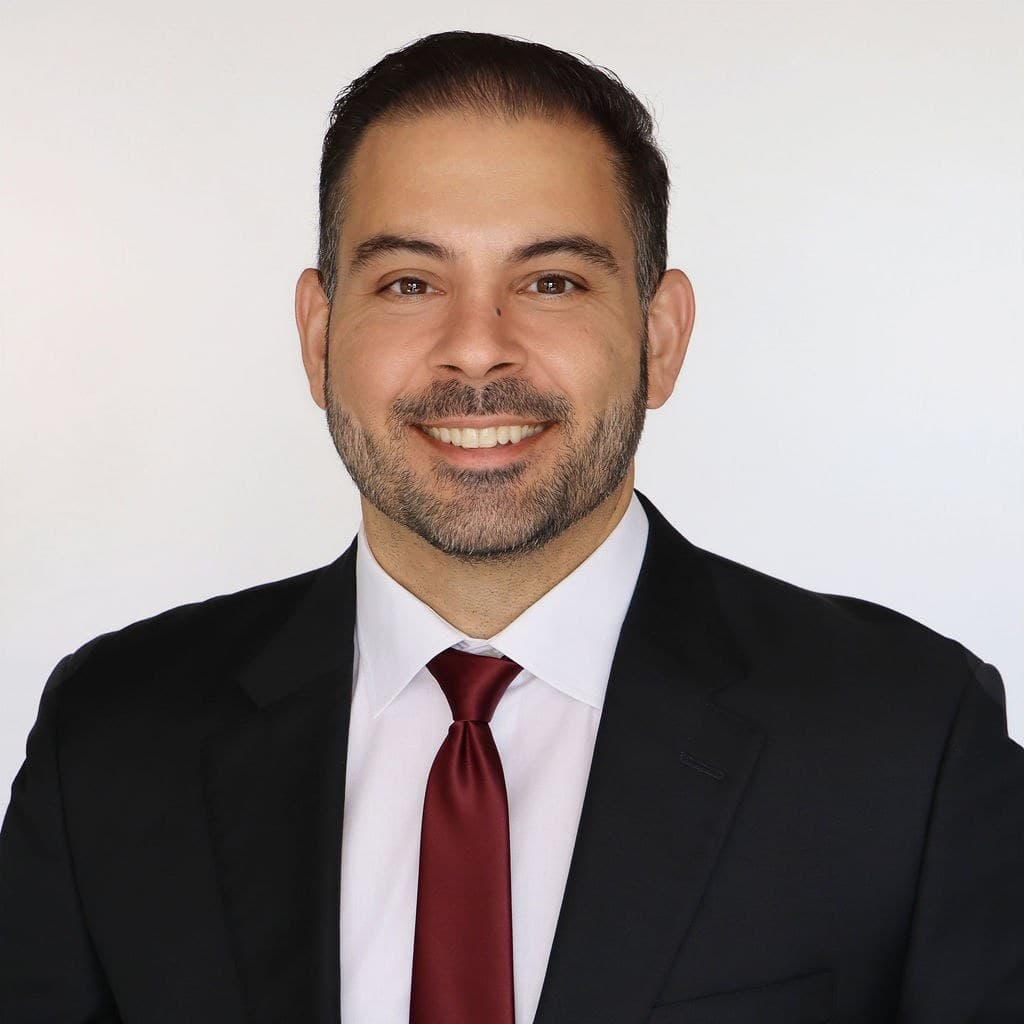
Eman Yazdchi, Esq., Certified Specialist in Workers' Compensation Law, California Board of Legal Specialization, State Bar of California.


California Board of Legal Specialization, State Bar of California
California Board of Legal Specialization, State Bar of California
- 14+
- Years of Practice
- 2,000+
- Cases handled over 14+ years
- $50M+
- Recovered over 14+ years
- 3
- Languages: English, Español, Farsi
Past results do not guarantee, warrant, or predict future cases. Each case is different and results depend on specific facts and circumstances.
Prepared by Yazdchi Law
Every employer except the state shall secure the payment of compensation in one or more of the following ways: (a) By being insured against liability to pay compensation by one or more insurers duly authorized to write compensation insurance in this state. (b) By securing from the Director of Industrial Relations a certificate of consent to self-insure either as an individual employer, or as one employer in a group of employers, which may be issued upon furnishing proof satisfactory to the director of ability to self-insure and to pay any compensation that may become due to his or her employees.
What does Labor Code 3700 require?
Labor Code 3700 requires every California employer to secure workers' comp insurance through an admitted carrier or qualify as a certified self-insured employer. Both routes are mandatory. No employer is exempt except the state.
Labor Code 3700 is the insurance mandate. Without coverage, the no-fault bargain under Labor Code 3600 cannot function. An uninsured employer faces criminal and civil consequences. The injured worker still gets paid.
Eman Yazdchi is a Certified Specialist in workers' compensation law, certified by the California Board of Legal Specialization, State Bar of California. He enforces Labor Code 3700 coverage obligations on every file where the employer's insurance status is in question.
Which California employers must comply with Labor Code 3700?
Every California employer with at least one employee must comply, regardless of whether the worker is full-time, part-time, or temporary. The mandate reaches every industry and every type of employer.
Labor Code 3700 covers construction, agriculture, retail, restaurant, manufacturing, healthcare, and professional services. Worker classification under Labor Code 2775 determines who counts as an employee. Once classified as employees, Labor Code 3351 confirms coverage regardless of immigration status. The employer must insure the full workforce.
What are the two Labor Code 3700 compliance routes?
Route one is purchasing a policy from an insurer admitted to transact comp business in California. Route two is qualifying as a self-insured employer through the Department of Industrial Relations Office of Self-Insurance Plans.
The self-insurance route requires posting security and demonstrating financial strength. The employer must report ongoing financial information to the DIR. Self-insurance is available to larger employers with sufficient assets. The Labor Code 3700 requirement is non-delegable. A contractor cannot shift it to a subcontractor or staffing agency.
What consequences follow a Labor Code 3700 violation?
Four layers of consequence apply at once: a stop-work order, a Labor Code 3700.5 misdemeanor fine tied to the unpaid premium (at least $10,000 for a first offense), a Labor Code 3722 civil penalty of $1,500 per employee, and a Labor Code 3706 civil suit by the injured worker outside the usual exclusive-remedy bar.
The DIR issues a stop-work order under Labor Code 3710.1. The employer faces a Labor Code 3700.5 misdemeanor, with a fine of up to double the unpaid premium (triple for a later offense) but never less than $10,000 for a first offense or $50,000 for a later one. A separate Labor Code 3722 civil penalty adds $1,500 for each employee on the payroll when the stop order is served. Under Labor Code 3706, the injured worker may file a civil suit. That suit falls outside the Labor Code 3601 exclusive-remedy bar.
How does Labor Code 3700 interact with the Uninsured Employers Benefits Trust Fund?
When the employer is uninsured, the Uninsured Employers Benefits Trust Fund steps in to pay the worker's comp benefits. The UEBTF then pursues reimbursement directly from the uninsured employer.
The UEBTF pays medical care under Labor Code 4600. Temporary disability flows under Labor Code 4653. Permanent disability is paid under Labor Code 4660. The injured worker is not left without benefits. The UEBTF recovers from the employer afterward.
Related: California workers' comp pillar · Labor Code 2775 explainer.
Results in cases like this
Every case is different. Past results do not guarantee, warrant, or predict a similar outcome.
$5,000,000
Catastrophic spinal cord injury
$1,500,000
Cervical spine injury
$425,000
Slip and fall accident
Find Out What Your Case May Be Worth
Two minutes. No fee unless we win; costs may apply.
Question 1 of 5
What type of injury do you have?
Not ready to fill this out? Just call (661) 273-1780 and we’ll ask the same questions by phone.
Free Consultation
Call or send the short form. We review your case, explain your rights, and outline your options. Free, no obligation.
We Build Your Case
We gather medical evidence, handle the insurance company, and file all the workers' comp court (WCAB) paperwork for you.
We Pursue Every Benefit
Medical care, lost wages, and permanent disability benefits. No fee unless we win your case; costs may apply.
Eman Yazdchi is a Certified Specialist in workers' compensation law, certified by the California Board of Legal Specialization, State Bar of California. Yazdchi Law serves injured workers throughout Greater Los Angeles. We appear at the WCAB in Van Nuys, Los Angeles, Long Beach, Pomona, San Bernardino, Riverside, and Oxnard. Call (661) 273-1780 for a free case review.
Injured at work? Talk it through for free.
Most claims must be filed within one year under Labor Code section 5405. A free call tells you where your clock stands.
Frequently Asked Questions
Does Labor Code 3700 cover domestic workers employed in private homes?
What happens if an employer's insurance lapses mid-claim?
Can an injured worker find out if the employer is insured before filing a claim?
Does Labor Code 3700 apply to out-of-state employers who send workers to California?
What is a stop-work order and how does it relate to Labor Code 3700?
Free case evaluation
Get your free case evaluation
Three fields. We respond within one business day.
Talk to a Certified Specialist
Certified Specialist in Workers' Compensation Law, California Board of Legal Specialization, State Bar of California.
Takes 30 seconds. No obligation.
Eman at Yazdchi Law was extremely professional, responsive, and supportive at all times. He and his staff exceeded all of my expectations.
A fighting force both consistent and compassionate on a scale’s a 5 all around.
Client testimonials. Testimonials are not a guarantee, warranty, or prediction of the outcome of your case.