
Carthay, California · Workers' Compensation
Carthay Denied Workers' Compensation Claim Lawyer
Hurt at work in Carthay? Workers' comp pays for medical care and part of your lost pay while you heal. A free call tells you where you stand.
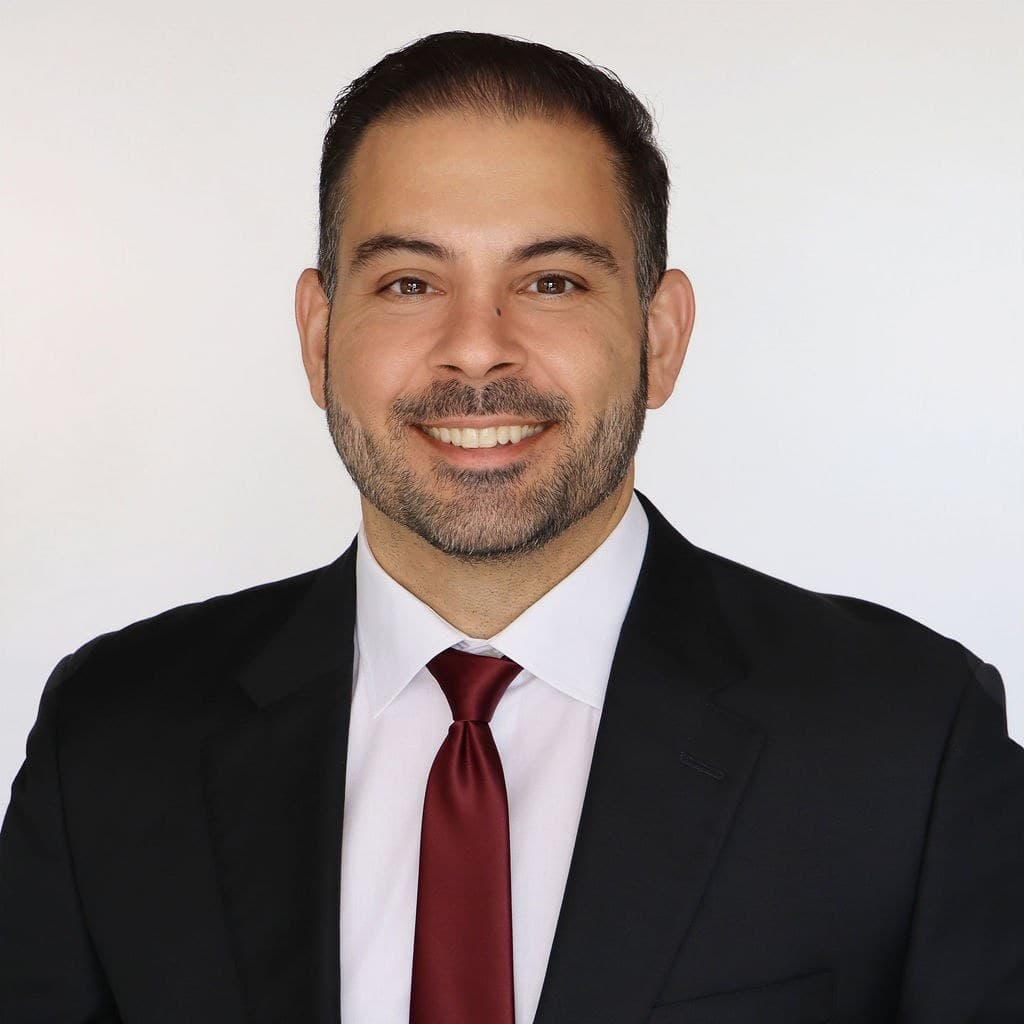
Eman Yazdchi, Esq., Certified Specialist in Workers' Compensation Law, California Board of Legal Specialization, State Bar of California.


California Board of Legal Specialization, State Bar of California
California Board of Legal Specialization, State Bar of California
- 14+
- Years of Practice
- 2,000+
- Cases handled over 14+ years
- $50M+
- Recovered over 14+ years
- 3
- Languages: English, Español, Farsi
Past results do not guarantee, warrant, or predict future cases. Each case is different and results depend on specific facts and circumstances.
Prepared by Yazdchi Law
A denial is not the end. It is the beginning of the fight.
That letter saying your claim is turned down can feel like the last word. It is not. California law gives you specific tools to push back, strict deadlines the insurer must meet, and real protections that started the moment you filed your DWC-1 form.
Carthay workers face denials rooted in the neighborhood's real jobs: housekeeping, grounds, and security for the Carthay Circle estates near Olympic Boulevard; clinical support roles for the many residents who commute to Cedars-Sinai's medical campus on Beverly Boulevard; and food-service and retail shifts along Fairfax Avenue and the small-business corridors on Pico. Insurers routinely call these injuries "not work-related" or blame old wear. Both moves can be challenged.
Here is what to do today:
- Keep the denial letter. The date on it starts key clocks. Do not throw it away.
- Write down what happened. Date of injury, what you were doing, who saw it. Even small details matter later.
- Call before a deadline passes. Eman Yazdchi reviews denied claims at no charge: (661) 273-1780.
Was your Carthay workers' comp claim denied? Here is what to do.
Keep the denial letter, note the date, and call a lawyer right away. Each path to fight back has a hard time limit that starts from the date on that letter.
Insurers count on workers to do nothing after a denial. Most people feel overwhelmed and assume the decision is final. It is not. You have a clear right to challenge a denied claim, a denied treatment, or a bad ruling from a workers' comp judge. But those rights come with short time limits. The sooner you move, the more options remain open.
The first question is this: what exactly was denied? Your whole claim, or one specific treatment? The two fights use different paths and different deadlines. Mixing them up can cost you the right to appeal at all. We will walk through each below.
Why do insurers deny workers' comp claims?
Four reasons come up most: not work-related, blamed on a prior condition, reported too late, or treatment not medically necessary. None of these is a dead end.
After years at the Los Angeles WCAB, we see the same denial patterns from Carthay employers and their insurers.
- Not work-related. The insurer says your injury happened outside of work. This comes up constantly on cumulative-trauma claims from Carthay housekeeping and maintenance workers, where no single event caused the injury.
- Pre-existing condition. They say arthritis, an old injury, or normal aging is the real cause. The law does not let them stop there. Their doctor must explain the exact how and why of any split in causation, not just point at an old X-ray.
- Late reporting. They argue you waited too long to tell your employer. California gives you 30 days. If you were near that line, it is worth contesting, because courts look at whether there was a real reason for the delay.
- Not medically necessary. They accept your claim but deny a surgery, specialist visit, or imaging your doctor ordered. That is a treatment denial, and it follows a separate path described below.
None of these reasons is final on its own. Every one can be challenged with the right evidence and the right argument at the LA WCAB.
The 90-day rule and what it means for your claim
Once you file the DWC-1 form, the insurer has 90 days to accept or turn down your claim. Miss that window, and your injury is presumed covered. You also get up to $10,000 in medical care during the wait, starting now.
Labor Code §5402(b): "If liability is not rejected within 90 days after the date the claim form is filed under Section 5401, the injury shall be presumed compensable under this division. The presumption of this subdivision is rebuttable only by evidence discovered subsequent to the 90-day period."
Under §5402, the clock starts the day you file your DWC-1 form. The insurer has 90 days from that date to accept or deny. If it does nothing and that window closes, the law says your injury is presumed covered. That is a powerful position, and it is hard for the insurer to walk back.
Equally important for most workers: during those 90 days, the law requires the insurer to pay up to $10,000 in medical treatment right away. They cannot freeze your care while they investigate. If a Cedars-Sinai clinical worker files on Monday, the insurer owes medical care by the end of that week. That $10,000 covers doctor visits, imaging, specialist consultations, and prescriptions while the decision is pending.
Many Carthay workers never learn this rule until it is too late. Insurers rarely volunteer it. If you filed and received no care during the investigation period, tell us. You may be owed back care they should have paid.
Denied treatment vs. a denied claim: two different fights
A denied treatment goes to a medical review process. A denied claim goes before a workers' comp judge. Using the wrong path wastes the time you cannot afford to lose.
When a treatment is denied
Your claim is accepted, but the insurer turns down your doctor's request for an MRI, surgery, or a specialist visit. That denial goes through Utilization Review, where an outside company checks whether the treatment meets state guidelines.
If Utilization Review upholds the denial, you have 30 days to request Independent Medical Review. This is a review by an independent organization called Maximus, which is completely separate from your insurer. The IMR doctor reads your full file and rules up or down. That ruling is final on most grounds. You can only challenge it if there was fraud, a clear bias, or a direct conflict of interest.
The 30-day window after Utilization Review is firm. Miss it and that path closes.
When a claim is denied outright
The insurer says your injury is not covered at all, or a judge rules against you. You fight that with a Petition for Reconsideration. This is a written request asking the Workers' Compensation Appeals Board to look at the decision again. You have 25 days from a mailed ruling, or 20 days from an electronic notice. Miss those dates and the ruling is final.
If the board still rules against you, the next step is a Writ of Review to the California Court of Appeal, within 45 days. And if a case was already closed but your condition has gotten worse, you can ask the board to reopen it within five years of your injury date.
We handle both paths at the Los Angeles WCAB at 320 W 4th Street, which hears every Carthay case.
How long do you have to respond?
Short windows: 30 days for a treatment appeal, 20 or 25 days for a judge's ruling. Each deadline is firm. Missing one can permanently close that option.
| What was denied | Your appeal route | Deadline | Law |
|---|---|---|---|
| Treatment denied at Utilization Review | Independent Medical Review | 30 days from the denial | §4610.5 |
| IMR upheld the denial | Challenge on narrow grounds only (fraud, bias, conflict) | 30 days | §4610.6 |
| Judge's decision (Findings and Award) | Petition for Reconsideration | 25 days if mailed, 20 if served electronically | §5903 |
| Reconsideration denied | Writ of Review to the Court of Appeal | 45 days | §5950 |
| New or worse disability after a closed case | Petition to Reopen | Within 5 years of the injury | §5803 |
Not sure where you fall on this chart? A free call clears it up: (661) 273-1780.
What to do the day your denial letter arrives
Read the stated reason. Note the date and how the letter was delivered. Then call a lawyer the same day, because every appeal clock starts from that letter.
When the denial arrives, take a breath first. Then read it carefully. California law requires the insurer to state a reason for the denial. That reason tells you which fight you are in. A letter that says "injury is not covered" is a claim denial. A letter that says "surgery is not medically necessary" is a treatment denial. Two different fights, two different clocks.
Note how the letter was sent. Mail gives you 25 days to challenge a judge's ruling. Electronic delivery gives you 20. Those five days matter more than most workers realize.
Then call us right away. Eman Yazdchi has handled denial cases at the Los Angeles WCAB for years. He knows the Cedars-Sinai clinical files, the cumulative-trauma patterns from Carthay Circle estate workers, and the food-service and delivery claims that come out of Fairfax Avenue and the small businesses on Pico and Olympic. He will tell you exactly where you stand and what the next step is. No charge for that first conversation.
Can your employer fire you for fighting a denial?
No. Retaliating against you for filing or contesting a workers' comp claim is against California law. You can recover your job, your lost pay, and a penalty added to your award.
Some Carthay employers, especially small residential-service operations or single-owner shops along Fairfax, get nervous when a worker challenges a denial. They may cut shifts, pass you over for hours, or let you go. That is illegal.
California's anti-retaliation rule covers this. Punishing someone for filing or fighting a workers' comp claim can lead to reinstatement, back pay, and a 50% penalty up to $10,000 added to their award. Tell us right away if anything changes at work after you challenge a denial.
How much does fighting a denial cost?
Nothing up front, and nothing unless we win. Fees are set by the WCAB judge, usually 12 to 15 percent of your recovery.
You do not pay by the hour. California workers' comp attorney fees are set by the WCAB judge, typically 12 to 15 percent of what we recover for you. If there is no recovery, you owe nothing. A Carthay housekeeper and a Cedars-Sinai clinical worker get the same quality of representation as any other injured worker in California.
Our firm has recovered up to $5,000,000 for a catastrophic spinal-cord injury and $1,500,000 for a cervical-spine injury. Past results do not guarantee future outcomes. Call (661) 273-1780 for a free, honest read on your case.
Results in cases like this
Every case is different. Past results do not guarantee, warrant, or predict a similar outcome.
$415,000
Motor vehicle accident
$5,000,000
Catastrophic spinal cord injury
$1,500,000
Cervical spine injury
Find Out What Your Carthay Case May Be Worth
Two minutes. No fee unless we win; costs may apply.
Question 1 of 5
What type of injury do you have?
Not ready to fill this out? Just call (661) 273-1780 and we’ll ask the same questions by phone.
Free Consultation
Call or send the short form. We review your case, explain your rights, and outline your options. Free, no obligation.
We Build Your Case
We gather medical evidence, handle the insurance company, and file all the workers' comp court (WCAB) paperwork for you.
We Pursue Every Benefit
Medical care, lost wages, and permanent disability benefits. No fee unless we win your case; costs may apply.
Denied-claim cases at the Los Angeles WCAB: what Carthay workers face
Carthay cases are heard at the Los Angeles WCAB at 320 W 4th Street. Eman Yazdchi appears there regularly on Cedars-Sinai clinical files, Carthay Circle residential-services cases, and Fairfax Avenue retail and food-service claims.
Where is the Los Angeles WCAB, and which cases does it handle?
Every Carthay workers' comp case is heard at the Los Angeles district office of the Workers' Compensation Appeals Board, at 320 West 4th Street, Los Angeles. It is among the most active workers' comp courts in California. Eman Yazdchi files Applications for Adjudication of Claim there, argues the 90-day compensability presumption, and handles Petitions for Reconsideration from that board. Related: Los Angeles denied-claim cases and the California denied-claim hub.
Which Carthay jobs drive the most denials?
Carthay is a compact Mid-City neighborhood. Its denial cases come from a handful of real job types:
- Residential services at the Carthay Circle estates: Housekeepers, gardeners, and security staff face cumulative-trauma denials. The insurer argues the wear came from personal activity, not the job. We fight that with injury logs and treating-doctor records that trace the damage directly to the work.
- Cedars-Sinai clinical commuters: Many Carthay residents work in patient care, lab support, or facilities roles at the Cedars-Sinai campus a short drive away on Beverly Boulevard. Shoulder and back injuries from patient handling are often called "pre-existing." When the hospital lacked proper lift equipment or a trained lift team, that failure directly supports your claim.
- Fairfax Avenue food service and retail: Cooks, servers, and clerks along Fairfax and the surrounding blocks face denials claiming the injury was personal. Repetitive-motion and strain claims from this workforce are among the most common we see at the LA WCAB.
- Small-business delivery and maintenance along Pico and Olympic: Workers on these corridors face cumulative-trauma denials on the "did not arise from work" ground. Building service and delivery work here generates a steady denial caseload at the Los Angeles board.
How the 90-day presumption plays out at the LA WCAB
When an insurer misses the 90-day window to accept or deny your claim, the compensability presumption kicks in. Proving the insurer missed the deadline is a factual fight the LA WCAB handles regularly. We pull the DWC-1 date-stamp and the insurer's response date, then present the timeline to the judge. Even one day late and the presumption flips in your favor. We have used this argument at the Los Angeles board on Cedars-Sinai employer files and on residential-services cumulative-trauma cases from the Carthay Circle area.
What is the QME process in a Carthay denial?
When the cause of your injury or the extent of your disability is in dispute, the state sends you a panel of three Qualified Medical Evaluators. You and the insurer each strike one name. The remaining doctor evaluates you independently. That doctor's findings carry real weight at the LA WCAB. We know the local QME pool and choose carefully, because the right evaluator can change the outcome of your case. The state process for picking a panel evaluator is governed by the panel QME rule. The state's full QME directory is here.
About your attorney
Eman Yazdchi is a Certified Specialist in Workers' Compensation Law, certified by the California Board of Legal Specialization, State Bar of California (CA Bar #285231). Only a small fraction of California attorneys hold this credential. He has represented hundreds of injured California workers and appears regularly at the Los Angeles WCAB. More about Eman Yazdchi. Verify his State Bar profile.
Nearby Mid-City and Westside areas we serve
Injured at work in Carthay? Talk it through for free.
Most claims must be filed within one year under Labor Code section 5405. A free call tells you where your clock stands.
Frequently Asked Questions
What happens if the insurance company misses the 90-day deadline?
What does the $10,000 interim medical care actually cover?
What are the most common reasons workers' comp claims get denied in Carthay?
Can I be fired for fighting a denial?
Can I reopen a workers' comp case that was already closed?
Does immigration status affect my right to challenge a denial?
What is a Petition for Reconsideration, and when do I need to file one?
How is a denied claim different from a denied treatment?
Free case evaluation
Get your free Carthay case evaluation
Three fields. We respond within one business day.
Talk to a Certified Specialist
Certified Specialist in Workers' Compensation Law, California Board of Legal Specialization, State Bar of California.
Takes 30 seconds. No obligation.
Eman really knows his stuff and we were very pleased with our end result.
I am glad and so very pleased...he made happen what no other attorney could do. So far he has proven his weight in gold.
Client testimonials. Testimonials are not a guarantee, warranty, or prediction of the outcome of your case.