
Burbank, California · Workers' Compensation
Workers' Compensation Lawyer in Burbank, California
Hurt at work in Burbank? Workers' comp pays for medical care and part of your lost pay while you heal. A free call tells you where you stand.
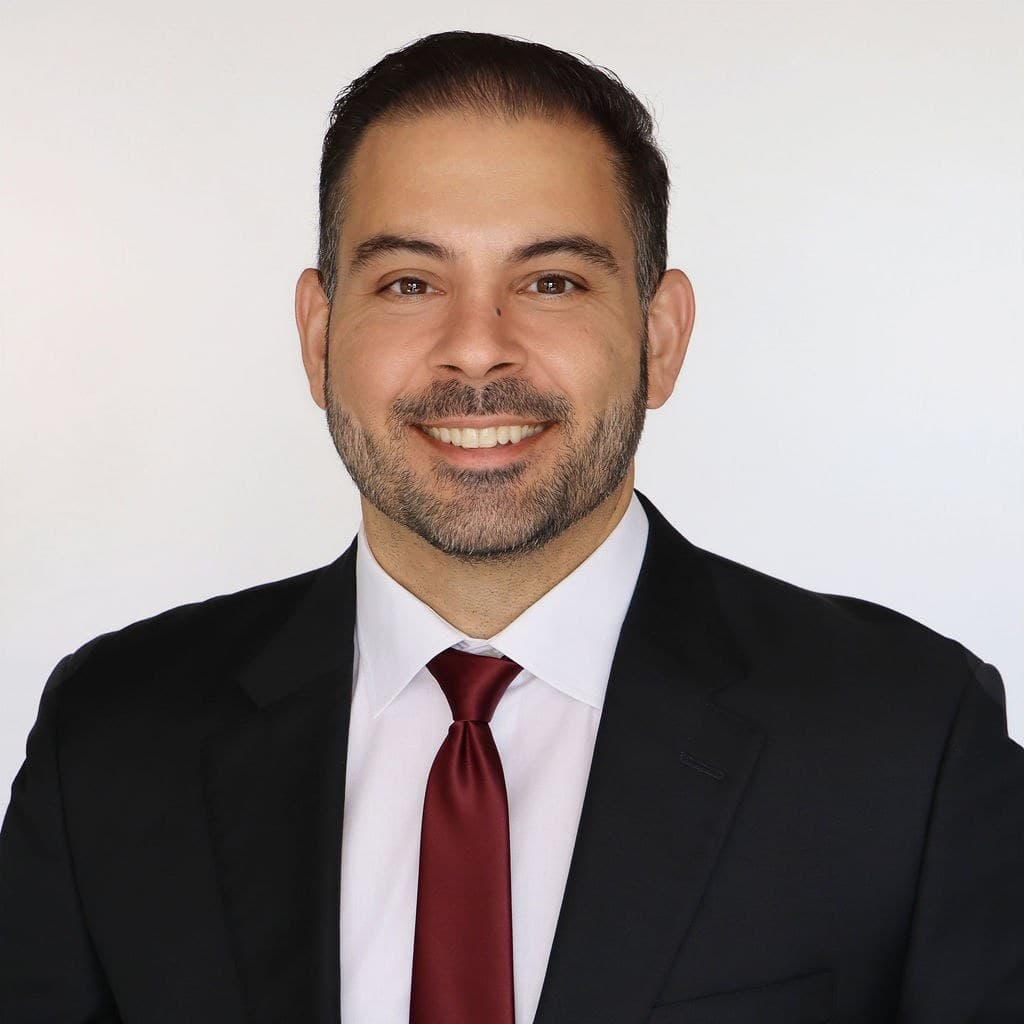
Eman Yazdchi, Esq., Certified Specialist in Workers' Compensation Law, California Board of Legal Specialization, State Bar of California.


California Board of Legal Specialization, State Bar of California
California Board of Legal Specialization, State Bar of California
- 14+
- Years of Practice
- 2,000+
- Cases handled over 14+ years
- $50M+
- Recovered over 14+ years
- 3
- Languages: English, Español, Farsi
Past results do not guarantee, warrant, or predict future cases. Each case is different and results depend on specific facts and circumstances.
Prepared by Yazdchi Law
Behind every show, every flight, and every hospital shift in Burbank is a worker doing something physical, and sometimes risky. When that work hurts you, the fear is immediate: the lost paycheck, the medical bills, the worry that speaking up costs you the job. You can set that fear down. The law is built to protect you, and the first call is free.
The core of it is simple. A work injury almost always means you are owed benefits, fault or not, because California does not assign blame. Your medical care gets paid in full. Two-thirds of your wages keep coming while you are off. A cash award follows if the harm is permanent. The clock to file usually runs one year, so reporting early protects you.
Eman Yazdchi is a Certified Specialist in Workers' Compensation Law, certified by the California Board of Legal Specialization, State Bar of California. He represents Burbank workers at the Van Nuys WCAB. Your first call will not cost you anything.
Do these three things today:
- Notify your employer in writing. A text or email to your supervisor or production office is enough. Add the date and what happened.
- Ask for the DWC-1 claim form. One working day is all the law gives your employer to provide it. If it does not come, call (661) 273-1780.
- See a doctor and say the injury is from work. Stated at the first visit, it puts the cause on the record.
Do you have a Burbank workers' comp case?
If your Burbank job caused the injury, a valid claim is very likely yours. It can pay your care, replace lost wages, and compensate permanent harm.
The worry that holds workers back is whether the case is even real. If the job caused the harm, it almost always is. One incident counts: a grip falls from a set platform on a studio lot, a nurse wrenches her back lifting a patient at Providence Saint Joseph, a loader is crushed against a dock in a media-warehouse bay. So does the slow kind, where a camera assistant's shoulder or a stagehand's knees give out after years of hauling gear.
The standard is short. Did the injury arise out of and in the course of your job? In everyday words, did work cause it, and were you on the clock? A set electrician shocked on a soundstage fits. So does a ramp worker hurt at Hollywood Burbank Airport, or an editor whose wrists fail after years at the bay.
California recognizes two kinds of injury. The specific kind happens in a single moment, a fall or a failed rig. The cumulative kind stacks up over years of repeated strain. Both are covered. For the cumulative kind, your one-year window opens when you connect the damage to your work.
That is the no-fault trade. Proving your employer was careless is not required. The cost is that you cannot sue them in ordinary court. The benefit is a defined set of payments that arrives far faster than a lawsuit.
California Labor Code section 3600(a): "Liability for the compensation provided by this division ... shall, without regard to negligence, exist against an employer for any injury sustained by his or her employees arising out of and in the course of the employment."
Coverage reaches every Burbank worker, freelance crew and those without papers included. A day-rate production hand and a temp warehouse loader can file all the same. Your immigration status cannot end a claim, and no employer may use it to keep you silent.
What benefits are on the table?
Paid medical treatment, two-thirds of your wages during recovery, a cash award for permanent harm, plus mileage and a retraining voucher.
A Burbank claim delivers a set of benefits working in tandem, not one lone check. Each carries part of the load while you heal.
Your medical care, fully covered
The insurer is required to fund every treatment you need from the day of injury onward. Visits, surgery, therapy, imaging, and prescriptions are all in. You pay no copay and no deductible. A crew member facing shoulder surgery never touches the bill.
A wage check while you are out
When the injury keeps you from working, temporary disability replaces two-thirds of your average weekly wage, to a state ceiling, and it can last up to 104 weeks within five years. The early weeks matter, so do not let the filing slide.
An award for harm that stays
Some injuries leave damage for good. When your condition levels off, a doctor scores the remaining harm as a percentage, and that score sets your permanent disability award. The next section turns it into dollars.
Care that can run for life
Serious injuries can need tending for years. Where your doctor expects future treatment, the claim can keep that care funded for as long as the injury follows you.
Mileage, plus a new direction
Mileage to your medical visits is reimbursed. And if you cannot go back to your old role, a voucher worth up to $6,000 pays for retraining toward work you can do.
What is a Burbank workers' comp claim worth?
Worth depends on the permanent harm left, your age, the demands of your job, and your future care. Each claim stands on its own.
Distrust any quick dollar figure offered before your file is read. The real answer ranges. Four levers move it: the permanent harm that remains, your age, the physical toll of your work, and the care still ahead.
The route from rating to money goes like this. When healing settles, a doctor grades the lasting harm on the state scale. Post-2013 injuries get that grade multiplied, then tilted up or down for your age and job demand. The table holds general statewide ranges, never a guarantee about your case.
| Injury severity | Typical permanent disability | Approximate value range |
|---|---|---|
| Minor strain or sprain, full recovery | 0 to 5 percent | $2,000 to $12,000 |
| Moderate injury needing surgery | 10 to 25 percent | $15,000 to $55,000 |
| Serious injury or a single-level fusion | 30 to 50 percent | $60,000 to $150,000 |
| Severe or multi-level injury | 55 to 80 percent | $160,000 to $370,000 |
| Catastrophic, spinal cord or brain | 85 to 100 percent | $400,000 and up, plus lifetime care |
These are general California ranges, not a prediction. Your actual award depends on your disability rating, age, occupation, and future medical care. Past results do not guarantee future outcomes.
Denied? Here is what you can do.
A denial only stalls things. A refused treatment carries a 30-day appeal, and a judge's bad ruling has roughly 20 to 25 days to challenge in writing.
Denials land for all kinds of reasons, some honest, many tactical. The thing to hold onto is that no is not the end. The law lays out routes to challenge it, and speed keeps them open.
After you file, the insurer holds 90 days to accept or deny, and through that window it still owes up to $10,000 toward your care. A treatment the insurer refused can be taken to independent medical review inside 30 days. A judge's ruling against you can be met with a written petition to the appeals board, usually inside 25 days of a mailed decision.
None of it falls on you alone. We break the denial down, find the crack, and bring the medical proof to pry it open.
Your filing deadlines in Burbank
Tell your employer inside 30 days, file inside one year. A missed clock can erase benefits, so do not wait.
The deadlines in California workers' comp do not bend. They are rules, and a single miss can sink the claim. We put every date on the calendar the day you hire us. The central ones are below.
| Step | Deadline |
|---|---|
| Report the injury to your employer | 30 days from the injury |
| File the formal claim (DWC-1) | 1 year from the injury |
| Injury that built up over time | 1 year from when you knew it was work related |
| Insurer must accept or deny | 90 days after you file |
Why Burbank workers choose Yazdchi Law
A Certified Specialist who knows the Van Nuys WCAB and understands studio, hospital, and warehouse work, not just desk jobs.
Eman Yazdchi holds the Certified Specialist credential in Workers' Compensation Law from the California Board of Legal Specialization, State Bar of California, a mark few attorneys carry. Hundreds of California workers have had him in their corner, and he is a regular at the Van Nuys WCAB, where Burbank claims are heard.
Beginning costs nothing. The judge sets the fee, a slice of the award that runs about 12 to 15 percent, and no recovery means no fee. We work in English and Spanish and keep the explanations plain.
Results in cases like this
Every case is different. Past results do not guarantee, warrant, or predict a similar outcome.
$5,000,000
Catastrophic spinal cord injury
$1,500,000
Cervical spine injury
$425,000
Slip and fall accident
Find Out What Your Burbank Case May Be Worth
Two minutes. No fee unless we win; costs may apply.
Question 1 of 5
What type of injury do you have?
Not ready to fill this out? Just call (661) 273-1780 and we’ll ask the same questions by phone.
Free Consultation
Call or send the short form. We review your case, explain your rights, and outline your options. Free, no obligation.
We Build Your Case
We gather medical evidence, handle the insurance company, and file all the workers' comp court (WCAB) paperwork for you.
We Pursue Every Benefit
Medical care, lost wages, and permanent disability benefits. No fee unless we win your case; costs may apply.
Burbank works in front of the camera and far behind it. The major studios, Warner Bros, Disney, and the networks, employ grips, riggers, set builders, electricians, drivers, and wardrobe and camera crews whose jobs are physical and often hazardous. Add the hospitals, Providence Saint Joseph chief among them, the warehouses and post houses across the Media District, and the ground crews at Hollywood Burbank Airport, and you have a city where the work is hands-on and the injuries are real: falls from rigging and sets, back and shoulder strain from lifting, and repetitive damage from years of the same task.
Your claim would be heard at the Van Nuys district office of the Workers' Compensation Appeals Board, at 6150 Van Nuys Boulevard. That office covers Burbank, Glendale, Pasadena, North Hollywood, and the rest of the San Fernando Valley. Hearings, settlement conferences, and trials all run on its calendar, and Yazdchi Law appears there regularly on Burbank cases.
Freelance and day-rate crew often fear that gig work means no coverage, or that filing will dry up the next call. Neither holds. You have the right to file and to be protected from retaliation. Call (661) 273-1780 for a free review in English or Spanish.
Injured at work in Burbank? Talk it through for free.
Most claims must be filed within one year under Labor Code section 5405. A free call tells you where your clock stands.
Workers' Comp Questions in Burbank, CA
I freelance on productions. Am I covered?
What does it cost to begin?
Can I be fired for filing in Burbank?
I am undocumented. Can I file?
Do I choose my own doctor?
How long will my case take?
Lump sum or keep medical open?
My injury built up over years on crew. Covered?
Free case evaluation
Get your free Burbank case evaluation
Three fields. We respond within one business day.
Talk to a Certified Specialist
Certified Specialist in Workers' Compensation Law, California Board of Legal Specialization, State Bar of California.
Takes 30 seconds. No obligation.
Eman by far exceeds the basic requirements other lawyers give to clients and surpasses all expectations.
Eman really knows his stuff and we were very pleased with our end result.
Client testimonials. Testimonials are not a guarantee, warranty, or prediction of the outcome of your case.